Tuesday, September 23, 2008

Icelandic Cinema and Me

There have been a number of notable films with strong connections to Iceland in the last few years.
The IMDb lists 302 titles in its Iceland section. I'll be giving a short impression of the ones I've seen, (using English titles) seeing any one of them is definitely the next best thing to being there...

101 Reykjavík, 2000, probably the most well known release of the last ten years, an unflinching look at the wild side of "101"- the central district of Reykjavík. I had a discussion about this film with a native in the Laugardalslaug pool, he was not at all pleased with its depiction of the city.

Beowulf and Grendel, 2005, Not the Angelia Jolie film, but the same story, told pretty well on a striking Icelandic location.

Cold Fever, 1995, Japanese-Icelandic production, very good, quirky, touching at times. Lots of countryside.

Screaming Masterpiece, 2005, The Icelandic music scene, wildly uneven, a must for music fans.

Dís, 2004, Coming of age story written by a woman who was a night clerk at Hotel Borg (Shen was working the night desk the time I stayed there), not the greatest film, but lots of Reykjavik locales, with a cameo from Vigdís Finnbogadóttir and soundtrack by Jóhann Jóhannsson.

Heima, 2007, Sigur Rós concert film, and much, much more. #1 rated documentary at IMDb.

The Juniper Tree, Brothers Grimm-type story concerning witchcraft set amidst Icelandic scenery. Björk's film debut. A bit thin on drama but very good atmosphere.

Cold Light, 2004, a brooding, dark film about a man haunted by a childhood trauma. Extremely well done, not for everyone. Good views of modern life in Reykjavík.

The Seagull's Laughter 2001, great film about an extended family of women whose worthless men meet their demise in various "accidents." Told from the point of view of a girl on the verge of adolescence. A must see.

Jar City, 2006, an Inspector Arnaldur mystery. Taut mystery with good cast, very dark, excellent location shots.

Noi the Albino, 2003, a peculiar young man in an isolated town on the northern coast of Iceland. Very odd, even by Icelandic standards, well worth viewing if you enjoy a Twilight-Zone type story.

There are obviously many more, some titles I've left off because they were not directly concerned with Iceland (notably Niceland, 2004, A Little Trip to Heaven, 2005, Dancer in the Dark, 2001) and there are some I've been wanting to see but haven't yet had the chance (The Sea, Angels of the Universe) to say nothing of the Halldór Laxness books that have been filmed (Salka Valka, 1954, and Atom Station, 1984.) Most of those are in Icelandic only, some aren't available in compatible formats.

I found Noi at my local Hollywood. Netflix should have most of the others...

UPDATE! Check out Rose's reviews of selected Icelandic films!

By Professor Batty


Comments: 2 


Monday, November 23, 2009

Nordic Lights Film Fest

Whenever there is a showing of a new Icelandic film in town I naturally try to see
it and today there were FOUR! Two features, Skrapp Út and Heiðin and two shorts, Síðastibærinn and Bræðrabylta were shown at the venerable (read: old and smelly) Parkway theater in south Minneapolis. Lately, I've been following Ben Hopkins' English language blog about Icelandic films and Heiðin (Small Mountain) was rated highly there as well as at IMDb. Skrapp Út looked a bit dodgy, and I had already seen The Last Farm, and they were being shown at 11:00 AM, so Heiðin and Bræðrabylta won by default. The Weaver graciously consented to join me and we made the thirty mile trek to the theater, where we were rewarded with real Norwegian candy in the lobby:


Bræðrabylta (Wrestling) about two gay Icelandic wrestlers, was a short film that almost defies description. Icelandic wrestling is very stylized- the contestants grasp straps on their opponent's thighs and attempt to throw them to ground. As they maneuver for an advantage it looks very much like close dancing. It was really pretty good, a little heavy on the symbolism, yet very naturalistic. Johann Johannsson's fine score helped make this odd little film feel "bigger" than it was.

The feature, Heiðin, was a film that started out as a slice of life of a small northern Icelandic town on election day, but slowly changed into a multi-generational family study. This was another "small" film, with very good acting and straightforward direction. The plot developed nicely, if very slowly, and reached a surprising conclusion (with a nice cameo from the singer Hafdís Huld.) What kept this from being a really good movie was the atrocious "Music Library" soundtrack by the hack composer Danny Chang- awful, tasteless disco/synth. Why wasn't a talented Icelandic composer used?

I've mentioned it before, but these festivals are becoming all digital projection now. It was so awful, I'm really thinking of never going to one of these again.

We topped off this mixed bag of a day out with coffee at the nearby Cafe Levain, a restaurant built around a commercial bakery, where we sat amidst the supplies:


Good coffee makes everything better.

By Professor Batty


Comments: 2 


Friday, October 13, 2017

Either Way


Á annan veg
A film by Hafsteinn Gunnar Sigurðsson
Iceland 2011

Another Icelandic film that had hitherto escaped my attention, found hidden in the Anoka county library system’s computer catalog. A true road movie: all of the action takes place on or near desolated stretches of Iceland's rural roads. I had seen one of its stars, Hilmar Guðjónsson, in a 2012 production of Rauð (Red), a play about Mark Rothko. I saw him in 2015 as well, in the Vesturbaerlaug swimming pool, but that was a different kind of “exposure.”

Set in the mid-80s, two road workers are spending their summer manually painting lines and pounding in stakes along a mostly deserted highway. Alfred (Hilmar) is 24 and restless, eager to return to the city. Finnbogi (Sveinn Ólafur Gunnarsson) is 33, and is using the summer to take a break from a stormy relationship with Alfred’s sister. The relationship between the men is strained to begin with, and goes downhill from there. A lot of not very enlightened talk about women eventually comes to a breaking point. I won’t go into plot; this more a film of atmosphere and nuance. The Icelandic scenery in the film is among its bleakest, this is most definitely not an Icelandic Tourism film. A hard film to like. While the actors are fine, I found the set-up and payoff not worth the effort. The film did have some success on the festival circuit where its “indie” production sensibilities would be an asset. It was remade as Prince Avalanche in the U.S. in 2013, starring Paul Rudd and Emile Hirsch, which bombed at the box office.

By Professor Batty


Comments: 4 


Monday, April 25, 2011

MSPIFF Revisited- Mamma Gógó


Mamma Gógó, 2010, A film written and directed by Friðrik Þór Friðriksson

Friðrik Þór Friðriksson has directed several notable movies, among them Niceland, Angels of the Universe, Devil's Island, Cold Fever, and Children of Nature. One trait in all of these is the great empathy he has for his characters. This film, loosely biographical, is about an Icelandic film-maker (Hilmir Snær Guðnason) whose latest film Children of Nature (as I said, "loosely" biographical) is doing poorly at the box office while at the same time his mother, Gógó, (Kristbjörg Kjeld) is rapidly developing an advanced case of Alzheimer's disease. This is, despite the plot, not a somber film. It isn't a comedy, but rather a realistic family drama with a vivid backdrop of modern Iceland. As the director's life crumbles, so does the relationship between Gógó and her children. The only person Gógó can communicate with is the ghost of her deceased husband, played by Gunnar Eyjólfsson. Gógó's fantasies develop, with memories of the early days of her courtship- played out in vintage black and white footage. The film's ending has an almost unbearable poignancy; be sure to bring some tissues, Friðrik Þór Friðriksson deserves a film festival of his own (or perhaps a box DVD set with Rokk í Reykjavík as an extra!)

The "film within the film":


79 af stöðinni, 1962, A film directed by Erik Balling

Starring: Kristbjörg Kjeld and Gunnar Eyjólfsson


NOTE: for MSP area readers: It will be screened again Friday, April 29, at 3:30 pm

By Professor Batty


Comments: 4 


Monday, January 13, 2014

Winter Movies - II


CBS Films

Inside Llewyn Davis, 2013
A film by the Coen Bothers

The Coens have “done winter” before, in their icy-black comedy Fargo, but this time the laughs are few and the blackness is grayer. Llewyn (Oscar Isaac) is a not untalented “folk singer” who can't seem to catch a break—he’s too busy sabotaging his own career. Taking place over the span of about a week, Llewyn bounces from one couch to another while alienating people who are his supporters, losing a couple of cats, and taking some hard knocks along the way. This film is a character study, with nuanced performances all around. The cinematography (Bruno Delbonnel) is moody and evocative. The best “feel bad” movie of the year, it is another great film from greatest brother duo in the history of film direction.

Underlying the film lies a rumination on success, failure, integrity and authenticity.  Llewyn has integrity and failure, but no authenticity or success. It is a question posed to any artist who must not only sell his art, but also himself. A young Bob Dylan appears at the end of the film, marking the end of an era which is seems to be over for Llewyn. The ending is deliberately ambiguous, suggesting either that Llewyn has come to grips with his failure and is ready to move on or he has embraced a cycle of failure as the price of experiencing artistic success.

Highest recommendation.


20th Century Fox

The Secret Life of Walter Mitty, 2013
A film by Ben Stiller

This is the other “holiday” movie which I saw this season, it is a considerably lighter and brighter (PG rated) film that I simply had to see in the theater—the middle of the film was shot in Iceland—and man, did they ever let it shine! Walter Mitty is an archivist for Life Magazine who has difficulties in engaging with reality at times. He has an interest in co-worker Cheryl Melhoff (Kristen Wiig) but doesn't have the nerve to act on it. Walter ultimately finds his “mojo” through a series of real-life adventures involving a mysterious photographer and a lost negative. It has some elements of fantasy and the shifts between reality and Walter’s imaginings are handled well. It is pleasantly non-raunchy. The film has a surprisingly satisfying ending. Walter learns the value of his own regular life, finding himself in the process and is finally able to start a relationship with Cheryl.

But forget all that analysis. Iceland is the real reason to catch this film. Lots of helicopter shots of the country (Iceland is also used as a stand-in for Greenland and Afghanistan) and an extended scene between Stiller and my favorite Icelandic actor, Ólafur Darri Ólafsson (pictured above). This film is a must for Icelandophiles—Iceland has never looked better on screen—and is a pleasant (if not terribly challenging) diversion for any non-jaded film buff.

One side note: Although both of these films were shot on film (and are gorgeous to look at) there have been rumors that traditional film manufacture and processing may soon cease, as early as this year! Both Stiller and the Coens have mentioned that these are probably their last movies shot on film. Secret has a sub-theme about the conflict of digital and analog photography, while Inside was post-processed to give the movie a very "60s Ektachrome" look.

By Professor Batty


Comments: 6 


Saturday, November 05, 2005

Campus Cinema


Went to the Oak Street (nee Campus) cinema tonight. There is an Icelandic film festival going on and the Weaver and I caught several short films and a feature, Niceland- which wasn't exactly Icelandic in theme- but a fine film nevertheless, with a good part of the production and the direction Icelandic. We got to the university area early, to grab a bite, and as we strolled among the shops, cafes and bars, I was reminded of my college years, spent on this same campus, with most of the same buildings still here; indeed, most of the buildings were nearly a hundred years old. Almost all the old businesses have turned over, but there are still a few that remain the same: Stub and Herb’s bar, a medical book store, the Army recruitment center and, of course, the cinema itself.

The cinema, despite all the technological changes of the last thirty-five years, has changed very little. The short films were actually projected video while the feature was traditional film. There currently is an intense pressure in the movie industry to convert all film-making to digital video, due to its cheaper cost of production. When this does come to pass, I fear that the movie-house may be phased out also. Why would you want to go to a theater to see what you can see at home?

I've seen projected video for a couple of years now, and it still is lacking in quality to film. If you make anything cheap enough, it will saturate the market and drive out any higher quality competition. And so the rule of the least common denominator wins out, and we are left the poorer.

By Professor Batty


Comments: 0 


Friday, July 18, 2025

Sódóma Reykjavík

Well!

I've finally gotten around to watch an Icelandic film that my old blog-pal Darien recommended 18 years ago! Sódóma Reykjavík/Remote Control is a weird, shaggy-dog story of a garage mechanic who gets involved with bootlegging, mobsters and other misfits in his search for his mother’s missing TV remote control. It was set in early 1990s Reykjavík and surrounding suburbs. I found it on YouTube in a murky print that was probably taken from a VHS tape. Sort of a predecessor to The Big Lebowski, but not nearly so polished (or funny.) The Sódóma referred to in the title was a fictional night club which, years later, became a real one—using the same logo! There are scenes set in the club with an actual Icelandic punk-rock group (Ham) playing. It was once actually voted best Icelandic film of all time! 

After ninety minutes of non-stop action the film careens to halt, the bad guys are vanquished and the missing remote is finally replaced.


By Professor Batty


Comments: 2 


Friday, November 11, 2005

Dís and Cold Light


Saw an Icelandic double feature last night- Dís and Cold Light (Kaldaljos), not an easy thing to do in this part of the world. The Icelandic film festival comes through about once a year, I have to make sure to catch them while I can (or else invest in a PAL video player!)

The subject of Dís was a twenty-three year old Icelandic woman with an existential crisis. Is it my imagination, or I have been focusing a lot of my attention on that socio-ethnic-gender group lately? It was fun to to get a taste of some of the cultural interactions from the “other side.” It was also nice to see the interior shots of the Hotel Borg. There is a cameo by Vigdís Finnbogadóttir, Iceland's first female president. Lots of attractive scenery, both urban and rural, and an excellent score from Jóhann Jóhannsson makes this slight film enjoyable. The woman who wrote and directed the film, Silja Hauksdóttir, actually was a receptionist at the Hotel Borg right about the time I stayed there!


Cold Light concerned itself with an artist, Grímur, who could foretell the future with his drawings, and switched between his adult life and troubling childhood memories. Very dark at times, and most thought-provoking. Hilmar Oddson’s film has a lot of the grim, gray scenery that doesn't usually make it into the travel brochures, yet is just as much a part of Iceland.

Both films are well worth a look.

By Professor Batty


Comments: 0 


Friday, July 26, 2024

Berdreymi

Beautiful Beings

A film by Guðmundur Arnar Guðmundsson

Four troubled young teen-aged boys in a suburb of Reykjavík struggle to find themselves in this gripping drama. This is not an easy film to watch; the pointless violence of the teens is reflected in the wreckage of the broken lives of their parents. This movie won’t bring any tourists into Iceland, but much of it rings true to me, especially with the very limited experiences I’ve had with young males and single mothers in Reykjavík, and with my own experiences growing up in the 60s.

Set in the late 90s/early 00s (computers but no smart phones) the film plays out over the span of a couple of weeks, following the boys in turns as they bluster, smoke, drink and do drugs on their way through one self-generated crisis after another. There is a bit of supernatural nonsense thrown in but the narrative is generally straightforward and reaches a conclusion that I found satisfactory. The entire cast is excellent, especially the boys who will probably become the next generation of Icelandic film stars. Anita Briem appears as a mother of one of the youths and, in an horrific cameo, Ólafur Darri Olafsson makes an appearance (and manages to get naked as usual). I saw both Páll Óskar and Samaris listed in the musical credits.

A limited recommendation. It is thought-provoking but difficult to watch. The Icelandic title translates as "nightmare."

By Professor Batty


Comments: 0 


Thursday, April 24, 2008

My Weekend With Baltasar

                          "No! No more cruddy digital projection!"

I'm not really as upset as the fellow in the picture seems to be. Actually, I'm looking forward to spending some quality time with him tonight. we've met before, via a mutual acquaintance: Baltasar Kormákur, the Icelandic director of such films as 101 Reykjavík, Hafið, A Little Trip to Heaven, Devil's Island, and a film that I'm going to see again tonight, Jar City, based on the book Mýrin by the noted crime writer Arnaldur Indriðason. I've seen 101 and a couple of Kormákur's stage productions. Furthermore, I was almost run over by him the last time I was in Rekjavík as I was leaving the National Theatre's box office!

One thing Baltasar does well is create stunning images, both on stage and in movies; the first time saw Mýrin, without subtitles, I was left with quite an impressionistic view of modern Icelandic forensics. Tonight's viewing (after having read the book) should be a little more coherent, but just as rewarding. He just won a "best picture" award for Jar City at the Prague Film Festival. It's worth a look, it will also play Monday night in Minneapolis, you might be able to catch it at other festivals this spring as well.

UPDATE: Just got back from the festival showing, the movie is as good (or better) than I remembered it (yay!), but it had been transferred to digital (boo, hiss!) with a BIG degradation of image quality. The theater was packed, the film received a good response, with a lot of Icelandic-oriented discussions going on in the lobby both before and after the showing. One viewer at a time, Rose.

If this is the only "print" in the country, it might be better to wait for the DVD or pay-for-view. Some kind of "truth in advertising" law must have been broken here, film is film and digital is digital. High quality digital is possible, but this wasn't it.

By Professor Batty


Comments: 4 


Monday, July 22, 2024

Hvítur dagur

A White, White Day

A film by Hlynur Pálmason

The last time I saw Ingvar Sigurðsson was in person, in Vesturbæjarlaug, sharing water with him in one of the larger hot pots. With 91 acting credits on IMBD, Ingvar is arguably the preeminent Icelandic film actor. I’ve also seen him on stage; he is a commanding presence in any medium. In A White, White Day, Ingvar portrays Ingimunður, a police officer in a small town on the eastern coast of Iceland. He is old enough to have an eight-year-old granddaughter but still young enough to work. He is stoically grieving his wife, who died in a car accident. His family and friends (and a horrible psychologist) all try to help but, as the film develops, Ingmunður regresses from anger into rage as he learns more about the circumstances that led to his wife’s death.

This is a very stylized, fugue-like film; lots of static scenes are repeated with variations. Verry arty! It is also extremely sad, the slow-burn of its pacing might drive you crazy. Special note must be made of Ída Mekkín Hlynsdóttir as the granddaughter Salka. She is the female lead and is pitch-perfect as a child who must deal with a adult world twisted by events beyond her understanding.

Recommended, respecting the above-mentioned caveats.

By Professor Batty


Comments: 0 


Wednesday, October 11, 2017

Bokeh


Screen Media Films
 
Continuing with my Icelandic-themed October, I watched the movie Bokeh last weekend.

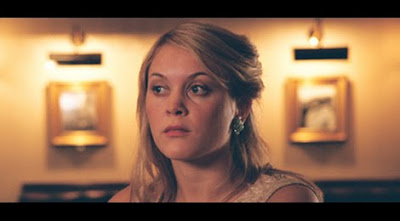
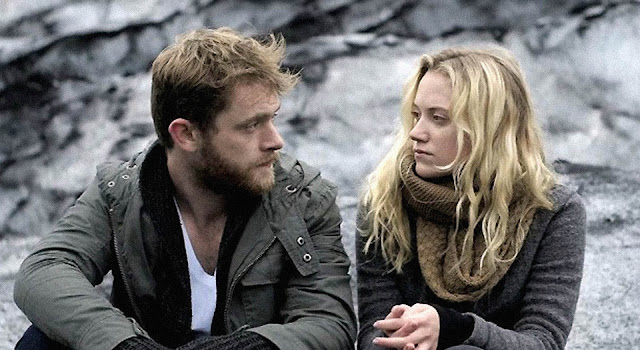
It is a post-apocalyptic mumblecore film (set in Iceland) where a young couple, Jenai and Riley, suddenly find themselves on an island without people. This should be a good set-up for an Adam and Eve film, or even an extended Twilight Zone episode. Instead, it is an extended passion(less) play about a clueless child-man and a perpetually PMS-ing young woman who barely speak (and when they do it is in unintelligible monotones.) They wander around in what appears to be an Icelandic Tourism promotional video, usually dressed in t-shirts as if it was southern California. There are numerous “Huh?” moments that don't make any sense; things that couldn’t (or shouldn’t but don’t) happen. The brief cameo by notable Icelandic actor Arnar Jónsson perked my interest for a few minutes, but it too little, too late. While I didn’t think much of the film the deleted scenes were even worse—real howlers.

A tiresome film that I was relieved to see end.

By Professor Batty


Comments: 3 


Monday, September 05, 2016

Mondays in Iceland - #75

Pascal Pinon, Sundur and the circle…


Magnus Andersen

I’ve been listening to the latest Pascal Pinon album a lot. What follows is not exactly a commercial review; in light of the sensitive nature of this project that would be crass. This is more of a rumination—on the music of course, but also on my circular quest for a fuller understanding of life via Icelandic culture.

By the mid-80s, when I had pretty much hung up my musical “career”, I was trying to make the home and family thing work. One escape from my domestic duties that I did have was a subscription to Andy Warhol's Interview magazine, one of the few periodicals that retained a large format. The articles and photography were mostly about New York art and music scenes, but they also showcased up-and-comers from around the world. One of these blurbs featured the Icelandic band The Sugarcubes: Björk’s breakout vehicle. It was the beginning of a circle. I made a mental note of her and, in 2000, the Weaver and I did manage a short trip to Iceland. She was impressed but I was overwhelmed, especially with the omnipotence of Björk in the shops. So began a cultural odyssey. After quickly getting up to speed on Icelandic music and literature (and with the advent of blogs), I even began to make personal contacts with some of the natives. Now, five trips to Iceland later, I have come to the realization that I am approaching the end of the circle. Nothing ever stays the same, of course, and my contacts in Iceland have, like me, have moved on in their lives. The classic literature of Iceland remains great (and I adore serious Icelandic theater), its modern practitioners are gifted. Icelandic cinema remains very strong. The Icelandic music scene, however, seems to have reached some kind of peak around 2010. Although there are still some acts with international success (Sigur Rós, Of Monsters and Men), the most challenging new work is coming from Jóhann Jóhannsson, as a film music composer (Prisoners, The Theory of Everything, as well as the new Bladerunner).

All of this rambling is a preface to today’s subject: Sundur, the third album by Ásthildur and Jófríður Ákadóttir, twin sisters who call themselves Pascal Pinon. I first saw them in 2009 at Iceland Airwaves and I have always had an affection for the group. Their first release (Pascal Pinon, 2010), recorded when they were 14 years old, was a honest topography of the heart. Twosomeness, their second release (2013), brought the girls out of their bedroom and into the studio. It was, as to be expected, much more polished, while still retaining an intimate nature. Sundur goes far beyond either of these, presenting Jófríður’s lyrics "up-close-and-personal" accompanied by Ásthildur’s sure-handed production. The songs, as would be expected from the album’s title, are about love: lost, broken, or missed, with a bittersweet tinge. I could run this down track-by-track, but Jófríður has graciously already done so. Two of the stand-out cuts, Orange, and Ást, are available at the link. Ást was inspired by the writing of Halldór Laxness (another cultural circle), and is a powerful lament on love: “… the silent symphony created by stroking the strings of the heart… ”

Speaking of circles, Jófríður is featured in a recent Guardian article as being one of Björk's inspirations! Some reviewers have commented on the similarity of the two singers vocal styles. There is something to it but Jófríður is in full command of her gift; her melodies and phrasings are her own, the similarities in diction are shared by thousands of other Icelanders! She is also blessed with a twin sister who has grown musically as well. Ásthildur’s previous contributions were subtle but she is now an equal partner in this fascinating collaboration. Her assured and dynamic keyboard efforts are the equal of her sister’s vocalizations.  I would even put Sundur in the same class as Joni Mitchell’s Blue, not as mature, of course (after all, they still are only 22), yet it is even more intimate than Joni’s masterwork—if such a thing could be possible. As a jaded, card-carrying curmudgeon, it takes a lot to crack my frozen attitudes. Pascal Pinon, those wyrd sisters from the North Country, not only thawed my resistance, they positively melted me.

Highest recommendation.

By Professor Batty


Comments: 2 


Tuesday, October 13, 2009

Guð Blessi Ísland

Another fine, albeit breezy day. Picked up my Airwaves wristbands, my bike, and stopped in to Þjóðleikhúsið for my Saturday night theatre ticket:


I wouldn't dare miss a production with my favorite, usually half-naked, Icelandic Actor, Ólafur Darri Ólafsson:


My next stop was a riotously chaotic bookstore where I had a delightful chat with Sveitakall, seen here in all his glory:


We got to talking about a certain Icelandic author and we checked the shelves, but there wasn't anything I was really interested in. "Why don't you come with me, we'll go downstairs see if there is anything there..." We went through a back door and down an elevator, then down a hall with several identical doors. He opened the last door and behind it there was a room packed with shelves of "the good stuff." First editions, mostly in Icelandic, and much more. Still, the books on the shelves were not quite what I wanted. "I've got this box," he said, "there may be something in it..."


OMG!!!

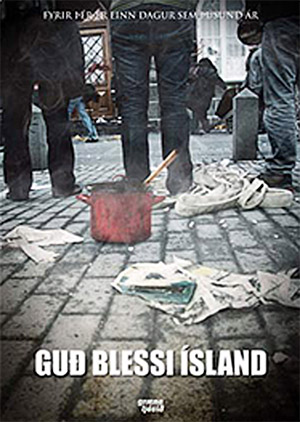
After I regained my breath, we negotiated a fair price and I left the store with my treasures. Another swim 'n soak at the neighborhood pool, then a little web cam appearance for all my fans, a few minutes at Friða Frænka and some supper. I dined in early because I had seen a poster at the Háskóla Bíó for a movie I wanted to see and I'd read about:


It is a documentary about the Kreppa and last winter's protests and also about the lives of three of the people involved: a policeman, a trucker, and a witch. Not being able to understand Icelandic, I watched the movie at a certain distance, but the humanity of those involved was clear enough. The protest scenes were very intense, reminiscent of Haskell Wexler's Medium Cool. The evocative musical soundtrack was composed by Hilmar Örn Hilmarsson

Of course, this story isn't over yet, and may not be for a long time. As an outsider, I really can't comment too much on the film. I'll leave you with a link to an Icelandic blogger's reaction: Google translate is pretty sketchy in Icelandic, but the second paragraph is clear enough:
I wept
I wept when I watched about the police against protestors
I wept when Stulli and his wife had (a) Móment when he was going to Norway
I wept when Eva Hawke was to pack down (closing her shop)
Having met Eva once, and, having followed her blog, I almost wept myself.

Guð Blessi Ísland

By Professor Batty


Comments: 7 


Wednesday, June 26, 2024

20 Years Ago on FITK

Salome’s Dance

If one were to be standing on Öskjuhlíðar, the hill in Reykjavík with Perlan at its top, and proceed in a southerly direction you would end up at the beach at Nauthólsvík. In the summer this is a lively place with a geothermally heated lagoon for swimmers, in late winter it can be somewhat desolate.

This is where I found myself last April, after having eaten a light dinner at the Kaffi Nauthóll, a delightful turf-covered hideaway situated in this forlorn landscape. I was headed to the beach, to enjoy a vista of city lights across the bay, when I came upon a small boathouse. As I strode past a short fence, I saw three women leaving the building, and as they exited, one was in contortions, possibly adjusting her bra. My appearance must have struck them as somewhat amusing, for as soon as they saw me they burst into laughter.

   “Er-excuse me... ” I stammered.

The fact hat this timid stranger on a deserted beach was an American tourist was a situation they found hilarious. Smiling, they fearlessly strode over and I found myself surrounded!

There is something about the initial moments of contact with strangers, when you realize that you will speak and interact with these people you don’t know. I suppose the subconscious “flight or fight” instinct is there, but this was a little different. Lots of eyeing each other, with the women glancing at each other as if saying to each other, “Is this guy OK, or not, or just a waste of time?”

   “Hvaðan ertu?”

   “Minnesota,” I couldn’t bring myself to say America or The U.S.A.

   “Have you been in Ísland long?

   “Since Monday...

   “You come with us to the Kaffí, we will talk there.

   “Um, OK, I would like that a lot.

   “You can have a drink with three weird Icelandic women.” They all laughed.

   “Yes, I will, with three beautiful Icelandic women.” They redoubled their laughter.

I had passed the first test...

Settling in, the women ordered while I sat and wondered: “What have I gotten myself into?” I had heard that Icelanders were a fiercely independent people, and that the women did not tolerate fools. As they chatted with me and amongst themselves in English and Icelandic, I started to feel woefully under-educated. Suddenly, the woman who had done most of the talking, and who I thought was the leader, reached over and grasped my forearm. “What do you think about the situation in Iraq?” see asked, with a piercing stare. I thought for a second, and said, “It makes me ashamed to be an American...

Talk turned to Icelandic film (101 Reykjavík, The Seagull's Laughter) and Literature. Being a big fan of Halldór Laxness, I found a topic that we could share. Halldór Laxness’ novel  Íslandsklukkan (Iceland's Bell) had recently been translated into English and I had read it just before my trip. It was a heady moment for me, discussing Snæfríður’s speech to the Danish authority, making my case that it was a universal plea for human dignity for all oppressed people. I had made contact, and I felt the ice was broken as our awareness of each each other grew along with our smiles…

We talked into the night; about children, grandparents, social customs, even card games! By now it was quite dark, we went outside, the wind had died down, a fine mist filled the air. While we waited for their ride, one of the women, the one who I had earlier caught ‘adjusting herself’, walked a few feet away and, spreading her jacket wide, did a little dance to the night sky. Salome in all her glory could not surpass the joy she expressed. Their driver pulled up, the spell was broken and, when I returned to my guesthouse, my head was reeling.

Only in a small way, and only for a few minutes, my world had become a better place…

UPDATE: The bistro in this post has been replaced by an upscale restaurant. It is in the same location, but is now simply named Nauthóll.

By Professor Batty


Comments: 0 


Wednesday, June 30, 2004

Salome's Dance

UPDATE: The bistro in this post has been replaced by an upscale restaurant. It is in the same location, but is now simply named Nauthóll.

If one were to be standing on Öskjuhlíðar, the hill in Reykjavík with Perlan at its top, and proceed in a southerly direction you would end up at the beach at Nauthólsvík. In the summer this is a lively place with a geothermally heated lagoon for swimmers, in late winter it can be somewhat desolate. This is where I found myself last April, after having eaten a light dinner at the Kaffi Nauthóll, a delightful turf-covered hideaway situated in this forlorn landscape. I was headed to the beach, to enjoy a vista of city lights across the bay, when I came upon a small boathouse. As I strode past a short fence, I saw three women leaving the building, and as they exited, one was in contortions, possibly adjusting her bra. My appearance must have struck them as somewhat amusing, for as soon as they saw me they burst into laughter.

   “Er-excuse me... ” I stammered.

The fact hat this timid stranger on a deserted beach was an American tourist was a situation they found hilarious. Smiling, they fearlessly strode over and I found myself surrounded!

There is something about the initial moments of contact with strangers, when you realize that you will speak and interact with these people you don’t know. I suppose the subconscious “flight or fight” instinct is there, but this was a little different. Lots of eyeing each other, with the women glancing at each other as if saying to each other, “Is this guy OK, or not, or just a waste of time?”

   “Hvaðan ertu ?”

   “Minnesota,” I couldn’t bring myself to say America or The U.S.A.

   “Have you been in Ísland long?”

   “Since Monday... ”

   “You come with us to the Kaffí, we will talk there.”

   “Um, OK, I would like that a lot.”

   “You can have a drink with three weird Icelandic women.” They all laughed.

   “Yes, I will, with three beautiful Icelandic women.” They redoubled their laughter.

I had passed the first test...

Settling in, the women ordered while I sat and wondered: “What have I gotten myself into?” I had heard that Icelanders were a fiercely independent people, and that the women especially did not tolerate fools. As they chatted with me and amongst themselves in English and Icelandic, I started to feel woefully under-educated. Suddenly, the woman who had done most of the talking, and who I thought was the leader, reached over and grasped my forearm.  “What do you think about the situation in Iraq?” see asked, with a piercing stare. I thought for a second, and said, “It makes me ashamed to be an American... ”

Talk turned to Icelandic film (101 Reykjavík, The Seagull's Laughter) and Literature. Being a big fan of Halldór Laxness, I found a topic that we could share. Íslandsklukkan (Iceland's Bell) had recently been translated into English and I had read it just before my trip. It was a heady moment for me, discussing Snæfríður's speech to the Danish authority, making my case that it was a universal plea for human dignity for all oppressed people. I had made contact, and I felt the ice was broken as our awareness of each each other grew along with our smiles...

We talked into the night; about children, grandparents, social customs, even card games! By now it was quite dark, we went outside, the wind had died down, a fine mist filled the air. While we waited for their ride, one of the women, the one who I had earlier caught “adjusting herself”, walked a few feet away and, spreading her jacket wide, did a little dance to the night sky. Salome in all her glory could not surpass the joy she expressed. Their driver pulled up, the spell was broken and, when I returned to my guesthouse, my head was reeling.

Only in a small way, and only for a few minutes, the world became a better place…

By Professor Batty


Comments: 0 


Friday, May 01, 2026

20 years of Reykjavík Pool Culture

Image: Art Bicnick, Reykjavík Grapevine

Discovering and being part of the pool culture in Iceland has been one of the great joys of my life. Here are some impressions from various times I’ve enjoyed it over the last twenty-one years: 

                                                      ~ 2004 ~

Some vacation trips are family affairs, others are romantic getaways for two. Then there is the third type, the solo excursion. Traveling by oneself has some unique advantages. You only have to please yourself. You can set the pace, either fast or slow, according to your mood or disposition.

So you can imagine my slight consternation when, during my carefully planned solo trip to Iceland last spring, I was “befriended” by a somewhat clueless and flabby college counselor who was the tour leader for a group of teachers-in-training from a state school in Michigan. He had done no homework about this trip, none about Iceland in general, and none about Reykjavík in particular. My schedule was complete, I had about twenty hours of things to do each day. I was not a slave to that schedule but I didn’t have any time to babysit.

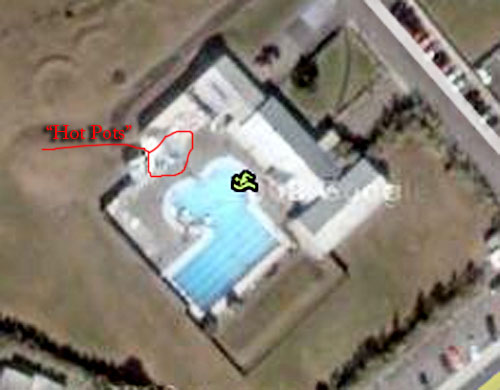
Nevertheless, I mentioned to this chaperone that I was going to Laugardalslaug, and he was welcome to come along. “Do you have a car? How far is it?” Well no, I didn’t have a car and it was about 1.5 km to the pool from our guest-house on Bólstaðharlið—not a really long walk but far enough to tax the feeble. In other words, my accidental companion. We did make it there, he was complaining all the way and we had to stop a few times to rest. We showered and changed into our swimsuits; he felt the need to wear a shirt into the pool. I did my laps, then soaked a bit to get the travel kinks out. I think my ‘pal’ spent the whole time wondering what he had gotten himself into.

Finally, it was time to go (the pool was closing), and we headed back. He had to stop at the American Style restaurant, where we drank Cokes while he complained about his time in Iceland. Some date. When we got back to the guesthouse, he went straight to bed but I stayed up and talked with some of his charges, the students who were far more in tune with the idea of Icelandic exploration. Over the course of the evening, one of the students was complaining about being stuck with such a dud. I thought about this for a while and then said: “Yeah, but I had to see him naked!” 

I returned to Laugardalslaug later in the week, this time I made the mistake of mentioning the film of Hallgrímur Helgasson’s 101 Reykjavík to a fellow ‘hot potter’. He had not been amused by it and let me know it. Evidently I still had a lot to learn about pool culture.

                                                      ~ 2006 ~

“The water has memory, you see, the water has memory.”


When a man who has spent his life on the ocean speaks poetically of water, I will give him due consideration.

I was sitting in a hot pot at the Vesturbæjarlaug pool, sharing water with a retired trawler captain, a Spaniard, and an elderly woman, the conversation was as warm as we were. It was another unseasonably fine October day in Reykjavík and I was taking a final visit to the neighborhood pool. The conversation swirled like the water in which we soaked; moving between politics, economics, wool, music and water. Always water, this rock in the North Atlantic, surrounded by water and the fish in it which generated wealth, the heat from the geothermal water making living comfortable here, and the electricity generated from the hydroelectric plants making modern life practical. I mentioned Halldór Laxness and his novel Kristnihald undir Jökli, wherein the "fallen" pastor Jón Primus declared his only theory: “… water is good… one doesn’t even have to go by my theory unless one is thirsty.” Everybody laughed. Water is good, especially when one is in it with congenial company. When I had finally become thoroughly cooked I reluctantly left.

BEST MUSIC OF THE DAY: The speech of an Icelandic coquette in hot-pot 3 at the Vesturbaejarlaug thermal pool (13:00). She was in an animated discussion (about working hours I believe), but I could appreciate were the beautiful cadences and inflections of her voice. Did I mention how much I enjoy being here?

                                                      ~ 2009 ~
I haven't had any deep conversations in the "hot pots" this trip as yet, but there have been moments, like the one Sunday with a mother and father and their ten year-old daughter. The daughter was resting her head on her father's massive chest, talking to him quietly and sweetly. She then started to croon a plaintive childrens song- a very touching and tender scene.

Monday: I was in a pot with three older people when some young men from from the U.S. came in and started taking computer repair. Talk about a mood killer! They left soon enough; the ensuing quiet was most welcome.

Tuesday: I was in the same pot. The sun was shining so you could bask in it while the hot water swirled all about you. Then a trio of bikini-clad teen-age girls came in. From the sound of their conversation I surmised that they were Swedish. One had a waterproof camera (normally forbidden in the pool—but who’s going object to some girls snapping pictures of each other?) and I used that camera to take a picture of all three them together. The sounds of their voices were like singing as well.

Grace is real.

Wednesday: Ok, I'm back from the pool, were I spent time listening to an old fisherman punctuate his monologues with Icelandic poetry. He evidently was well known to the regulars who, like me, enjoyed his performance.

                                                      ~ 2012 ~

Monday: At Vesturbæjarlaug the air temp was 4°c, a balmy 39°f but the sun had retreated behind leaden clouds, giving a somber look to the surroundings. There were only about a half-dozen other bathers in the pools; I had never seen them so empty. I did my laps then went into the medium hot pot, alone. The cricks and aches from my flight quickly were forgotten.

Tuesday: This afternoon I spent close to three hours there: enjoying the sun, the 38-40° C. (100-104° F) warm water as well as interacting with an interesting mix of people from various backgrounds. The conversation was lively, the first half-hour was dominated by an older gentleman whose non-stop banter kept the pool laughing. It was all Icelandic, I could understand the laughter and when he referenced numerous vacation sites (Costa del Sol, Sardinia, Crete, San Francisco) but otherwise I could understand little. When he left a woman took up the slack for another half-hour, also in Icelandic. The crowd turned over, and several of the new arrivals started talking to me (in English) about a wide variety of subjects: the destruction of the Reykjavík city center, Vikings in the new world, Snorri Sturluson, the Kensington Rune Stone (they brought it up!), Shakespeare’s visit to Iceland (?!), the spread of Icelandic pop culture, and music education in Iceland (one of the men in the pool had been a music teacher of the Ákadóttir Twins!!)

Eventually the crowd thinned out but two men (a nephew and uncle) remained and our talk turned to Halldór Laxness. We talked about the problems of translation, various books, and the subtle ironies in Laxness' writing. Then it was only the nephew who remained, he spoke to me about his life in Denmark, how he wanted to return to Iceland permanently, and about the water. “God made the cold water, and the Devil made the hot water, and the mixing of them is what makes Iceland such a special place.” He also introduced me to the pleasure/torture of the 'cold pot'—with water in the 8-10° C. range (45-50° F.) and the importance of drinking lots of water when in the hot pots.

On Wednesday I spent some time on the Seltjarnarnes peninsula, and went to the salt-water pool there. My swimming pass wouldn’t work, the attendant laughed and said “That's for the city pools, you're in the country now!” The pool and the changing room were very nice indeed, one might call it ritzy, although I’m not big on the way salt water feels on my skin. I had a conversation with a couple of teen-aged boys about music, they were into “Pink Floyd and Led Zep.” Upon learning that I was from Minnesota, an elderly woman mentioned going to the University there in the 1950s, learning nutrition. I asked her about Ancel Keys, but she didn’t remember him.

Friday found me back at Vesturbæjarlaug, in the hot-pot with Ufuoma, a vivacious woman from Nigeria (via the UK.) She had married an Icelander and had embraced the country fully—including hugging several of the pool patrons that knew her. There was a morning exercise group that morning that we joined; she was in a lot better shape than I was. Her performance suggested that she was an experienced dancer. Our conversation showed that she was highly educated (I later found out that she has translated Chaucer into Icelandic for a stage play.) Her name meant ‘peace of mind’, and she lived up to the moniker. The hot tub conversation we were having was interrupted when we were joined by Vigtýr, ‘The Banjo Player,’ as she called him. He was in his mid 30s, tall and handsome, with long blonde hair—a regular Viking. Ufuoma, who had been out of the country for the last few weeks, had to catch up on things and asked him how he had been doing lately. His answer was quick in coming and surprised me with its bluntness: “I’ve been feeling kind of… I guess you could say I've been lonely…” Ufuoma, expressing genuine concern, started asking questions. Vigtýr said he had always been self-reliant, but lately it had started to catch up with him. Ufuoma knew that he had some health issues as well, including surgery to relieve nerve damage in one leg, a condition which caused him to have phantom pain in his foot. Ufuoma nonchalantly picked up his leg and began to massage the offending foot. “I know someone in London, he can help you, no surgery, you should go see him,” she said. She then lifted her leg above the swirling water and showed us the scars on her leg. She had gotten them from the exhaust of a motor scooter. They were interesting, two almost perfectly round spots. Had her healer friend helper her recover? Or did she just want to show us her leg? I didn’t have any interesting stories to offer about either of my legs. The instant rapport we shared (based mostly on Ufuoma’s extremely engaging personality), was like a meeting between old friends. It would be hard to image in any other circumstance, but the leveling nature of the hot-pot made it seem natural. It was with great deal of reluctance that I finally took my leave to catch my flight back home.

                                                      ~ 2015 ~
Monday: The pool was, as it usually is, sublime. It was sunny, with a light breeze, 8°C. air temp (about 46°F.) There are two new GIANT 'hot-pots', better for extended lounging, but not as intimate as the old ones (which are still there.) Got into an extended conversation with a woman of 'indeterminate' age, the first topic always seems to be "why Iceland?"

Tuesday: Earlier in the day, at the pool, the Icelandic author Þórbergur Þórðarson came up in conversation. My companion mentioned another book by this author which I will have to pick it up when I return home. In the book the protagonist pines for a young girl who “… still had a bit of God in her.” When he returns from fishing, the girl had grown up and the main character becomes disillusioned with the result. As we were talking, in the shallow wading pool near us, there were numerous young children getting rudimentary swimming instruction. Their shrieks and cries were, to my ears, akin to birds singing.

“Those children still have that little bit of God in them, don't they?” said my companion.

After this trip I recieved an email from Dan Kois, the author and New York Tomes writer. He wanted to know more about Icelandic pool culture and I helped him out.

                                                      ~ 2018 ~

Back again in Vesturbæjar, this time with The Weaver in tow. We came straight from the airport, going to a nearby bakery/coffeeshop for some breakfast then getting into the pool about 10:00. The hot-pots there were a perfect cure for jet-lag. Suitably refreshed, we left the pool and dressed and then were off to Ólafoss, Gljúfrasteinn, returning to our apartment mid-afternoon. We returned a couple of times during our trip, once getting into a discussion about Independent People, the famous novel by Halldór Laxness. The local in our shared hot pot was enthusiastic: “I read it in Icelandic and in English, side by side—it was a perfect translation.” The Weaver, initially skeptical about going to the pool, warmed up to the idea after a few trips.

                                                      ~ 2022 ~

I woke up Wednesday morning completely refreshed. Any lingering traces of jet-lag were gone and by now my morning routine had been established: coffee, cereal with fruit and milk, checking email and the weather, then heading out to the pool for some laps and socializing. It was a bit colder that particular morning, the temps were just below freezing and there was a thin film of ice on the pond across the street from my digs. It almost made me wish I had brought a warmer jacket. The paving stone sidewalks were a bit slippery but I made it to Vesturbæjarlaug without managing to break my neck. At the pool I did manage a few laps and then I just indulged myself in trying out each of the different soaking pools before returning to my usual 38-40°c hot-pot.

I spent Wednesday afternoon noon at the pool where I struck up a conversation with two people, one was a thirty-something man that I learned was Guðmundur Óskar Guðmundsson, the bassist for Hjaltalín! He was most surprised when I told him I had a copy of one of his limited release albums. My other pool-mate was a friend of his, a lively older woman who was 95 and proud of it (“I still drive!”) and we shared travel stories and commented on the weather (not a cloud in the sky again today!)
Thursday was another beautiful day at the pool (45°F, sunny, no wind). Had a long conversation with an Icelandic woman about Icelandic literature, music, film and drama all the while soaking in a hotpot directly across from the noted actor Ingvar Sigurðsson. I reluctantly left her and the pool for it was time to officially start Airwaves. I made my way over to the Iceland Airwaves check-in and got my wrist band.
                                                      ~ 2023 ~

The Vesturbæjarlaug pool was a bee-hive of activity. I did my laps, explored the various hot-pots, and finally settled in at the 38°c hot-pot. I saw Ingvar again, as he was making his rounds of the pool. I was soon joined by a man who recognized me from years previous. “You’re that guy with the Halldór Laxness website,” he said. I had recognized him immediately because he was a doppelgänger of one of my neighbors at home. We made some small talk, he asked why I was here. I mentioned the festival, and also said that I was going to meet up with some old blog-friends. “I’m having lunch with Silja A—, the writer at TMM, to talk about the new translation of Halldór LaxnessSalka Valka. “Oh, you’re in good hands with Silja,” he said, smiling.

Everybody knows everybody here.

On the other side of the lap pool was a grass-covered earthen berm, it helps to cut the wind and offers a bit of privacy. As I talked with my old ‘pal’ I noticed two men in swim suits lying on the side of the berm, feet up-head down. The air temp was warmer now, it had risen to 4°c (39°f) but it was still cooler than I would like when taking a nap in my Speedo. They must have stayed there for several minutes, I stopped watching after a while, when I looked up later they were gone. I looked at the clock and it was 1230 hours. My luncheon date was at 1400 hours, and on the other side of the city from the pool, about a half mile from my apartment. I said goodby to my tub-mate, and headed back to the apartment to prepare for the afternoon’s adventure.

The next day I spent a long time in conversation with Lárus Halldór Grimsson, an Icelandic music veteran who had been in the prog-rock band Eik in the seventies. He was full of stories; hanging out with David Bowie, writing music for plays, and had even portrayed a young Halldór Laxness in a television production! Lárus seemed to know everybody in Iceland, and was full of arcane references, but I think I surprised him when he mentioned Baggalútur. I said that I not only knew of them that I had seen them perform and I even had one of their CDs. I spoke of the Ákadóttir Twins who comprised Pascal Pinon and he knew their father well. We also talked about the late, great Jóhann Jóhannsson whom he knew back in Jóhann’s days in the punk-rock group Ham, which brought out me telling them about seeing them perform the previousnight. From Ham and Johann it was only a slight turn in the conversation to Hildur Guðnadóttir, the Academy Award-winning composer. He had given her a stuffed Pink Panther doll when she was a small child!

Speaking of children, a young man with a boy came into our pot, the man explained that the boy was autistic, and liked to take water-bottles! I moved my $8 medical-grade water bottle away as the scamp cavorted around the pool as we talked. The man wasn’t his father, he was just a friend of the family (and not even an Icelander!) and had some free time so he took the boy to the pool to give his parents a little respite. No big deal here, it takes a village to raise a child. I managed to give the boy a side-eye wink that he caught and answered with a shy smile. After the pool, I sauntered back to the apartment. It was a bittersweet trip; by this time tomorrow I would be in the Keflavík airport, waiting to return home.

It’s good to live in the moment when on vacation.

No what-might-have-beens, no second guessing your itinerary, no comparing this trip to another one. The weather, while still warm by November standards, had turned a bit windy, so I spent most of the afternoon in the hotpots at Vesturbæjarlaug swimming complex. There were a lot of people there with Airwaves armbands, and even a couple of performers. Lolling in the shallow oval hot-pot, laying back with my head on its rim, gazing at the wispy clouds floating high above me allows my brain to stop, being one with them, a moment I will long remember.

Vesturbæjarlaug, an open-air swimming pool, is my personal favorite. Its proximity to the university insures that the pool’s population always consists of a mix of backgrounds: a fair amount of academics, actors, students, tourists and the usual neighborhood old-timers. Geezers like me (67+) get in free, without a doubt the best tourist deal in the whole country. When I walked in and went to the reception desk the clerk asked “Is this your first time here?” when she heard my accent. The first time this trip, yes, but it is just one of dozens—many fond hours I’ve spent here in the hot-pots, absorbing heat and culture in equal measures. I even do laps— and my partaking in actual physical exercise is a rarity. The clerk handed me my ticket and, after scanning it at the gate, I went down into the locker room. I stripped naked and headed for the showers to wash with soap (special emphasis on cleaning the germy bits) and then donned my Speedo to head out to the pool complex. Four double lanes in the 25 meter lap pool, a large shallow pool with slides for children, and six soaking pools of varying temperatures and sizes. The chlorine level in the water is mercifully low which allows one to stay for hours and any traces are dissipated by the fresh sub-arctic air (bring a water container to avoid dehydration!) If you need even more heat there is also a steam bath and a sauna. In the hot pot at Vesturbæjarlaug the topic of Halloween in Iceland came up. “Not my cup of tea,” said a woman sitting next to me with a temporary tattoo of a flaming skull on the back of her hand, “The old Icelandic holidays are disappearing,” a man said, ruefully. He recognized me from a visit ten years ago! I commented that I had been in Iceland once before on Halloween and it was nothing then.

                                                      ~ 2025 ~

Monday: I met Ingimar in one of the hotpots where he told me interesting stories about his exploits in NATO. And of course he knew my old blog pal Kristín. By the time I was thoroughly cooked Ingimar had started to repeat his stories. The pool was crowded, with lots of families and kids. I talked with a couple of men: one a native, the other an ex-pat DJ from Brooklyn. Theatre, literature and even AI music generation were some of the topics of our conversation. I mentioned that I listen to my own AI augmented songs as a playlist, he did the same too.

Tuesday: Woke up early, at 06:00 it was still night. After breakfast I made my way to the pool and took my first lap under the stars. Dawn broke slowly and by the time I left the hotpot it was morning. In the shower I noticed a man who looked like Langi Seli across from me. I asked if he was who I thought he was, and he was (I almost didn’t recognize him without his Gretsch.) I told him of the times I had seen him play, and mentioned the video I made in 2006(!) of him and his band, Skuggarnir. We continued our conversation as we got dressed—our lockers just happened to be adjoining—about Airwaves, Minnesota music and what we were currently doing. When I left, Langi was at the mirror, making sure his pompadour was looking good (it was)

Wednesday: When I was at the pool when one of a group of six ‘mature’ women smiled at me when she saw me entering the hot pot: “We were just talking about you—you are the one who goes to see plays in Icelandic when you can’t speak the language!” Talk about being felt welcome! We talked a bit about Icelandic drama and culture, including Halldór Laxness, of course. One of the women was close friends with Halldór’s daughter Guðny who has an AirBnb near Gljúfrasteinn, Laxness’s estate. Later, I sat with a gang of six Danish festival-goers (you can tell who they are by the wristbands) and we compared notes. They come almost every year for the last 12 or so years. We were going to see some of the same acts tonight.

Thursday: I was sitting in a hot-pot talking with Anna Róshildur and she mentioned the very restrictive audition process for a local act to get into Airwaves off-venue schedule, to say nothing about the regular venues. Troy (from Texas) introduced himself and when he found out that I was from Minnesota mentioned that he was a Vikings fan, I looked for the incision when his broken heart had been mended. He laughed.

Friday: Was talking with a woman from Finland whom I had seen the day before, in the exact same spot in the large hot-pot. She was here for the Airwaves festival too so we compared notes (Ms Obama!) Troy showed up and when I told him of meeting a English couple the night before he said “Barry and Tina! They come every year!“

Saturday: A daytime moon was shining over Vesturbæjarlaug:
Had some lively conversations in the pool’s biggest hotpot with some fellow Iceland Airwaves attendees: Troy from Texas who had known Tina and Barry (see yesterday’s post) for years. A German and a Finnish woman were also very sociable. After a while Troy left (to do laps) and the talk turned from music to horses, so I made my exit as well.

And when will I return? I’ve got a pool pass that is good until October…

By Professor Batty


Comments: 0 


Tuesday, January 04, 2011

Devil's Island


A film by Friðrik Þór Friðriksson, written by Einar Kárason (Icelandic title: Djöflaeyjan), 1996.

This DVD was part of my Christmas "haul" and is an off-beat film concerned with the lives of lower class people living in abandoned U.S. military barracks in Reykjavik in the late 1950's. It stars Baltasar Kormákur as Baddi, a rebel without a cause who lived briefly in the U.S. and returned with a pompadour and an attitude. His shiftless hedonism, based upon American pop culture, clashed with these impoverished families, in a unique, short-lived environment.

The film veers close to stereotype at times (with the usual quirky Icelandic tropes), but the high level of acting and the basic humanity of the characters kept it from veering into parody. There are sub-themes of alcoholism and despair, but ultimately the film is not depressing. A worthwhile effort about a unique historical situation which manages to embrace some universal truths.

Readily available through Amazon.

UPDATE: A newly published analysis of Devil's Island at Senses of Cinema...

By Professor Batty


Comments: 4 


Monday, March 20, 2023

Grund

Chapter 12 of Search For a Dancer, a serial memoir about a week I spent in Iceland. Mondays on Flippism is the Key
I have mentioned sprakkar, an Icelandic word meaning ‘outstanding or extraordinary women’ before. Guðni Thorlacius Jóhannesson, pictured above, is married to Eliza Reid, who, in a recent book, has popularized the word.

He also happens to be the president of Iceland.

I was in the assembly hall of Grund, a senior residence in Reykjavík. Guðni was speaking to a varied group: Seniors, schoolchildren, media types and a handful of jet-lagged attendees of the Iceland Airwaves music festival. This was a repeat performance, he had spoken here in 2018 (when I was also here) and in 2019. Covid had caused the cancellation of this ceremony in 2020 and 2021; this was a much smaller gathering (the festival had been scaled back considerably) so this event had a special significance. Guðni’s speech was short; a pleasant mix of greetings and platitudes, but his attention to supporting the performing arts in Iceland was a genuine reflection on the country’s support for education in music and the arts. Guðni is a historian and is acutely aware of Iceland’s role in the world and its strategic location in it. He left he following week on a tour of various colleges and universities around the world. I was duly impressed that he took the time to talk with us, even more so after interacting with Eliza (albeit virtually) at the 2020 Iceland Writers Retreat and (in person) in Minneapolis the previous spring.

After Guðni’s speech an Icelandic pop duo Sycamore Tree came up and sang several pleasant, if somewhat nondescript, songs in English with a backing of strings:
They have been an act for a while, YouTube videos don’t show much change in their repertoire, although their hats have gained some embellishments over the years. I wondered what the elderly residents (some of which were my age-peers) thought of them. Cognitive Dissonance? After they had finished, the troubadour Júniús Meyvant performed, solo, singing and playing guitar, also in English:
He offered more of the same bland fare, except with whistling. My musical allergies to CD (and whistling) were beginning to act up so I left after a few of his songs. It wasn’t that his music was bad, but it just didn’t measure up to what I had seen here four years ago: The magnificent Soléy, performing heartfelt tunes sung in Icelandic along with her father’s support on the trombone. This situation of singing in English is a not a problem unique to Iceland, English lyrics are everywhere in pop music. It takes real courage to perform in an obscure language before an international audience, and a great deal of determination to write lyrics in one. This issue will come up again and again over the festival—my fear is that in not too many years Icelandic songs will have become historical curios; and festivals such as this one will become even more culturally diluted.

Another reason for my early departure was that I had a luncheon date at noon, and it was a good twenty-minute walk to Hlemmur Mathöll, a food hall at the eastern end of Laugavegur. In 2004 it was a sketchy bus terminal and one of the few places in Reykjavík where I had ever felt ill-at-ease.  I had stopped in there then to change film in my cameras (Film!) and was given the evil-eye by a young ruffian.

Not a likely occurrence today as the station has been transformed from a shelter for miscreants into a bustling hub of dining opportunities. I made it there in time and, as my partner in gustatory delights worked only a block away (at the Foreign Ministry)  I expected her shortly, although that hadn’t always been the case in the past.


Search for a Dancer Index…

By Professor Batty


Comments: 0 


Wednesday, October 14, 2009

Quiet Moments Before the Mælstrom

AT LAST!


Reykjavík, Harbour with Sculpture and Imagine Peace Tower

I'm back on the rock. I've got a few days to settle in before the madness begins, I did some walking about, went swimming, and ate at a wonderful little restaurant recommended by Maria's Cat (see comments.) The Plokkfiskur með rúgbrauði was to die for.


Evidently this was Bobby Fischer's favorite place to eat. I may have to go back for the Hrár Hvalur Sasimi að japönskum sið.

And last, but not least:


Don't knock it if you haven't tried it.

More to come all week long...


Tjörnin

The weather keeps getting better, in the upper 40's today with little wind. I went out biking, and for some reason it seemed especially tiring- until I looked at my brake and saw that one of the springs that holds the caliper open had slipped- I was pedaling with the brake on. It was somewhat easier after I fixed that! Along the harbour was an exhibit of past and present scenes of the waterfront area, including this locomotive, the first and only train there ever has been in Iceland:


And, of course, there is the Vesturbæjarlaug pool:


I haven't had any deep conversations in the "hot pots" this trip as yet, but there have been moments, like the one Sunday with a mother and father and their ten year-old daughter. The daughter was resting her head on her father's massive chest, talking to him quietly and sweetly. She then started to croon a plaintive childrens song- a very touching and tender scene. Monday I was in a pot with three older people when some young men from from the U.S. came in and started taking computer repair. Talk about a mood killer! They left soon enough; the ensuing quiet was most welcome. Today, (Tuesday) I was in the same pot. The sun was shining so you could bask in it while the hot water swirled all about you. Then a trio of bikini-clad teen-age girls came in. From the sound of their conversation I surmised that they were Swedish. One had a waterproof camera (normally forbidden in the pool- but who's going object to some girls snapping pictures of each other?) and I used that camera to take a picture of all three them together. The sounds of their voices were like singing as well.

Grace is real.

The evening found me back at 3 Frakkur, this time for Hvalkjöts piparsteik með piparsósu. I even managed to pronounce it well enough so that the waitperson could understand me.
This dish was a bit rich for my tastes, but still very good.

After dinner I walked the streets a bit. The Airwaves crowd is starting to filter in, but nothing is really going on yet. There is a "Rock 'n Bacon" breakfast show at 10:00 tomorrow morning with the Ultra Mega Technobandið Stefán - a wild group of young men (don't let their picture fool you.) Sounds delicious.


Guð Blessi Ísland

Another fine, albeit breezy day. Picked up my Airwaves wristbands, my bike, and stopped in to Þjóðleikhúsið for my Saturday night theatre ticket:


I wouldn't dare miss a production with my favorite, usually half-naked, Icelandic Actor, Ólafur Darri Ólafsson:


My next stop was a riotously chaotic bookstore where I had a delightful chat with Sveitakall, seen here in all his glory:


We got to talking about a certain Icelandic author and we checked the shelves, but there wasn't anything I was really interested in. "Why don't you come with me, we'll go downstairs see if there is anything there..." We went through a back door and down an elevator, then down a hall with several identical doors. He opened the last door and behind it there was a room packed with shelves of "the good stuff." First editions, mostly in Icelandic, and much more. Still, the books on the shelves were not quite what I wanted. "I've got this box," he said, "there may be something in it..."


OMG!!!

After I regained my breath, we negotiated a fair price and I left the store with my treasures. Another swim 'n soak at the neighborhood pool, then a little web cam appearance for all my fans, a few minutes at Friða Frænka and some supper. I dined in early because I had seen a poster at the Háskóla Bíó for a movie I wanted to see and I'd read about:


It is a documentary about the Kreppa and last winter's protests and also about the lives of three of the people involved: a policeman, a trucker, and a witch. Not being able to understand Icelandic, I watched the movie at a certain distance, but the humanity of those involved was clear enough. The protest scenes were very intense, reminiscent of Haskell Wexler's Medium Cool. The evocative musical soundtrack was composed by Hilmar Örn Hilmarsson

Of course, this story isn't over yet, and may not be for a long time. As an outsider, I really can't comment too much on the film. I'll leave you with a link to an Icelandic blogger's reaction: Google translate is pretty sketchy in Icelandic, but the second paragraph is clear enough:
I wept
I wept when I watched about the police against protestors
I wept when Stulli and his wife had (a) Móment when he was going to Norway
I wept when Eva Hawke was to pack down (closing her shop)
Having met Eva once, and, having followed her blog, I almost wept myself.

Guð Blessi Ísland

By Professor Batty


Comments: 4 


. . . . . . . . . . . . . . . . . . . . . . . . . ©Stephen Charles Cowdery, 2004-2026 . . . . . . . . . . . . . . . . . . . . . . . .