Chapter 5 of Search For a Dancer, a serial memoir about a week I spent in Iceland. Mondays on Flippism is the Key
As I walked through this residential neighborhood, I saw more reminders that it was Halloween. A holiday perfectly suited to Icelandic children: a little bit exotic, incorporating motifs from legends and religion, and candy. Lots of candy. Icelanders love their lakkris (licorice), particularly with chocolate. There is even a variety with a distinct ammonia flavor (I’ve brought some back and most people hate it, but there are a few who enjoy its acrid tang.) For a while there was a late-night candy store just off of Ingólfstorg, you could see adults shopping for candy at 2200 hours.
In the hot pot at Vesturbæjarlaug the topic of Halloween in Iceland came up. “Not my cup of tea,” said a woman sitting next to me with a temporary tattoo of a flaming skull on the back of her hand, “The old Icelandic holidays are disappearing,” a man there said, ruefully. He recognized me from a visit ten years ago! I commented that I had been in Iceland once before on Halloween and it was nothing then.
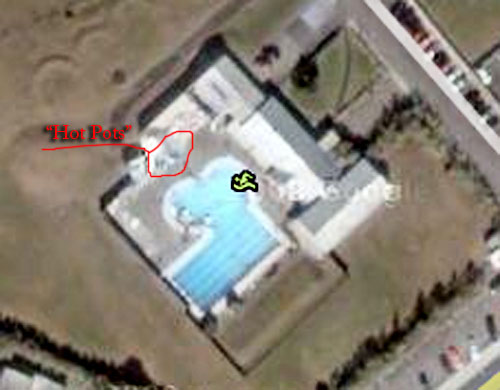
My destination was the open-air swimming pool, Vesturbæjarlaug, my personal favorite. Its proximity to the university insures that the pool’s population always consists of a mix of backgrounds: a fair amount of academics, actors, students, tourists and the usual neighborhood old-timers. Geezers like me (67+) get in free, without a doubt the best tourist deal in the whole country. When I walked in and went to the reception desk the clerk asked “Is this your first time here?” when she heard my accent. The first time this trip, yes, but it is just one of dozens—many fond hours I’ve spent here in the hot-pots, absorbing heat and culture in equal measures. I even do laps— and my partaking in actual physical exercise is a rarity. The clerk handed me my ticket and, after scanning it at the gate, I went down into the locker room. I stripped naked and headed for the showers to wash with soap (special emphasis on cleaning the germy bits) and then donned my Speedo to head out to the pool complex. Four double lanes in the 25 meter lap pool, a large shallow pool with slides for children, and six soaking pools of varying temperatures and sizes. The chlorine level in the water is mercifully low which allows one to stay for hours and any traces are dissipated by the fresh sub-arctic air (bring a water container to avoid dehydration!) If you need even more heat there is also a steam bath and a sauna.
The air temp was 4°c, a balmy 39°f but the sun had retreated behind leaden clouds, giving a somber look to the surroundings. There were only about a half-dozen other bathers in the pools; I had never seen them so empty. I did my laps then went into the medium hot pot, alone. The cricks and aches from my flight quickly were forgotten. Soaking in a tepid bath of memory, my thoughts wandered in a Proustian fashion. Well, the thoughts were not exactly tepid, especially when thinking about the time I spent in the hot-pot with Ufuoma, a vivacious woman from Nigeria (via the UK.) She had married an Icelander and had embraced the country fully—including several of the pool patrons that knew her. There was a morning exercise group that morning that we joined; she was in a lot better shape than I was. Her performance suggested that she was an experienced dancer. Our conversation suggested that she was highly educated. Her name meant ‘peace of mind’, and she lived up to that moniker. The conversation flowed between us and other patrons who joined us that morning like a burbling fell stream. Life was good that day.
My breakfast cafe, decorated and staff in costumes, was down the street from the pool:
My stomach interrupted my reverie. It was time for breakfast, so I left the pool, dressed and went out, walking down the street to a bakery/coffee shop nearby. The place was decorated in a Halloween theme and the workers were also costumed. After a hard-boiled egg and coffee (I just couldn’t face a pastry) I left, heading back to the bus station to retrieve my luggage. I walked past a middle school where some kids, also in costume, were outside for recess. They seemed to be having a ball: chattering, laughing, socially interacting—the noise they made was akin to the sound of birds. Life was good this day as well.
I walked past Háskolábíó, the big cinema on campus. A poster featured the film adaptation of one of my favorite books, Summer Light, Then Comes the Night (Sumarljós og svo kemer nóttin.) I had seen the lead actor, Ólafur Darri, in an electrifying version of Peer Gynt (Pétur Gautur) sixteen years prior how could it have been so long ago? My companion on that evening was a hung-over twenty-something blogger, not a lot of conversation from her, it was perhaps the strangest date of my life. I later learned that another of my Icelandic blog-connections knew Darri in college. He has since established himself as an international movie star, working with the likes of Ben Stiller and Will Ferrell. I thought of going to the film, but my only free night was tonight, I’d probably fall asleep by the break—Icelandic cinemas usually have an intermission. I left the campus and returned the way I had come, past Norrena Husið, and took the foot path through the swamp. As I was still comfortably warm from my swim, the trek back across Vatnsmýri was even more pleasant than it had been earlier.
The bus station was considerably quieter; a mid-day lull in the flights before the flight from from Europe began arriving. I retrieved my luggage and headed North, toward Tjörnin, the pond in the center of the city, and to my apartment nestled behind Fríkirkjan, the sheet-metal clad church. It would be past 1100 hours by the time I arrived, late enough to be able to drop off my things before check-in at 1500 hours.
SPECIAL NOTE: I’m in Reykjavík RIGHT NOW and will be giving updates on new performances including Nýtt eldhús eftir máli (tonight) and Ormstunga (tomorrow afternoon.)
Þjóðleikhúsið (National Theatre)
Over the last two decades a recurring topic of FITK has been Icelandic Theatre. Is it ironically appropriate in that the National Theatre building is the same age as me?
Borgarleihusið (City Theatre)
Like many aspects of Icelandic Culture, the dramatic arts have had an outsized influence in the world. Not the stage productions themselves (although the 2006 production of Pétur Gautur did play in London) but through Icelandic and world cinema and television productions. Notable actors (Ólafur Darri and Ingvar Eggert Sigurðsson, Anita Briem) and stage director Baltazar Kormákur have been part of big-budget films. Film composers Jóhann Jóhannsson and Hildur Guðnadóttir (who both started out in Icelandic theatre) have won numerous awards including: Golden Globes, Baftras, Emmys and even an Oscar. The first woman elected president in the world, Vigdís Finnbogadóttir, was the director of the city theatre when she was elected.
I’ll list the productions I have seen in chronological order.
Þetta er allt að koma by Hallgrímur Helgason, d. Baltazar Kormákur, 2004, Þjóðleikhúsið, Main stage:
My Icelandic theatre crawling started with a bang with this wild satire of a talent-challenged performer who always believes that “Things are going great” as her life falls apart in various picturesque ways. The most inventive set I’ve ever seen in a stage play, much of it is set in a huge furry box with a multi-section floor continuously sliding back and forth. I did manage to speak with the playwright (via Zoom) twenty years later. Alas, there were no new plays from Hallgrímur on the horizon. The next production I saw was also directed by Baltazar and was, in some ways, even wilder.
Pétur Gautur (Peer Gynt) by Henrik Ibsen, 2004, Þjóðleikhúsið, Black Box stage:
One of Ibsen’s most intense plays, and it was doubly so in the intimate confines of the small ‘black box’ theatre on Lindargata. My companion and I were almost within touching distance of the actors! The fish cleaning scene (with real fish) was memorable, and they eliminated the ‘second wall’ when the fire escape double door in the back of the stage was opened and the action went outdoors - with people on the street walking by in the background! The play ended with the stage floor covered in blood, money, and ashes as the lights went out.
Frida, vida la vida… written, directed and starring Brynhildur Guðónsdóttir, 2009, Þjóðleikhúsið, Main stage:
This was a very stylized production, with Frida Kahlo’s paintings becoming a part of the set. Figures from them, most notably Óxlotl, her dog (and also the Aztec dog of the underworld), and La Catrina, the Mexican goddess of death, came alive on stage. Frida’s life, including her disfiguring accident and her stormy relationship with Diego Rivera, was told in a grim, nightmarish fashion that became frightening at times. Ólafur Darri Ólafsson was Rivera with a commensurate stature appropriately larger than life. Frida’s politics were also covered, even Leon Trotsky made a memorable appearance. That a regional Icelandic theatre would produce an original play about Frida shows what an influence her art and life has had worldwide. The Selma Hayek movie version was visually stronger, as would be expected from a Hollywood movie, but this production brought out the internal struggles of Frida in a more compelling way. The cognitive dissonance in this production was pretty high, which added to the play’s surreal quality.
Jónsmessunótt, by Hávar Sigurjónsson, 2012, Þjóðleikhúsið, Black box stage:
Kristbjörg Kjeld and Arnar Jónsson are the parents of an unruly clan meeting for a reunion on midsummer’s day. The father, who has numerous affairs over the years, is deluded in thinking that his family respects him but in reality they all know he is a philandering fraud. The set featured clever intersecting boardwalks used in numerous ways:
As the audience filed in the actors mimed as if they were a continuous loop in a DVD menu.
Rautt (Red), by John Logan, Borgarleihusið 2012, small stage:
THE Icelandic drama reviewer Silja Aðalsteinsdóttir personally recommended this play to me. Although the play was quite wordy, the context (late fifties New York art scene) and numerous instances of name-dropping in the script helped me follow the gist of the story. Mark Rothko (Jóhann Sigurðarson) and his fictional assistant (Hilmar Gudjonsson) have heated conversations about the meaning of modern art vs. pop culture:
The play’s major conceit is the real-time creation of Rothko’s art on 2x2 meter canvases. As Silja had mentioned to me earlier, Jóhann was exceptional as Rothko.
Heimkoman by Harold Pinter, 2015, Þjóðleikhúsið, Main stage:
The Homecoming is a strange two-act play which explores the dynamics of sexual power in an English family. Teddy, the eldest son, brings his “wife” Ruth home from America to the seedy house where his father, an uncle, and two other brothers live. In the version I saw, in preview, the stage had morphed into a service garage complete with operating plumbing. This sleazy psychodrama unfolded in this hyper-realistic yet surreal set. I could understand few of the words, but the emotional language of the actors was quite clear, as was the full male nudity added to the mix. In a short conversation with the woman sitting next to me (who goes to ALL the plays), I mentioned some of the more memorable plays I had seen there and her appraisals more or less matched mine. In this play, she was put off by Pinter’s 1960s sensibilities.
The Rocky Horror Show By Richard O’Brien, Borgarleihusið 2018, Main stage (lobby shown below):
This was a blockbuster hit in Iceland, with its first run selling out almost instantly. Iceland music legend Páll Óskar reprised his role as Frank-N-Furter which he had performed as a college student twenty-eight year earlier. A true extravaganza, with an intricate set design and first-rate singing actors in all the major roles. My companion and I had never seen the play (nor the film) and were blown away by the excess of it all. Special note must be made of Minnesota’s own Surfin’ Bird by the Trashmen being played during intermission—twice! Rather than have me blather on about the production anymore, here is a video of the Páll’s opening number, you can judge for yourself:
Vertu Ulfur (Be a Wolf) directed by Unni Ösp Stefánsdóttir, 2022, Þjóðleikhúsið, Main stage:
I can’t even begin to explain it, much less justify it.
The one-man stage play is based on Héðin Unnsteinsson's autobiographical narrative of the same name. It was described as a crazy journey through the “… dangerous places of the mind into a world of anarchy and despair and back again, the struggle of a man who manages to break out of the vicious cycle and manages to turn his most terrifying experience into the strength needed to change.”
This production really pushed me out of my comfort zone with its 100+ minutes of Björn Thors’ nearly nonstop monologues in Icelandic, imaginative stagecraft and his masterful emoting. I was enthralled throughout.
Why would anyone go to see a play in a foreign country, performed in an incomprehensible language? I’ve done stranger things, but not many. This production had been a rousing success, with over 100 performances seen by tens of thousands of people, including many middle-school students who were there in abundance that night:
Between trigger warnings and censorship, I can’t see that a performance as intense as this one would be allowed to have an audience of older children and young teens in the U.S.A.
The play opened with a closed curtain. A man in a suit (actor Björn Thors) stepped out in front of it with a pocket full of sand. He used the sand and a piece of chalk to draw a circular diagram of his family and its history. Out of this simple introduction came the story of his struggle with manic-depression, two hours of intense acting that enthralled me with its vivid portrayal of a man struggling with his inner demons. His body language became a sublime dance, choreography of the human spirit. The stagecraft was just as brilliant—the minimal sets were transformed again and again with its archetypal imagery: A rain shower! A forty-foot-long duvet! A vanishing road to nowhere! Evocative lighting made it visual magic.
An aside: A typical tourist, unless they happened to walk into the theatre’s box office out of curiosity about the theatre’s imposing facade, would be unaware of the miracles this venue performs on a regular basis. And if that wasn’t enough culture for one town, the city boasts of another live theatre complex of equal stature, plus several smaller companies.
Before this play started I was sitting on a bench in the outer lobby when woman came in and sat down next to me. We started talking about Icelandic theatre, she was a regular and I mentioned Hallgrímur Helgason’s Þetta er allt að koma. She had known Hallgrímur since he was three years old! She also mentioned what a great man he was—the second time I heard someone say that about him that day!
When the woman for whom my bench-mate was waiting came in she saw us sitting side by side she said to us: “Ah! Brúðkaupsbekkurinn!”
Here is the play, in its entirety, with an additional prologue:
Sjö ævintýri um skömm (Seven Fairy Tales of Shame) a play by Tyrfing Tyrfingsson, 2022, Þjóðleikhúsið, Main stage:
One recurring aim of my trips to Reykjavík is to experience experimental and off-beat Icelandic Theatre.
This production hit the target in the bulls-eye.
This play had been expanded from an earlier one-act which had been a hit in a festival setting.
Several of Iceland’s most celebrated stage and screen actors were in it, including the lead Ilmur Kristjánsdóttir (seen in the TV series Trapped!) as Ölga, Ólafía Hrönn Jónsdóttir (White Night Wedding) as Ölga’s mother Amma, the venerable Kristbjörg Kjeld as her grandmother Fanney, and Hilmir Snær (101 Reykjavík) playing against his usual leading-man-type, as an alcoholic psychiatrist who takes on a troubled client: Öğla.
The psychiatrist abhors cognitive behavioral therapy, and believes that the cure for Ögla's distress lies in finding its roots—which is shame. We follow the two of them throughout the play as she tells the doctor about seven adventures that are crucial to her dilemma, and were caused by the people who were closest to her.
The key dynamic of the work is the uneasy relationships between Ölga and her grandmother and her mother—it shows us how ‘wounds’ are inherited between generations. Playwright Tyrfing used a lot of his childhood memories for the set pieces with the grandmother. Ólafína and Kristbjörg tear into their roles with gusto, it was really a special pairing:
In Ilmar’s performance as Ögla she draws the audience in, as her character falls apart as the play progresses. She is not easy to love—on edge and confrontational, Olga is married to Hanna (Kristín Þora Haroldsdóttir), the two women have the most outrageous artificial insemination scene-gone-wrong I had ever seen:
A crucial scene of the play revolves around the relationship between Ögla and Hanna, about the paradox of the fantasy of love with love in everyday life.
Seven Fairy Tales of Shame celebrates the magic of the theater, queerness and everything that is strange, oblique and excessive in life. This was not your standard dinner theatre fare:
Sem Á Himni, 2022, Þjóðleikhúsið, Main stage:
This musical originally was a Swedish stage production and then a film. It is the story of a conductor who has a heart attack (at the podium!) and then returns to his home town to recover. There he helps out with a struggling choir and in the process everyone grows, learns, and is fulfilled. It was written as a crowd-pleaser with character stereotypes aplenty. The drama is supplied by themes of spousal abuse and small-town politics presented in almost in a check-list fashion:
Overall I found it to be well sung, but with stilted staging, especially compared to the two previous plays I had seen. I had heard from more than one person that the casting of the play was controversial in that one of the characters was a special needs man who was portrayed on stage by a ‘norm’, with no other actors even considered for the role. I could see both sides of the argument; his part was pivotal and needed an accomplished singer and actor to fill it or, conversely, they could have reached out for someone with that background. I imagine there was someone in the tight-knit Icelandic theatre community that should have been given a chance—otherwise there might not have been such a fuss. I had read in a review that the big production number (at the end of the first act) was so good that the remainder of the play suffered in comparison. If that was the play’s high point (and it was impressive) I didn’t want to see any more. I left at the intermission.
Look at the Music! 2023, Tjarnarbíó theatre:
I had never been in Tjarnarbíó before, it was an old cinema restored, seating about 250, a little gem of a venue:
A powerful set of choral music set to complement Sign Language, Look at the Music! was part of a year-long international project involving both hearing and deaf artists with poetry in Icelandic Sign Language (ITM).
The 45 minute show was excellent; the music complemented the signing perfectly. There was even a “sing-along/sign-along” at the end. And there were balloons (Yay!) Beforehand I hob-nobbed with the cultural elite over a bottle of Apelsin, a uniquely Icelandic orangey beverage that I have every time I’m here. It’s awful (shown on the table in the foreground) but I’m weak—I need it.
Ibuð 10B, written by Olaf Olafsson and directed by Baltazar Kormákur, 2025, Þjóðleikhúsið, Main Stage. The set was static, with minimal changes in the background and lighting:
This was a talky play, set in a modern apartment (Ibuð) where a group of residents gathered to forge a covenant for potential incoming refugees who might be living in their building. What started out as an exchange of pleasantries (and wine tasting) turns sour as everyone gets more drunk. When a mixed-race resident comes in with his spouse unacknowledged feelings of bigotry simmer and boil over. I’ll let an Icelandic reviewer give a deeper explanation:
There are big issues here and some are very hot, and Ólafur Jóhann skillfully weaves them together so that from the first quiet minutes, the tension in the living room grows more and more, the characters reveal themselves better and better until we have a clear understanding of how they are put together, where they come from and where they are going. The conversations are fast-paced and often very funny, you have to keep your eyes peeled when it is at its most intense. This is a dense and substantial text, brilliantly thought out and written. ~ Silja Aðalsteinsdóttir, TMM Forlagið
The near-capacity audience gave the cast multiple ovations at the end.
On an unrelated note: I did snap this pic of the old retired lighting board at rest in the upper lobby of the theatre:
Kjallarakabarett, Kjallarinn, 2022, 2025:
What better place to celebrate Halloween than in the ‘cellar’ of the National Theatre. A most welcoming and congenial atmosphere of Pulchritude and Perversion greeted this timid visitor who otherwise wouldn't dream of attending such a spectacle. The MC greeted us with the invitation/admonition “You can take photographs but no flash, please. We’ll do the flashing!” A series of bawdy skits followed and were interspersed with singing and some very titillating amusing stripteases.
40.000 Fet, Tjarnarbíó 2025:
It is always nice to see so many young people at the theatre:
In the lobby a man greeted me thinking I was someone he knew from 30 years ago. I was sorry to have disappointed him, he seemed like a nice guy.
The play was the stylized comedy about two female flight attendants and their flight crew. It was quite bawdy at times, with a serious ending addressing mortality. A nice twist was that when you entered the theatre space the actors portraying the flight attendants greeted you in character, as if you were the passengers:
Dead Air by Álfrún Rose (in English): Tjarnarbíó, 2025
Since Alfie’s dad died, he’s visited everyone’s dreams but hers. Rude. Desperate to talk to him, she uses AiR, an AI chatbot for the dead. A heartfelt, funny, and glitchy deep dive into grief, ghosts, and digital obsession.~ from the Airwaves guide
A good premise, somewhat defeated by an unintelligible voice-shifting device that Álfrún used when she was ‘streaming’ her dead father.
The hour+ performance became a litany of dysfunctional family tropes, even more disturbing because I suspect they were all true. I find it ironic that the only real dud I saw in 21 years of Icelandic theatre was in English!
Performance images by the respective theatre groups.
Reykjavík, Harbour with Sculpture and Imagine Peace Tower
I'm back on the rock. I've got a few days to settle in before the madness begins, I did some walking about, went swimming, and ate at a wonderful little restaurant recommended by Maria's Cat (see comments.) The Plokkfiskur með rúgbrauði was to die for.
Evidently this was Bobby Fischer's favorite place to eat. I may have to go back for the Hrár Hvalur Sasimi að japönskum sið.
And last, but not least:
Don't knock it if you haven't tried it.
More to come all week long...
Tjörnin
The weather keeps getting better, in the upper 40's today with little wind. I went out biking, and for some reason it seemed especially tiring- until I looked at my brake and saw that one of the springs that holds the caliper open had slipped- I was pedaling with the brake on. It was somewhat easier after I fixed that! Along the harbour was an exhibit of past and present scenes of the waterfront area, including this locomotive, the first and only train there ever has been in Iceland:
And, of course, there is the Vesturbæjarlaug pool:
I haven't had any deep conversations in the "hot pots" this trip as yet, but there have been moments, like the one Sunday with a mother and father and their ten year-old daughter. The daughter was resting her head on her father's massive chest, talking to him quietly and sweetly. She then started to croon a plaintive childrens song- a very touching and tender scene. Monday I was in a pot with three older people when some young men from from the U.S. came in and started taking computer repair. Talk about a mood killer! They left soon enough; the ensuing quiet was most welcome. Today, (Tuesday) I was in the same pot. The sun was shining so you could bask in it while the hot water swirled all about you. Then a trio of bikini-clad teen-age girls came in. From the sound of their conversation I surmised that they were Swedish. One had a waterproof camera (normally forbidden in the pool- but who's going object to some girls snapping pictures of each other?) and I used that camera to take a picture of all three them together. The sounds of their voices were like singing as well.
Grace is real.
The evening found me back at 3 Frakkur, this time for Hvalkjöts piparsteik með piparsósu. I even managed to pronounce it well enough so that the waitperson could understand me.
This dish was a bit rich for my tastes, but still very good.
After dinner I walked the streets a bit. The Airwaves crowd is starting to filter in, but nothing is really going on yet. There is a "Rock 'n Bacon" breakfast show at 10:00 tomorrow morning with the Ultra Mega Technobandið Stefán - a wild group of young men (don't let their picture fool you.) Sounds delicious.
Guð Blessi Ísland
Another fine, albeit breezy day. Picked up my Airwaves wristbands, my bike, and stopped in to Þjóðleikhúsið for my Saturday night theatre ticket:
I wouldn't dare miss a production with my favorite, usually half-naked, Icelandic Actor, Ólafur Darri Ólafsson:
My next stop was a riotously chaotic bookstore where I had a delightful chat with Sveitakall, seen here in all his glory:
We got to talking about a certain Icelandic author and we checked the shelves, but there wasn't anything I was really interested in. "Why don't you come with me, we'll go downstairs see if there is anything there..." We went through a back door and down an elevator, then down a hall with several identical doors. He opened the last door and behind it there was a room packed with shelves of "the good stuff." First editions, mostly in Icelandic, and much more. Still, the books on the shelves were not quite what I wanted. "I've got this box," he said, "there may be something in it..."
OMG!!!
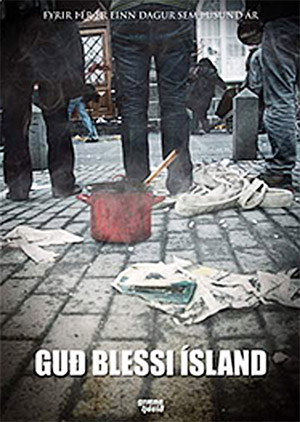
After I regained my breath, we negotiated a fair price and I left the store with my treasures. Another swim 'n soak at the neighborhood pool, then a little web cam appearance for all my fans, a few minutes at Friða Frænka and some supper. I dined in early because I had seen a poster at the Háskóla Bíó for a movie I wanted to see and I'd read about:
It is a documentary about the Kreppa and last winter's protests and also about the lives of three of the people involved: a policeman, a trucker, and a witch. Not being able to understand Icelandic, I watched the movie at a certain distance, but the humanity of those involved was clear enough. The protest scenes were very intense, reminiscent of Haskell Wexler's Medium Cool. The evocative musical soundtrack was composed by Hilmar Örn Hilmarsson
Of course, this story isn't over yet, and may not be for a long time. As an outsider, I really can't comment too much on the film. I'll leave you with a link to an Icelandic blogger's reaction: Google translate is pretty sketchy in Icelandic, but the second paragraph is clear enough:
I wept
I wept when I watched about the police against protestors
I wept when Stulli and his wife had (a) Móment when he was going to Norway
I wept when Eva Hawke was to pack down (closing her shop)
Having met Eva once, and, having followed her blog, I almost wept myself.


 My breakfast cafe, decorated and staff in costumes, was down the street from the pool: