Monday, May 16, 2011

Interview

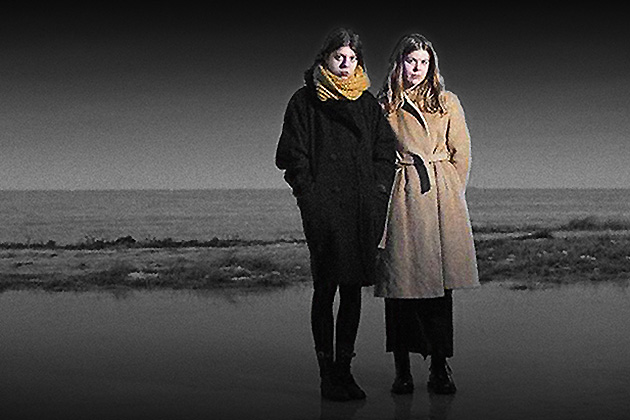
In 2009 a group of four young Icelandic women began performing what they called “Friendly Concerts” in Reykjavík under the name Pascal Pinon. In October they appeared at the Iceland Airwaves Festival where I was most impressed by their performance. Although I didn’t know it at the time, they had already recorded an entire concept album which they later released independently; it was picked up by Morr Music in Berlin and re-released worldwide. Last October my blog-pal DJ Cousin Mary (from radio station KFJC in Los Altos Hills, California) went to the 2010 Iceland Airwaves where she saw them perform. Recently Mary did a three-hour special on Icelandic music and during the show interviewed Jófríður Ákadóttir, the primary songwriter for the group. A transcript of that interview follows:

MARY MACDONALD: I’m talking to Jófríður from Pascal Pinon… Now tell us about your band, it’s you and your sister right?

JÓFRÍÐUR ÁKADÓTTIR: Yes, it’s called Pascal Pinon and we mostly just play indie-acoustic pop music. It’s always written in my bedroom so I think you can sort of hear it, because it has a lot of shyness in it because we’re both very shy… when I’m writing I always do it in my bedroom and I always play very low so I hope that nobody can hear…

MARY: (laughs)

JÓFRÍÐUR: … I think that maybe I can hear that in the music because it always colors it, how it comes into the world, I think, and that’s sort of where my music is born.

MARY: Is there anyone other than your sister and you in the band?

JÓFRÍÐUR: We always play four girls when we play concerts, but we just get session players for the shows because we used to be four in the band, two other girls with us, but then after a year of working together they decided to quit because it was getting a bit hard, and me and Ásthildur were doing everything, mostly, so we all just agreed, they just stopped being in the band… sometimes playing with us, sometimes doing other things… it actually works out a lot better this way.

MARY: You began playing when you were very young, isn’t that true? How old were you when you started?

JÓFRÍÐUR: Well, this band we started when we were fourteen, and today we are sixteen, almost seventeen.

MARY: Oh, I see, so you’re still in school…

JÓFRÍÐUR: Yes, and it’s actually Easter break now and we're using the Easter break to make the second album.

MARY: Oh, how exciting…

JÓFRÍÐUR: It’s very exciting!

MARY: You and your sister are twins, isn’t that true?

JÓFRÍÐUR: Yes, we’re twins.

MARY: You say you’re shy, yet you get up and perform… Do you enjoy performing?

JÓFRÍÐUR: Yeah, I think it‘s really, really fun to perform. The first concert—it was terrifying! My feet were shaking and we couldn’t stand because I was so nervous and we had to sit down and my feet were both shaking really, really fast. It was awful because I was so nervous and afraid and shy—and that was the first concert. And then you just sort of learn that people aren’t really that mean, they always kind of seemed to be really positive, and after playing many, many concerts, and people seem to be very happy, it’s not that frightening anymore, it really gets kind of fun and you start to enjoy it a lot because its really really fun to play your own songs in front of an audience.

MARY: There's a sweetness and a warmth to your music, at least that’s why I enjoy your music, so I would think that would appeal to a lot of people.

JÓFRÍÐUR: I think our music, because its been called very cute, and I think that it is very cute, and it’s very warm and it’s very happy, in a way. It’s kind of if you would imagine something very soft. I have nothing against being soft, but I also think that it cannot be too soft, and it cannot be too cute and it cannot be too much of anything. I think it’s very important that all of the things that you write, all this cuteness, and the shyness, that it doesn’t get too much of anything.

MARY: Now, have you written new songs for your new CD that you’re mixing?

JÓFRÍÐUR: Yes we have fifteen songs that we’re going to choose from, and we have recorded fourteen.

MARY: The songs that you’ve composed, have they changed over time, from the first songs?

JÓFRÍÐUR: Well, um, we’re experimenting a bit, on the second album, with shakers and a bit of drums, because if you heard the whole album you notice that there are no drums, or shaker, or anything at all, on the whole entire album, we’re experimenting a bit with that. I think that maybe the compositions, in general, haven’t changed that much. I mostly noticed that the sound is improving and we’re exploring a bit of kind of different sound world on the second album. There’s one song that is very different from all the other songs. I think the most, the biggest difference with this album and the other is that the first album is a really, really whole unit. It’s a really whole album—it has a very similar sound to all the songs and it kind of forms a very special wholeness—if that makes sense (laughs) because it was recorded in five days and we had been practicing these songs for a long time and we knew exactly what we were going to record and we just did it. This album is recorded in three different places. It was recorded first of all in the summer, the summer of 2010, when we had a recording session, and again, when we had the next break from school—it was the Christmas break—and then we did some recordings now, in the Easter break. So we’re using all our breaks to record. And the songs we’ve been adding, more and more songs to the album with time. There’s not much similarity in all the songs as it was in the first album, so the sound is kind of different from each song. But in a way, I think that’s also interesting, to make an album that has a very mixed diversity, or at least more diversity than the first album.

MARY: What kind of musical education do you and your sister have?

JÓFRÍÐUR: We have both studied classical music, and we are studying now. Ásthildur is a really good piano player, a classical piano player, and I play the clarinet, I have been playing the clarinet since I was eight years old and we are very much busy at the music school all the time, except for the breaks, then when we have time to be in a band. I also play piano too, but very little. Ásthildur plays the bassoon.

MARY: Are you attending a music school right now?

JÓFRÍÐUR: Yes we are, we are in the Music School of Reykjavík.

MARY: Is that at the high school level?

JÓFRÍÐUR: Yeah.

MARY: When will you be going to university?

JÓFRÍÐUR: In three years from now, it's a different system…

MARY: Well, that’s a long time.

JÓFRÍÐUR: We’re also very young… so it kind of adds up.

MARY: You’ll have plenty of time to do what you're doing right now.

JÓFRÍÐUR: Um-hmm. I think we just don’t really realize how young we are. We have all this time to do so many things. Sometimes we kind of get lost in always comparing ourselves to some people who are older and have been doing this thing for a lot longer time. I thinks that’s one sort of mistake that you make and you have to be very careful sometimes because we are very young and we have to sometimes be careful not to compare ourselves too much.

MARY: Well, not to compare you to other people, but to compare Iceland to other countries, it seems to me that there are a lot of musicians in Iceland, given the small population, do you agree?

JÓFRÍÐUR: I agree, and I think that there are strangely many good musicians here. I really like this whole indie community that had been formed here, and this whole music scene. I really like it and there are a lot of people in it, and it’s really lucky to be a part of it.

MARY: I agree. Do think there's anything particular about Iceland that has made this happen?

JÓFRÍÐUR: No, I really cannot tell because it’s so hard to spot something that you’re a part of. It’s really hard to look at it as an outsider. I don’t really know why it has become the way it is. I really always think it is a huge misunderstanding that it has anything to do with nature. I think that’s just something that Björk created. Sometimes, when we do interviews, and there are people from other countries, they ask: “Has the nature affected your music in any way?” and we always say “No!” (laughs) because I cannot see how nature can possibly be connected with music, at least not the type of music that we make. But I understand maybe Björk always talks about how she's hiking in the mountains and looking at the wilderness… I think maybe this somehow works for her, but I don’t think it has anything to do with the rest of the Icelandic music scene. I haven’t really thought about this very much. I like the way it is and I haven’t been wondering why everything is the way it is. I’m kind of just thankful for it.

MARY: Are there other Icelandic Musicians that you particularly like, or that you feel influenced you?

JÓFRÍÐUR: Yes. I really like Sóley, who is also with Morr Music, and I also really like Sin Fang, who is also with Morr Music and Sóley is playing with him, and I also like Nolo a lot. They’re not very famous, but they are really, really good.

MARY: OK, I’ll have to look for them.

JÓFRÍÐUR: Yes. I would look for Nolo on gogoyoko- have you been visiting gogoyoko.com?

MARY: No, that sounds like a good idea.

JÓFRÍÐUR: Yeah, that’s a really good site… it’s a music webshop…

MARY: What about other musicians that have influenced you, in the whole world? Is there anyone in particular?

JÓFRÍÐUR: Yes, we were quite obviously interested in Tegan and Sara when we were beginning the band, when I was 14 the only thing I could listen to was Tegan and Sara and I think that without realizing it I was becoming very influenced by their music in my own compositions, maybe I Wrote a Song, which was one of the first songs we played together. Tegan and Sara, they’re Canadian twins—but they’re identical twins. Maybe it’s different.

MARY: Could be. Did you study composition or did you just start writing songs?

JÓFRÍÐUR: No, I’ve been doing this for a long time, it started when I first got my guitar… it was a Christmas present from my parents when I was eleven. I got an electric guitar and I got a book to learn how to play the guitar. I learned the chords and one of the first things I did was to write very, very awful songs on it and they were all very, very bad. Then later I started writing better songs (laughs). Then we got the idea of maybe starting a band and I was the only who could stand up and say “I have written a song—maybe we can play it?”

MARY: Is there anything else you’d like to tell our listeners about your music or Iceland?

JÓFRÍÐUR: I think its really really fun to be in concert in Iceland, I think it’s really a special atmosphere in concerts in Iceland. I think because everybody seems to know each other… all the musicians are watching the other musicians, this whole scene is really connected. It’s sort of like it is a family.

MARY: I could sense that, even being an outsider. I could definitely sense that. Thank you so much for talking with me and with my listeners, and I wish you all the best of luck.

JÓFRÍÐUR: Thank you.


And thanks again to DJ Cousin Mary and radio station KFJC for supporting Icelandic music and airing this interview.

Photo: Lilja Birgisdóttir


Interview Copyright KFJC, 2011. USED BY PERMISSION

By Professor Batty


Comments: 3 


Monday, May 17, 2021

Mondays in Iceland - #115

This is a re-post from FITK, May 16, 2011

Interview

In 2009 a group of four young Icelandic women began performing what they called “Friendly Concerts” in Reykjavík under the name Pascal Pinon. In October they appeared at the Iceland Airwaves Festival where I was most impressed by their performance. Although I didn’t know it at the time, they had already recorded an entire concept album which they later released independently; it was picked up by Morr Music in Berlin and re-released worldwide. Last October my blog-pal DJ Cousin Mary (from radio station KFJC in Los Altos Hills, California) went to the 2010 Iceland Airwaves where she saw them perform. Recently Mary did a three-hour special on Icelandic music and during the show interviewed Jófríður Ákadóttir, the primary songwriter for the group. A transcript of that interview follows:

MARY MACDONALD: I’m talking to Jófríður from Pascal Pinon… Now tell us about your band, it’s you and your sister right?

JÓFRÍÐUR ÁKADÓTTIR: Yes, it’s called Pascal Pinon and we mostly just play indie-acoustic pop music. It’s always written in my bedroom so I think you can sort of hear it, because it has a lot of shyness in it because we’re both very shy… when I’m writing I always do it in my bedroom and I always play very low so I hope that nobody can hear…

MARY: (laughs)

JÓFRÍÐUR: … I think that maybe I can hear that in the music because it always colors it, how it comes into the world, I think, and that’s sort of where my music is born.

MARY: Is there anyone other than your sister and you in the band?

JÓFRÍÐUR: We always play four girls when we play concerts, but we just get session players for the shows because we used to be four in the band, two other girls with us, but then after a year of working together they decided to quit because it was getting a bit hard, and me and Ásthildur were doing everything, mostly, so we all just agreed, they just stopped being in the band… sometimes playing with us, sometimes doing other things… it actually works out a lot better this way.

MARY: You began playing when you were very young, isn’t that true? How old were you when you started?

JÓFRÍÐUR: Well, this band we started when we were fourteen, and today we are sixteen, almost seventeen.

MARY: Oh, I see, so you’re still in school…

JÓFRÍÐUR: Yes, and it’s actually Easter break now and we’re using the Easter break to make the second album.

MARY: Oh, how exciting…

JÓFRÍÐUR: It’s very exciting!

MARY: You and your sister are twins, isn’t that true?

JÓFRÍÐUR: Yes, we’re twins.

MARY: You say you’re shy, yet you get up and perform… Do you enjoy performing?

JÓFRÍÐUR: Yeah, I think it‘s really, really fun to perform. The first concert—it was terrifying! My feet were shaking and we couldn’t stand because I was so nervous and we had to sit down and my feet were both shaking really, really fast. It was awful because I was so nervous and afraid and shy—and that was the first concert. And then you just sort of learn that people aren’t really that mean, they always kind of seemed to be really positive, and after playing many, many concerts, and people seem to be very happy, it’s not that frightening anymore, it really gets kind of fun and you start to enjoy it a lot because its really really fun to play your own songs in front of an audience.

MARY: There's a sweetness and a warmth to your music, at least that’s why I enjoy your music, so I would think that would appeal to a lot of people.

JÓFRÍÐUR: I think our music, because its been called very cute, and I think that it is very cute, and it’s very warm and it’s very happy, in a way. It’s kind of if you would imagine something very soft. I have nothing against being soft, but I also think that it cannot be too soft, and it cannot be too cute and it cannot be too much of anything. I think it’s very important that all of the things that you write, all this cuteness, and the shyness, that it doesn’t get too much of anything.

MARY: Now, have you written new songs for your new CD that you’re mixing?

JÓFRÍÐUR: Yes we have fifteen songs that we’re going to choose from, and we have recorded fourteen.

MARY: The songs that you’ve composed, have they changed over time, from the first songs?

JÓFRÍÐUR: Well, um, we’re experimenting a bit, on the second album, with shakers and a bit of drums, because if you heard the whole album you notice that there are no drums, or shaker, or anything at all, on the whole entire album, we’re experimenting a bit with that. I think that maybe the compositions, in general, haven’t changed that much. I mostly noticed that the sound is improving and we’re exploring a bit of kind of different sound world on the second album. There’s one song that is very different from all the other songs. I think the most, the biggest difference with this album and the other is that the first album is a really, really whole unit. It’s a really whole album—it has a very similar sound to all the songs and it kind of forms a very special wholeness—if that makes sense (laughs) because it was recorded in five days and we had been practicing these songs for a long time and we knew exactly what we were going to record and we just did it. This album is recorded in three different places. It was recorded first of all in the summer, the summer of 2010, when we had a recording session, and again, when we had the next break from school—it was the Christmas break—and then we did some recordings now, in the Easter break. So we’re using all our breaks to record. And the songs we’ve been adding, more and more songs to the album with time. There’s not much similarity in all the songs as it was in the first album, so the sound is kind of different from each song. But in a way, I think that’s also interesting, to make an album that has a very mixed diversity, or at least more diversity than the first album.

MARY: What kind of musical education do you and your sister have?

JÓFRÍÐUR: We have both studied classical music, and we are studying now. Ásthildur is a really good piano player, a classical piano player, and I play the clarinet, I have been playing the clarinet since I was eight years old and we are very much busy at the music school all the time, except for the breaks, then when we have time to be in a band. I also play piano too, but very little. Ásthildur plays the bassoon.

MARY: Are you attending a music school right now?

JÓFRÍÐUR: Yes we are, we are in the Music School of Reykjavík.

MARY: Is that at the high school level?

JÓFRÍÐUR: Yeah.

MARY: When will you be going to university?

JÓFRÍÐUR: In three years from now, it's a different system…

MARY: Well, that’s a long time.

JÓFRÍÐUR: We’re also very young… so it kind of adds up.

MARY: You’ll have plenty of time to do what you're doing right now.

JÓFRÍÐUR: Um-hmm. I think we just don’t really realize how young we are. We have all this time to do so many things. Sometimes we kind of get lost in always comparing ourselves to some people who are older and have been doing this thing for a lot longer time. I thinks that’s one sort of mistake that you make and you have to be very careful sometimes because we are very young and we have to sometimes be careful not to compare ourselves too much.

MARY: Well, not to compare you to other people, but to compare Iceland to other countries, it seems to me that there are a lot of musicians in Iceland, given the small population, do you agree?

JÓFRÍÐUR: I agree, and I think that there are strangely many good musicians here. I really like this whole indie community that had been formed here, and this whole music scene. I really like it and there are a lot of people in it, and it’s really lucky to be a part of it.

MARY: I agree. Do think there's anything particular about Iceland that has made this happen?

JÓFRÍÐUR: No, I really cannot tell because it’s so hard to spot something that you’re a part of. It’s really hard to look at it as an outsider. I don’t really know why it has become the way it is. I really always think it is a huge misunderstanding that it has anything to do with nature. I think that’s just something that Björk created. Sometimes, when we do interviews, and there are people from other countries, they ask: “Has the nature affected your music in any way?” and we always say “No!” (laughs) because I cannot see how nature can possibly be connected with music, at least not the type of music that we make. But I understand maybe Björk always talks about how she's hiking in the mountains and looking at the wilderness… I think maybe this somehow works for her, but I don’t think it has anything to do with the rest of the Icelandic music scene. I haven’t really thought about this very much. I like the way it is and I haven’t been wondering why everything is the way it is. I’m kind of just thankful for it.

MARY: Are there other Icelandic Musicians that you particularly like, or that you feel influenced you?

JÓFRÍÐUR: Yes. I really like Sóley, who is also with Morr Music, and I also really like Sin Fang, who is also with Morr Music and Sóley is playing with him, and I also like Nolo a lot. They’re not very famous, but they are really, really good.

MARY: OK, I’ll have to look for them.

JÓFRÍÐUR: Yes. I would look for Nolo on gogoyoko- have you been visiting gogoyoko.com?

MARY: No, that sounds like a good idea.

JÓFRÍÐUR: Yeah, that’s a really good site… it’s a music webshop…

MARY: What about other musicians that have influenced you, in the whole world? Is there anyone in particular?

JÓFRÍÐUR: Yes, we were quite obviously interested in Tegan and Sara when we were beginning the band, when I was 14 the only thing I could listen to was Tegan and Sara and I think that without realizing it I was becoming very influenced by their music in my own compositions, maybe I Wrote a Song, which was one of the first songs we played together. Tegan and Sara, they’re Canadian twins—but they’re identical twins. Maybe it’s different.

MARY: Could be. Did you study composition or did you just start writing songs?

JÓFRÍÐUR: No, I’ve been doing this for a long time, it started when I first got my guitar… it was a Christmas present from my parents when I was eleven. I got an electric guitar and I got a book to learn how to play the guitar. I learned the chords and one of the first things I did was to write very, very awful songs on it and they were all very, very bad. Then later I started writing better songs (laughs). Then we got the idea of maybe starting a band and I was the only who could stand up and say “I have written a song—maybe we can play it?”

MARY: Is there anything else you’d like to tell our listeners about your music or Iceland?

JÓFRÍÐUR: I think its really really fun to be in concert in Iceland, I think it’s really a special atmosphere in concerts in Iceland. I think because everybody seems to know each other… all the musicians are watching the other musicians, this whole scene is really connected. It’s sort of like it is a family.

MARY: I could sense that, even being an outsider. I could definitely sense that. Thank you so much for talking with me and with my listeners, and I wish you all the best of luck.

JÓFRÍÐUR: Thank you.


And thanks again to DJ Cousin Mary and radio station KFJC for supporting Icelandic music and airing this interview.

Photo: Lilja Birgisdóttir


Interview Copyright KFJC, 2011. USED BY PERMISSION

By Professor Batty


Comments: 2 


Monday, May 01, 2023

Forskot á heimavelli

Chapter 18 of Search For a Dancer, a serial memoir of one week in Iceland in 2022. Mondays on Flippism is the Key
“We may judge what is merely beautiful, but sublime art judges us or, better said, it challenges us to judge ourselves.” ~ David P. Goldman
JFDR and band, Gamla Bíó, Iceland Airwaves, 2022

Where to begin?

Along with Johann Johannson, Jófríður Ákadóttir (AKA JFDR) and her sister Ásthildur have been consistent presences in my Icelandic musical landscape. Alas, Johann is gone now but his claim to immortality is assured by his film scores. Jófríður is on her third (or fourth or fifth) career and, at the age of 28, shows no sign of slowing down. Her live performances had been curtailed during the Covid epidemic but she kept busy with film and television score work.

As she has grown from a shy teen into a mature performer some things have changed while other traits remain. The best description of her early years is found in an interview by KFJC's DJ Cousin Mary, done when she was sixteen:
“I think we just don’t really realize how young we are. We have all this time to do so many things. Sometimes we kind of get lost in always comparing ourselves to some people who are older and have been doing this thing for a lot longer time. I thinks that’s one sort of mistake that you make and you have to be very careful sometimes because we are very young and we have to sometimes be careful not to compare ourselves too much.”
Ásthildur and Jófríður Ákadóttir, Grand Rokk, October 16, 2009

The Ákadóttir twins produced three full-length albums (and several other tracks) as Pascal Pinon. Since then, Jófríður has collaborated with numerous other groups and performers and started a solo career as JFDR. Ásthildur pursued composition and further musical education. Seeing them on stage together again was a delight—their years apart were always not smooth sailing—but both looked to be in their element as they played and sang together:
Ásthildur and Jófríður, November 3, 2022

The best description of Jófríður’s current state of mind is to be found in this The Line of Best Fit interview. The arrangements featured backing tracks augmented by Ásthildur’s and Josh Wilkinson’s keyboards, a string section and, at times, Jófríður on guitar. Her steady finger-picking style has been a constant throughout her career. What has changed is a shift from melodically based guitar songs to programmed grooves:


What was also missing were the quirky fills and odd instrumentation of the Pascal Pinon songs. They were albums out of time, living in a separate reality where only twins can go. Jófríður’s new music is polished and pleasant, modern in every way. She commented that being on the Gamla Bíó stage was like a homecoming. A “home-field advantage?” I thought. The crowd was attentive and appreciative, especially so for such an ethereal performer, but Jófríður was really in her element when she strapped on her guitar:
As the final chords of her set faded away, I was struck with a feeling of melancholy: this might well be the final time I’m in the same room as these twins—“Pascal Pinon-the two-headed“—a most agreeable freak of nature. Jófríður’s music is sublime but seems to be heading in a direction that I’m not; Ásthildur’s music may be more to my taste, but so far there have only been hints as to where her art is going. The almost mystical bond they shared in their youth has been torn and rent in the way that all the trappings of youth are ultimately shredded by time.

Lift ourselves up from the ground
Let wings grow into our backs as if we are angels
In the cold air of heaven
We're flying to, we fall down

Throw ourselves into the deep sea
Let fish-tails grow onto our bodies
Swim like seals in the cold ocean and
Feel safe 'cause there we can't fall down

Lower ourselves down
From the sky, and onto the earth
Let arms grow out of our bodies
As if we're babies*

Overall the night was a triumph for Jófríður, a welcome homecoming where she could strut her stuff and face the world:
This post has been a bit of a mess—jumping back and forth between various stages of the sisters’ career, but it accurately reflects my thinking on them; their music is all jumbled up in my conciousness: I’m a fan, not a musicologist.

* Babies, by Jófríður Ákadóttir


Search for a Dancer Index…

By Professor Batty


Comments: 0 


Monday, December 26, 2016

Mondays in Iceland - #100

No subject could be more appropriate for the capstone of FITK’s Mondays in Iceland:

Jófríður Ákadóttir


Reykjavík Grapevine

Most great artists share these common traits: early promise, hard work, and continued growth. Jófríður Ákadóttir, with her twin sister Ásthildur, formed the Folk/Pop duo Pascal Pinon in 2009 (they were 14 years old!) A short set I caught at an Iceland Airwaves off-venue show in the Norræna Húsið that year showed the early promise of her talent: almost everyone in the room was stunned by the integrity of the songs composed by this unassuming teen. Jófríður and I communicated with each other on a few occasions back then; her level-headed approach to her career was already evident. Unfortunately, Ásthildur—who did most of the production and accompaniment on the Sundur CD—has recently been suffering from depression. Jófríður, in recent interviews, has intimated that as a group, Pascal Pinon is probably finished. While this news is disheartening, Jófríður is continuing her career: a new album by the electronica group Samaris was recently released,  she is also member of the “supergroup” Gangly. Now she has a solo act—JFDR—with an album coming out in 2017:


She was recently featured in an in-depth interview in The Reykjavík Grapevine, an article that is an excellent chronology of her career. It shows her hard work, both in performance and composition, as well as her relentless drive to explore the world. It’s as if she can’t get enough of life and all it has to offer. I have never been much of a musical prognosticator, but Jófríður’s continued growth in all of her musical projects has exceeded my wildest dreams. She’s all grown up now and has made the transition from child to adult on her own terms. What I’ve heard of her new material (in live tracks) features loopy arrangements layered with reverb, but I’ll reserve any judgement until the upcoming CD comes out. Time will tell if this old dog can warm up to her new kind of musical tricks.

Below is a live performance of JFDR doing some new material (not from the album) for Seattle radio station KEXP, interspersed with interviews from the great Kevin Cole:


And an interview on Portuguese TV:


NOTE: This is the final installment of “Monday in Iceland.” My thanks to all who viewed these posts and images over the last seven years. I hope you enjoyed the experience as much as I enjoyed the making of them.

By Professor Batty


Comments: 2 


Wednesday, March 13, 2024

Song in Blue

I stare into nothing, I yearn for the innocence I once thought I had
A lack of sense for a fear that grows as I get older
I've carried these thoughts and I've drowned them in work
And I've worn myself blue on the way down
Oh, mother, would you cry if you hear this song?
~Jófríður Ákadóttir
In light of her perfomance tonight at SXSW I thought I would ruminate a bit about my favorite Icelandic chanteuse: Jófríður Ákadóttir, aka JFDR.

I first saw her perform with Pascal Pinon fourteen(!) years ago where I was touched by their honest presentation and her melodic songs. Jófríður and I actually interacted a bit back then, exchanging CDs, emails, she vetted a KFJC an interview (she said my blog was “cool”). A year later I saw her perform with Samaris and sat in on their sound-check, an experience which gave me some insight on her compositional methods:


In 2018 I saw her perform at Airwaves, in support of Nini Julia Bang, in an absolutely stunning off-venue performance:
I was standing in the back of the auditorium as she burst in, side-swiping me with her gear—my brush with greatness! In 2022 she repeated the feat, pushing me aside on her way to perform at a fashion boutique (I was hiding amidst the clothes but she still managed to find me):
Last year we actually sat down together and she spoke with me. I tried not to be a jabbering fan-boy but it was hard under the circumstances: I was on a vintage boat; in the Reykjavík harbour; with my favorite Icelandic musician; on a beautiful fall day and… cocoa. Jó graciously accepted my thanks for all her music over the years, so… now I can die happy, I guess:
Her music, in recent years, has become sadder as her youthful exuberance has been tempered with the usual disappointments and struggles that come with age. She got a big dose of reality when Covid hit just as she was on the verge of an international tour promoting her newest album. It wasn’t a complete disaster—she was stranded in Australia with musician/electronic equipment designer Joshua Wilkinson, whom she then married! I saw them perform together at last year’s Iceland Airwaves; it was a stripped-down show, but Jófríður was in good spirits and was even pushing herself in new musical directions:
While I have struggled some with her more recent music—it isn’t exactly easy listening—she always has inventive arrangements and beautiful melodies. Of all the musical acts I’ve seen in Iceland, hers is the one I have engaged with the most over the last 25 years. What that says about me, I don’t know exactly, but I am grateful for her honesty, intelligence, as well as a clear musical vision.

So… Tonight Jófríður is playing in Austin, Texas for SXSW. She’s 28, and arguably at the peak of her musical powers. Is there a place for a melancholy Icelandic star in the disintegrating world of pop music? The last Icelandic act to hit it big* was Of Monsters and Men and that was over a dozen years ago, Sigur Rós broke over twenty years ago and Bjórk’s “debut” was over thirty! The world of music distribution has changed since then and the odds are against her (she does film and TV scoring too.)

The larger world has encroached on SXSW as well. SXSW is sponsored in part by the the U.S. Army which has had a role in the current situation in Israel and Palestine. Another Icelandic act, Gróa (with whom JFDR’s sister Marta performs), has already pulled out from the festival because of that issue, an issue that may become a family affair. Regardless of any fallout from this performance, it is just another hurdle for her to overcome in her fairy-tale career:
Lift ourselves up from the ground
Let wings grow into our backs
As if we′re angels in the cold air of heaven
We're flying to, We fall down
Throw ourselves into the deep sea
Let fish-tails grow onto our bodies
Swim like seals in the cold ocean and
Feel safe ′cause there we can't fall down
Lower ourselves down from the sky, and onto the earth
Let arms grow out of our bodies as if we're babies
~ Jófríður Ákadóttir
This may well be my final JFDR post on FITK.

Good-bye is too cruel a word, babe, so I’ll just say, “Fare thee well… ”


More JFDR posts on FITK

*Laufey was half-raised in the U.S.

By Professor Batty


Comments: 0 


Monday, September 05, 2016

Mondays in Iceland - #75

Pascal Pinon, Sundur and the circle…


Magnus Andersen

I’ve been listening to the latest Pascal Pinon album a lot. What follows is not exactly a commercial review; in light of the sensitive nature of this project that would be crass. This is more of a rumination—on the music of course, but also on my circular quest for a fuller understanding of life via Icelandic culture.

By the mid-80s, when I had pretty much hung up my musical “career”, I was trying to make the home and family thing work. One escape from my domestic duties that I did have was a subscription to Andy Warhol's Interview magazine, one of the few periodicals that retained a large format. The articles and photography were mostly about New York art and music scenes, but they also showcased up-and-comers from around the world. One of these blurbs featured the Icelandic band The Sugarcubes: Björk’s breakout vehicle. It was the beginning of a circle. I made a mental note of her and, in 2000, the Weaver and I did manage a short trip to Iceland. She was impressed but I was overwhelmed, especially with the omnipotence of Björk in the shops. So began a cultural odyssey. After quickly getting up to speed on Icelandic music and literature (and with the advent of blogs), I even began to make personal contacts with some of the natives. Now, five trips to Iceland later, I have come to the realization that I am approaching the end of the circle. Nothing ever stays the same, of course, and my contacts in Iceland have, like me, have moved on in their lives. The classic literature of Iceland remains great (and I adore serious Icelandic theater), its modern practitioners are gifted. Icelandic cinema remains very strong. The Icelandic music scene, however, seems to have reached some kind of peak around 2010. Although there are still some acts with international success (Sigur Rós, Of Monsters and Men), the most challenging new work is coming from Jóhann Jóhannsson, as a film music composer (Prisoners, The Theory of Everything, as well as the new Bladerunner).

All of this rambling is a preface to today’s subject: Sundur, the third album by Ásthildur and Jófríður Ákadóttir, twin sisters who call themselves Pascal Pinon. I first saw them in 2009 at Iceland Airwaves and I have always had an affection for the group. Their first release (Pascal Pinon, 2010), recorded when they were 14 years old, was a honest topography of the heart. Twosomeness, their second release (2013), brought the girls out of their bedroom and into the studio. It was, as to be expected, much more polished, while still retaining an intimate nature. Sundur goes far beyond either of these, presenting Jófríður’s lyrics "up-close-and-personal" accompanied by Ásthildur’s sure-handed production. The songs, as would be expected from the album’s title, are about love: lost, broken, or missed, with a bittersweet tinge. I could run this down track-by-track, but Jófríður has graciously already done so. Two of the stand-out cuts, Orange, and Ást, are available at the link. Ást was inspired by the writing of Halldór Laxness (another cultural circle), and is a powerful lament on love: “… the silent symphony created by stroking the strings of the heart… ”

Speaking of circles, Jófríður is featured in a recent Guardian article as being one of Björk's inspirations! Some reviewers have commented on the similarity of the two singers vocal styles. There is something to it but Jófríður is in full command of her gift; her melodies and phrasings are her own, the similarities in diction are shared by thousands of other Icelanders! She is also blessed with a twin sister who has grown musically as well. Ásthildur’s previous contributions were subtle but she is now an equal partner in this fascinating collaboration. Her assured and dynamic keyboard efforts are the equal of her sister’s vocalizations.  I would even put Sundur in the same class as Joni Mitchell’s Blue, not as mature, of course (after all, they still are only 22), yet it is even more intimate than Joni’s masterwork—if such a thing could be possible. As a jaded, card-carrying curmudgeon, it takes a lot to crack my frozen attitudes. Pascal Pinon, those wyrd sisters from the North Country, not only thawed my resistance, they positively melted me.

Highest recommendation.

By Professor Batty


Comments: 2 


Wednesday, November 11, 2015

Gangly


One group which received a lot of note in coverage of the recent Iceland Airwaves is Gangly. I like their music a lot. There is one video available which isn’t as raunchy as the title suggests:


Here's a mini-review of their Airwaves performance from the omnipotent Edward Hancox:
Gangly are a sneaky bunch, but now this electro producing trio have now been unmasked to be Sindri from Sing Fang, Jófríður from Samaris/Pascal Pinon and Úlfur from Oyama. How could they go wrong? Turns out, they can’t. This is clever, scintillating stuff. All three provide vocals, but with the draw here being Jófríður. Úlfur makes good use of a vocoder, whilst Sindri provides the samples. It’s gentle, but insistent. The highlight is a smooth ‘Someone Else’ (as I’ll call it here) which sounds just wonderful. I note members of other Icelandic bands in the audience, who nod appreciatively but must be slightly worried as this is a clear contender for act of the festival.

I'm unfamiliar with Úlfur but I've run into Sindri before.  As to Jófríður, well,  anyone who has followed this blog in the last six years knows what I think about her.


Image: atiredmachine

UPDATE: Jo has been hard at work on a variety of projects.

By Professor Batty


Comments: 1 


Tuesday, February 12, 2013

Do Not Underestimate Pascal Pinon


Image: Fréttablaðið/Stefán

Twosomeness: an album by Pascal Pinon

It’s been nearly 4 years since a group of 14 year-old Icelandic girls recorded the tracks which would become their first album, Pascal Pinon. Their second album was finally released in the United States last Tuesday. Despite internet teasers and download opportunities, I’m just enough of a Luddite to wait until I actually get a CD so that I may give it, in its entirety, my undivided attention. Jófríður and Ásthildur Ákadóttir, now 18, recorded this album last year under the aegis of Alex Somers who has worked with numerous performers, most notably Jónsi of Sigur Rós. I was a bit apprehensive about this, I wondered if the ethereal nature of Pascal Pinon’s music could survive the transition from the bedroom to the studio. I have often heard it said that it is the second album which really exposes the character of a musical group or performer.

I need not have worried. Twosomeness is a great album. Ekki vanmeta, the opening track, is a knockout.  All the songs are strong. The lyrics, in Icelandic, English and Swedish, are at times wistful and ambiguous, but never shallow or trite. The vocal and instrument arrangements are magnificent; inspiring and challenging by turns. Jófríður has always had a knack for writing arresting melodies, but this disc also shows Ásthildur’s keyboard prowess, particularly on the track Bloom, where the sounds of her harmonium and bassoon are as otherworldly as that of any synthesizer. Kertið, which was also on their first album, I found a bit over the top—the fussy production actually diminished the raw emotional impact of the original. There were a couple of other times when I would have liked Alex to dial down the reverb a bit but, for the most part, he lets the music shine through. This CD is available from Amazon and other on-line sources, and yes, it is also available on vinyl, bless their retro hearts.

Pascal Pinon is also noteworthy for its strong DYI ethic. They have created a very entertaining and informative, if somewhat jumbled,  web site where you can catch glimpses of the twins' other artistic interests, along with the occasional translation*. These sisters seem to have retained a healthy and refreshing attitude about the music business. Although they are still in school they have already performed in China, Japan and numerous places in Europe.

   Here are a few videos - some promotional, some from concerts. The last one features their younger sisters (WARNING: POSSIBLE CUTE OVERLOAD!):

In Japan,  Ekki vanmeta:


Playing Djöflasnaran on the Icelandic coast at 2 A.M.:


Sumarmál, from last year's Iceland Airwaves:


And, finally, Entertaining Japanese guests in their home with Somewhere:


I’ve loved the music of this group since I first heard it at Iceland Airwaves in 2009. On the basis of this effort, I’m looking forward to their next album. I will post again about this group, once I've had a chance to let this CD sink in.

Highest recommendation.

   *Ekki vanmeta - Do not underestimate

He put the cap on
and walked home
there is no lane
where he goes

all the energy that surrounds him
is a weapon in the dark
the bird leads him
back again

he lives closer than you think
don't underestimate the distance

rhythm takes him
and leads him home
He puts the cap on
and walks home
.

   ~Jófríður and Ásthildur Ákadóttir

By Professor Batty


Comments: 3 


Saturday, November 09, 2013

Samaris— Promise and Problems

I’ve been listening to the “new’ Samaris CD. It was released last summer on the One Little Indian label. It contains their first two EPs—all eight original tracks with the addition of four remixes. They’ve recently given stunning performances at Iceland Airwaves, and have several festival dates lined up for the new year. The group´s material comes from 18th century Icelandic poetry set to a minimal electronica background (created by Þórður Kári Steinþórsson) with vocal melodies by Jófríður Ákadóttir and layered with clarinet themes by Áslaug Rún Magnúsdóttir. I’ve been hearing bits and pieces of this all year, although lo-fi video clips don't do this music justice. I caught them last year at the now demolished Faktorý—a crazy gig in a sweltering room full of yakkers:


Needless to say, I was eager to give this CD a listen in the privacy of my pine-paneled garret. Their music is wonderful. The concept—old poetry sung in Icelandic with a programmer and a clarinetist—sounds like a recipe for disaster. I found the result surprisingly fresh and unaffected. The songs are carefully structured, just the right length and had enough musical surprises to delight both the casual and serious listener. Jófríður has a tremendous sense of melody; it was the first thing I noticed about her in her other group Pascal Pinon (at the 2009 Iceland Airwaves.) The group has been getting a lot of attention; their version of Góða Tungl will be featured in the upcoming Icelandic feature film XL.

Now for the bad: The remixes. Really, really bad. This kind of audio graffiti was lame years ago and its tedious execution here left me with a bad taste for the whole album. I assume the remixes were done to give the group exposure to club music market. Samaris, unlike Pascal Pinon, is managed by “outsiders” and evidently the group has no control of their product, excepting the basic tracks. Even the cover art was misguided. This is one CD I’ll definitely re-burn without the remixes. The members of Samaris are all students and have a limit to how much effort they can expend on their career; what they have produced here is great. It is unfortunate that this collection was marred by lesser talents. The group has been performing some of these remixes live, so I’ll assume they approve.

Jófríður has tremendous potential, recent photos from the Airwaves show at Harpa show her gaining stage presence. She’s a talent to watch, I hope her career doesn’t get sidetracked by uninspired management.

Samaris in 3-D:


Cross eyes and focus on the center image for stereo effect!

By Professor Batty


Comments: 0 


Monday, April 03, 2023

Touched

Chapter 14 of Search For a Dancer, a memoir of a week I spent in Iceland in 2022. Mondays on Flippism is the Key
I stare into nothing, I yearn for the innocence
I once thought I had
A lack of sense for a fear that grows as I grow older
I've carried these thoughts and I've drowned them in work
And I've worn myself blue on the way down
Oh, mother, would you cry if you hear this song?*
There were a couple of hours remaining before the first off-venue show of the day.

I was back in the apartment, thinking that I’d just lay down a bit to recoup from the chasing around I had already done earlier. I set my travel alarm (Braun BC02XW for those of you scoring at home) for 1600 hours just in case I happened to doze off. Which I promptly did. I woke to a knocking and the sound of a female voice saying “Room Service… ” I jumped up out bed and opened the bedroom door to find a vivacious young woman standing in the apartment “Oh, excuse me, I didn’t mean to wake you,” she said. “It’s fine!’ I replied, “I must have fallen asleep. I should have put out the do not disturb sign. I won’t need any towels, I shower at the pool, I’m good here.” She smiled at my TMI and said, “I’m sorry to have woken you, Is there anything else you might need?” “No, I’m here for the music festival, it runs late so I need all the sleep I can get in the day. I always stay at the Castle House when I come to Reykjavík.” She smiled again, thanked me, and closed the door. A different kind of sprakkar, another woman of Iceland eager to help me (although I think she was originally from Poland.)

It was only a short walk from my apartment to the Hildur Yeoman boutique, up the hill and around a couple of corners, down Ingólfsstræti and then a right, just past Prikið on Laugavegur. I’d be making this walk several times in the coming days. I was ten minutes early for the off-venue show by Jófríður Ákadóttir, AKA JFDR, a musical artist whose development I’ve followed for 13 years now. She has had some real success, first with her sister Ásthildur in the folk-tronica Pascal Pinon, then with the techno-poetic Samaris, as well as numerous collaborations and even compositions for television and film. Her musical journey has been a bildungsroman of sorts—her lyrics focus on her psychological and moral growth from childhood to adulthood. She has developed her solo career over the last five years even though it was interrupted by the Covid pandemic.

By the time she arrived the boutique was quite full. I had nestled in against a wall behind a rack of dresses to avoid being in the way (my usual M.O.) She was late, she explained that she had just come from the sound check for her evening show and had been delayed by the band before hers. When she finally got set up but she had forgotten her capo—in the dressing room down stairs. This meant another trip through the crowds. She wasn’t reticent about plunging into the teeming masses; when you are wearing a high-fashion skin-tight body suit you already have pretty much killed any remaining shyness you may have once possessed. She brushed against me going out and coming back, but it wasn’t the first time that we had made contact. In 2018 I was hiding (again) against the back wall of a Julia Nini Bang off-venue show at the Nordic House and she came in (late then too) and banged against me with her backpack full of gear. The crowd in Yeoman was much older than what I remembered from prior Airwaves, a trend I had noticed at the preview the previous night. What that means is hard for me to say, is it that the younglings aren’t interested in live music as much, or is it that they can’t afford it? Maybe they are too busy with TikTok to make the effort to see live music? On the other hand, I’ll be the first to admit that her ethereal art-songs of love and despair aren’t everyone’s idea of a good time.
You look for one thing and find another and everything in between
You think you’re smart but don’t know whether you’re thirty or seventeen
Your feet are shaking, your hands and hanging out and your head doesn’t understand
These last days you’ve lost the count of lines that you have crossed
When searching for a solid ground, but in this world you’re lost
You want to cry but there are no tears cause you know how silly it would be
The good and bad things are slowly beginning to make a little sense
From times to times the trouble comes then quickly fades away
Leaves your lungs in wounds and leaves both heaven and earth all gray
The world is going to be another way when you wake up another day*
The boutique made for a memorable venue, the management just pushed the clothes to the sides so I felt as if I was in Jófríður’s bedroom. She was, in her sylph-like attire, almost an apparition, her muse sent to beguile us with magical incantations. She was inspired—the crowd transfixed—by her songs of love and longing:
i carve too deep and i move too much
a gentle affection a struggling touch
i’d forgotten how sweet and sunny it was
there’s no wonder it hurt like a dagger at last
can i do it again*
Was she the dancer I was searching for? And where does JFDR’s music fit in today’s crass world of entertainment? I can’t say, I can’t even begin to imagine what makes for a successful career nowadays. But hers is the voice of the ancients; a siren and also a singer of lullabies, love songs for all the lost and aging children of the new millennium:

A line that meets another line
Arrows shooting endlessly
And the anchor in my rib cage
Reminding me of the gravity

I feel how I'm hopelessly
Warping all reality
Wishing things were different
Between you and me

I’m veiling thoughts in counterpoint
Alternately wavering
There’s miles between the water
And the moon, oh the moon

When my eyes meet with your eyes
Briefly leave the clouds behind
Oh, to feel your breath and mine
Constellating
Constellating
Constellating

Even when I get the things
I dared to dream and wanted
I can't defy the gravity
I can't defy the gravity*

It had gotten dark outside during her performance so in leaving the boutique I felt as if I were falling from paradise into the portals of the underworld. But I was not discouraged—there were to be more moments of import to me on the evening’s agenda, much more.


The sun is white tonight
Tomorrow it will be red and bright in ardent stillness
An ocean wave is welcoming
Yet it is carrying all of my sins and all my troubles

Hey hey where were they hiding
The seabirds that return in the summer tide?
Hey hey where were they hiding
All my loving, giving, receiving?*


* All lyrics by Jófríður Ákadóttir


Search for a Dancer Index…

By Professor Batty


Comments: 0 


Wednesday, August 03, 2016

Sundur

It's been too long a time since Pascal Pinon released a new CD. The Ákadóttir sisters have, for the most part, been living apart from each other for the last few years, Jófríður is the singer of the popular electronica trio Samaris, as well as working on her own music. Ásthildur has been studying composition in Europe.

Here's a review from Peek-a-boo Magazine, a Dutch music site, along with 53, a cut from the album. The UK-based eclectic magazine, has also reviewed Sundur, as well as featuring  another cut, Orange. It will be released by Morr Music, August 16th.

While it is hard to get a sense of the whole thing from these two tracks, it is obvious that Pascal Pinon is not afraid of exploring new musical motifs. Their father, noted Icelandic musician Áki Ásgeirsson, has contributed percussion effects as well, making this a true family affair. There are more sisters at home—they've performed with Pascal Pinon in the past, when they were girls:


They've grown up now, whether they will follow in their older siblings footsteps or not remains to be seen, but I would certainly love to hear the music they would produce:


Image: Jófríður Ákadóttir, Instagram

By Professor Batty


Comments: 0 


Sunday, November 05, 2023

Iceland Airwaves — Day 4

00:20: JFDR at Gamla Bíó.

The final act of Iceland Airwaves 2023. Jófríður Ákadóttir, AKA JFDR, has been a musician of interest for me since first seeing her at Iceland Airwaves 2009 when she was 15 and playing with her sister Ásthildur in the quartet Pascal Pinon. They produced three full-length albums and Jófríður’s follow-up group, Samaris, also released three albums which were very successful. As a solo act she has released multiple albums and EPs and her collaborations with other artists are innumerable. Additional film and television scoring is also in her CV.
One of the knocks against JFDR’s singing style has been her constant use of a breathy soprano. Tonight she was experimenting with her delivery and even going into an open-throated delivery at times.
I found myself engulfed in a reflective mood as I watched her: so many performances, so much music, watching her develop as a musician for half her life. Her musical growth may have plateaued lately, with songs of vague young adult angst rather than the insightful and focused coming-of-age narratives of her earlier work.

You can’t be a teen-ager forever.

Performing with her on various keys and programmers was her husband Joshua Wilkinson. Josh and Jó had been a definite item at this Airwaves as they were seen canoodling in dimly-lit back corners of off-venues. If there had been a cutest Airwaves couple award, they would have won it. A musical marriage creates its own problems, but tonight everything was all smiles, as evidenced with this lovely curtain call:
But the afterglow from the show evaporated in a flash.

As I was heading out through the outer lobby of Gamla Bíó I heard a loud metallic bang coming from the open doors, followed by shouts. Stepping out, I saw a car up on the sidewalk and a pedestrian lying by a snapped-off sign post. The anguished driver got out of her car, saying “It was my fault, it was my fault,” as she looked in horror at the immobile man. If I had been out the door 3 seconds earlier it would have been me on the ground.
Image: RUV

The air temperature had dropped and the wind had picked up, making my walk back to my flat even more disconsolate.

My Iceland Airwaves 2023 was over.

By Professor Batty


Comments: 0 


Monday, November 30, 2020

Jófríður’s Chicken

My favorite Icelandic chanteuse, Jófríður Ákadóttir, has released a new video.

It was shot in Australia, where she has been in Covid isolation.
I’m not going to subject this to critical appraisal: it speaks for itself.
It does feature a chicken which is always, in my mind at least, a noble gesture:

By Professor Batty


Comments: 2 


Monday, May 09, 2016

Mondays in Iceland - #61


A different perspective on Perlan.

In reality, its just my way to disguise yet another post about Jófríður Ákadóttir, pearl of Iceland and the core of Pascal Pinon, shown here with her sister Ásthildur with a sample from their upcoming album:


Jófríður has been quite the globe-trekker of late, her Instagram feed has featured locales as diverse as Dublin, Berlin, L.A., Jamaica, Brooklyn, Seattle, and, lately, China. She is currently traveling without her sister, who is studying in Europe. Jó's musical partner for this stage of her sojurn is Kari Jahnsen, AKA Farao:


Jó is also working with Kristján Eldjárn of the group Sykur:


A new Samaris album, Black Lights, will be released on June 10th:


And she's been playing on her own:


No exact date on the new Pascal Pinon album, I'll be watching for it.

By Professor Batty


Comments: 4 


Monday, April 06, 2015

portal 2 xtacy


portal 2 xtacy is a trans-cultural happening-team consisting of áslaug brún magnúsdóttir, ásthildur ákadóttir and jófríður ákadóttir. they have a substantial background in music as well as visual, verbal and spiritual art. combining pop, new age and electronic influences they allow witnesses to enter the journey through the portal to ecstasy.
~ from their web site.

What ever it is they’re selling, I’m buying.

More from Jófríður (with some help from her friends in Muted):

By Professor Batty


Comments: 2 


Monday, December 31, 2018

Welcoming 2019!


Flippist World Headquarters, December, 2018

Sending my multitudes of readers all my best wishes. 
May the New Year bless you all, each and every one!

Artwork on back wall key: left to right, top to bottom; title, artist, date:

The Chicken Walks Through Dooms of Love ~ Shoshanah Lee Marohn, 2017
Student Work ~ Caitlin Karolszak, c. 2004
Jófríður Ákadóttir ~ Professor Batty, 2012
Jófríður Ákadóttir ~ Professor Batty, 2018
Wanda Gág with Cat ~ Robert Janssen, c. 1932
Persona ~ Professor Batty, 2017
Wanda Gág with Hat ~ Robert Janssen, c. 1932
Pascal Pinon street scene ~ unknown photographer, 2009
Fiskverkun ~ hand-colored postcard, unknown photographer and colorist, c.1920
Study in Cyan ~ Caitlin Karolszak, c. 2010.
Pascal Pinon, Norrna Húsið ~ Professor Batty, 2009
We Are Surely Doomed ~ Shoshanah Lee Marohn, 2014

Look at how much Flippist World headquarters has changed in the past ten years:


Image: Darien Fisher-Duke

By Professor Batty


Comments: 4 


Monday, April 19, 2004

Tónlist

Here is the list of the various Icelandic and other Nordic/Arctic musical groups I’ve mentioned in FITK over the years:

Áki Ásgeirsson
Amiina
Andy Schauf
Apparat Organ Quartet
Árný
Árný Margrét
Atli
Ásthildur Ákadóttir
Ateria
Áuslaug Magnusdóttir
Æla

Baggalútur
Bára Gísladóttir
Bárujárn
Bedroom Community
Benni Hemm Hemm
Between Mountains
Biggi Hilmars
Björk
Björt
BKPM
Bláskjár
Borko
Bríet
Brimheim
Buff

Cosmic Call
Cyber
Daníel Bjarnarson
Ditka
DJ Margeir
Dr. Spock
Egill Sæbjörnsson
Eivør
Elin Hall
Elisapie
Evil Madness
Flesh Machine
Fókus
Frid Fufanu

Gabriel Ólafs
Geðbrigði
Ghostigital
GKR
GDRN
Greyskies
Gróa
Grúska Babúska
Guðmundur Óskar Guðmundsson
Guðni Thorlacius Jóhannesson
Guðrið Hansdóttir
GusGus
Gyða

Hafdís Huld
Halla Tómasdóttir
Halli Guðmundsson
Ham
Hekla
Hekla Magnúsdóttir
Hellvar/Heiða
Hildur Gunðadóttir
Hildur
Hilmar Örn Hilmarsson
Hjaltalín
Hjörvar
Högni
Hraun
Hudson Wayne
Hugar
Iðunn Einars

Jakobínarína
Jana
JFDR
Jófríður Ákadóttir
Jóhann Jóhannsson
Jóhanna Elísa
Jóhanna Rakel
Jonathan
Jonfri
Joshua Wilkinson
Júniús Meyvant
K.Óla
Kaktus Einarsson
Kalli
Kevin Cole
Kimono
Kira Kira
Kiriyama Family
Kitchen Motors
Kjallarakabarett Kónguló
Kristín Sessala
Kvikindi

Langi Seli Og Skuggarnir
Larus Halldór Grimsson
Liva Mo
Ljáðu Okkur Eyra
Lupina
Mag og Tómas
Magnús Jóhann
Marius DC
Markús & The Diversion Sessions
Marta Ákadóttir
Mikado
Mezzoforté
Mr. Silla
Mugison
Múgsefjun
Mukka
Múm
My Summer as a Salvation Soldier
Mysterious Marta
Neonme
Nini Julia Bang
Nóra

Oculus
Ojba Rasta
Ólafur Arnalds
Ólöf Arnalds
Orphix Oxtra
Osmé
Óttarr Proppé
Pale Moon
Páll Óskar
Pellegrina
Pascal Pinon
Pellegrina
Peter Evans
Petúr Ben
Rakel
Red Barnett
Retro Stefson
Reykjavíkurdætur
Róshildur
Rokkurró

Salka Valsdóttir
Samaris
Screaming Masterpiece
Shadow Parade
Shahzad Ismaily
Sigrún
Sigrún Stella
Sin Fang Bous
Sindrí
Siggi Ármann
Sigur Rós
Ske
Skúli Severrisson
Sóley
Sólstafir
Sprengjuhöllin
Stórsveit Nix Noltes
Sunna Margrét
Svavar Knútur
Sycamore Tree
Systur

Tappi Tíkarrass
Team Dreams
Tilbury
Toggi
Úlfur Eldjárn
Ultra Mega Technobandið Stefán
Una Torfa
Uni
Unun
Útidúr
Valgeir Sigurðsson
Vicky
Wim Van Hooste

† = Fellow Travelers

By Professor Batty


. . . . . . . . . . . . . . . . . . . . . . . . . . . . ©Stephen Charles Cowdery, 2004-2025 . . . . . . . . . . . . . . . . . . . . . . . . . . .