Monday, February 27, 2023

Be the Wolf

Chapter 9 of Search For a Dancer, a serial memoir about a week I spent in Iceland. Mondays on Flippism is the Key
I can’t even begin to explain it, much less justify it.
The stage play Vertu úlfur (Be a Wolf) is based on Héðin Unnsteinsson's autobiographical narrative of the same name.

I saw it tonight in the National Theatre (Þjóðleikhúsið). The show took me on a crazy journey through the “… dangerous places of the mind into a world of anarchy and despair and back again, the struggle of a man who manages to break out of the vicious cycle and manages to turn his most terrifying experience into the strength needed to change.” The book was nominated for the Icelandic Literature Prize and was made into a solo play by director Unni Ösp Stefánsdóttir.

This really pushed me out of my comfort zone with its 100+ minutes of Björn Thors’ nearly nonstop monologs in Icelandic. The stagecraft and Björn’s masterful emoting and body language enabled me to be thoroughly enthralled throughout.

Why would anyone go to see a play in a foreign country, performed in an incomprehensible language? I’ve done stranger things, but not many. What began as a whim in 2004 has become a compulsion with me: Icelandic live theatre. I lost my Þjóðleikhúsið virginity attending a performance of Þetta er allt að koma (This is all coming). My mind was blown that night; perhaps this infatuation is actually my attempt to pick up the pieces. The production was to see tonight had been a rousing success, with over 100 performances seen by tens of thousands of people, including many middle-school students who were there in abundance that night:
Between trigger warnings and censorship, I can’t see that a performance as intense as this one would be allowed to have an audience of older children and young teens in the U.S.A.

The play opened with a closed curtain. A man in a suit (actor Björn Thors) stepped out with a pocket full of sand. He used the sand and a piece of chalk to draw a circular diagram of his family and its history. Out of this simple introduction came the story of his struggle with manic-depression, two hours of intense acting that enthralled me with its vivid portrayal of a man struggling with his inner demons. His body language became a sublime dance, choreography of the human spirit. The stagecraft was just as brilliant—the minimal sets were transformed again and again with its archetypal imagery (a rain shower! A forty-foot-long duvet! A road to nowhere!) Evocative lighting!

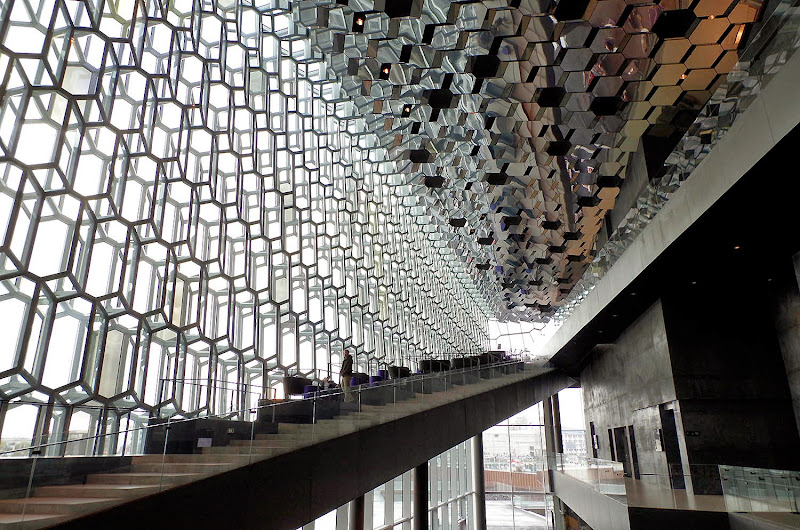
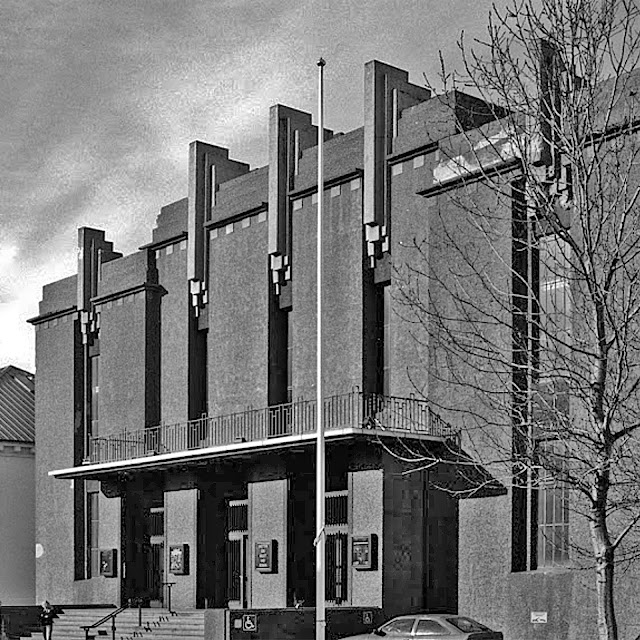
A typical tourist, unless they happened to walk into the theatre’s box office out of curiosity about the theatre’s imposing facade, would be unaware of the miracles this venue performs on a regular basis. The Reykjavík area has a population of about 200,000. And if that wasn’t enough culture for one town, the city boasts of another live theatre complex of equal stature, plus several smaller companies.

Before the play started I was sitting on a bench in the outer lobby when woman came in and sat down next to me. We started talking about Icelandic theatre, she was a regular and I mentioned Hallgrímmur Helgason’s Þetta er allt að koma. She had known Hallgrímmur since he was three years old! She also mentioned what a great man he was—the second time I heard someone say that today!

When the woman whom my bench-mate was waiting for came in she said to us: “Ah! Brúðkaupsbekkurinn!”


Search for a Dancer Index…

By Professor Batty


Comments: 5 


Monday, November 19, 2018

Iceland Airwaves Recap

The Song Remains the Same


                      Jofriður Ákadóttir, 2009                                                      Jofriður Ákadóttir, 2018

After having had a week to process the experience of the 2018 Iceland Airwaves, it is still impossible to come to any definitive conclusions about such a multifarious event. The wide assortment of musical styles presented has always been a feature of this most diverse musical festival. That said, times change; there were certainly more rap and hop-hop acts this year as well as, for the lack of a better word, “Swedish Style” glossy and formulaic pop music. There were fewer guitar-rock groups (I didn’t see a single Stratocaster!) and not quite as many singer-songwriter-troubadours as there were when I was there was in 2009. Even EDM seemed to be down—there was no main venue devoting a whole night to it as there once was.

A significant difference in the Airwaves Festival this year is the number of female acts. It has reached parity over all styles, a most welcome development. There seemed to be more string sections in use as well, even some of the acts performing in the small off-venues utilized them. They were all very good, although the quality of the arrangements varied. One tradition which has been upheld is the inclusion of carefully chosen new acts doing original music. This isn’t American Idol, where carefully groomed acts reenact hits of the past, but rather young (in some cases very young) musicians create something new and unshaped by the crushing effects of mass marketing. There were also numerous established but quirky “only in Iceland” acts singing in Icelandic—always a joy to behold—and the over-all level of musicianship has increased since I last attended ten years ago.

The past few Airwaves have lost boatloads of money, mostly due to the importation of big and expensive foreign acts. This year, under new management, reversed that trend, giving the locals a better representation and, hopefully, financial solvency. The festival organization was excellent, with well-trained and friendly staff making sure things ran smoothly. No late start times (in one case even early!) and the scheduling was arranged that there were not too many long lines. There were fewer off-venues this year, but the ones we attended were uniformly excellent, even transcendent at times.

A big thank-you has to go to the Icelandic musicians themselves, a close-knit community that is supportive and used to collaborating in various ways. In a festival situation that can backfire, but when it works it is simply magical. Jofriður Ákadóttir (JFDR), pictured above, was a great example of this, performing in at least five different shows. She is the most creative act in Iceland right now; her musical imagination is seemingly unlimited and she even has her own candy bar! To see her growth from humble beginnings in 2009 to today is remarkable, even for Iceland. Not a “one-trick-pony,” she transcends genres while remaining true to her central vision. I saw her backing the astounding Nini Julia Bang with three other performers (Liva Mo, Sóley, Áslaug Magnusdóttir) at the Nordic House playing to an audience of 25. She was just as into it then as she was a few days later when she played to a crowd of a thousand at Harpa.

There isn’t any really good way to sum up Airwaves, but I’ll end this with a list of some of the acts that I saw, where they played, and why I found them memorable:

Skúli Sverrisson og Bára Gísladóttir, KEX Hostel: a two bass hit!

Sóley and her father, Grund: the emotional high point of Airwaves.

Gróa, Ten Tónar: Teen-age rockers with unlimited potential.

Grúska Babúska, Húrra: Icelandic gypsy band: absolutely over-the-top fun.

Ateria, Húrra: Spooky teen-age Folk-Goth girls..

Reykjavíkurdætur, Art Museum: polished Feminist Rap collective.

Nini Julia Bang, Nordic House: voice artist, best act of the festival.

Vicky, Gaukurinn: hard rockers with no compromises.

Hugar, National Theatre: extremely disciplined ambient guitar/synth duo.

Högni, National Theatre: music, poetry, and theatrics perfectly combined.

Ólafur Arnalds, Nation Theatre: ambient/classical from the master.

Liva Mo, Nordic House: delightful singer, even better raconteur.

Bláskjár, Nordic House: songs from the heart, very touching.

Between Mountains, Gamla Bíó: yin/yang duo with unlimited potential.

Sólstafir, National Theatre: highly evolved metal, great spectacle.

Sóley, National Theatre: evocative electronica, Lynchian.

Hekla, Hitt Húsið: more music from the heart, very poignant and sincere.

Jóhanna Elísa, Hitt Húsið: very smooth pop with classical overtones, delightful.

Eivør, Harpa Flói: Faroese Valkyrie with a great drummer (Høgni Lisberg).

JFDR, Harpa Flói: bad venue, bad crowd, bad sound, still electrifying.


Looking back at this list it becomes pretty obvious that The National Theatre (Þjóðleikhúsið) was the premiere main venue, while The Nordic House (Norræna Húsið) was the best off-venue. Húrra had the best sound and Floí the worst. The most charming performance? A children’s choir at Fríkirkjan on Sunday (not an Airwaves event, but so worth it.)

Will I go back?

Never say never.

By Professor Batty


Comments: 4 


Monday, June 05, 2023

Terra Incognita

Chapter 23 of Search For a Dancer, a memoir of a week spent in Iceland in November 2022
One of the goals of my trip was to catch some Icelandic Theatre.
With a thin Airwaves line-up this night, I was glad that there was a stage production that I could attend. I have had numerous transcendent moments attending plays in Reykjavík and tonight’s offering at Þjóðleikhúsið was solidly in the tradition of surreal Icelandic theatre.
Sjö ævintýri um skömm (Seven Fairy Tales of Shame) a play by Tyrfing Tyrfingsson had been expanded from an earlier one-act which had been a hit in a festival setting. Several of Iceland’s most celebrated stage and screen actors were in it, including the lead Ilmur Kristjánsdóttir (from the TV series Trapped!) as Ölga, Ólafía Hrönn Jónsdóttir (White Night Wedding) as Ölga’s mother Amma, the venerable Kristbjörg Kjeld (who starred in the 1962 film The Girl Gogo) as her grandmother Fanney, and Hilmir Snær (101 Reykjavík) playing against his usual leading man type, as an alcoholic psychiatrist who takes on a troubled client: Öğla.
The psychiatrist abhors cognitive behavioral therapy, and believes that the cure for Ögla's distress lies in finding its roots—which is shame. We follow the two of them throughout the play as she tells the doctor about seven adventures that are crucial to her dilemma, and were caused by the people who were closest to her.
The key dynamic of the work is the uneasy relationships between Ölga and her grandmother and her mother as it shows us how ‘wounds’ are inherited between generations. Playwright Tyrfing used a lot of his childhood memories for the set pieces with the grandmother.
In Ilmar’s performance as Ögla she draws the audience in, and then she falls apart like an onion as the play progresses. She is not easy to love, she is on edge and confrontational throughout the play. Olga is married to Hanna (Kristín Þora Haroldsdóttir), and the two women have the most outrageous artificial insemination scene-gone-wrong I had ever seen:
A crucial scene of the play revolves around the relationship between Ögla and Hanna, about the paradox of the fantasy of love with love in everyday life.
Seven Fairy Tales of Shame celebrates the magic of the theater, queerness and everything that is strange, oblique and excessive in life. This was not your standard dinner theatre fare, and yes, there were dancers:
Immediately after the play, there was an old-school cabaret in Kjallarinn, the basement stage of the theatre, a room I’ve loved ever since seeing several good sets there in Airwaves 2006. This night it featured classic burlesque routines, including a raunchy cowboy, an upside-down strip tease by a man balancing on a hoverboard and, of course, counter-whirling tassels. A little bit naughty (although really quite quaint compared to the play I had just seen) and even had a sword-swallowing clown! It was all in Icelandic, the MC said that if you didn’t understand it, just ask your neighbor—who will become your new bestie!


All images taken from Þjóðleikhúsið promotional materials


Search for a Dancer Index…

By Professor Batty


Comments: 0 


Wednesday, October 18, 2017

In The Treetops

A new play
Written and performed by
The Sandbox Theatre, Minneapolis

Not too often (as in never before) have I had the opportunity to see the life of Wanda Gág, artist and author and personal inspiration, portrayed in any dramatic medium, much less in the living flesh in the intimate confines of a small theater. The Sandbox Theatre troupe has been creating dramatic events for several years now, this ode to Wanda is their latest.

The play opens with the adult Wanda, in her studio at All Creation, looking back at her childhood and the games and stories she played with her family to keep it together after the death of her father. For a show aimed at children (there is a lot of prancing and childish hi-jinks) it has an element of despair haunting it: the very effective shadow plays of Wanda’s parents on a back-lit scrim are dreams that still haunt the adult Wanda.

Almost any play written by a troupe will have problems with focus and story line: this effort, with its shifting scenes and minimally defined characters, is no exception. A little better exposition would have helped a great deal. The music, always the hardest thing to get right, is somewhat diffuse as well, although tasteful. The acting is good, adults portraying children are always a stretch, but usually better than children playing children. Kristina Fjellman as Wanda is almost too happy and too nice for the role, the real Wanda suffered immensely, a suffering that is only hinted at here.

I saw the final performance at the Open Eye Figure Theatre although there will additional shows at the Germanic-American center toward the end of the month.


The Shoebox Theatre, Image by Matthew Glover

By Professor Batty


Comments: 2 


Monday, February 20, 2023

Summit at Sandholt

Chapter 8 of Search For a Dancer, a serial memoir about a week I spent in Iceland. Mondays on Flippism is the Key
I spotted her immediately.

We were meeting at the Sandholt Hotel/Bakery/Restaurant/Haberdashery for a late lunch. Even though it was after 1400 hours the restaurant was still crowded. She walked in just before me; I had to hustle a bit to catch up to her. I touched her shoulder lightly and said “Silja… ” She turned and said “I was wondering if you would recognize me.” I assured her that it wasn’t a problem. Although it had been 10 years since we last met her visage had been featured in numerous articles that I had read online since then. Her face showed her years but her posture and the sparkle in her eyes belied her age.

When it comes to Icelandic literature, Silja is the real thing: a writer, an editor, a translator and even theatre critic. In her presence I felt as if my Flippism blog-posts on Icelandic culture were the work of a poseur—a literary wannabe—as was the Laxness in Translation website that I had developed years ago. That site (about the works of Icelandic author Halldór Laxness), was how we came to know each other. She had written an essay on the novel Salka Valka that had been published in The Reykjavík Grapevine, an English language weekly tabloid newspaper. It had been easy to get in touch with her via Já.is  (a national directory) and she had been willing to let me publish her essay. The LIT site was fledgling then but in the last decade it had become sort of a de facto international clearinghouse for information on the author and his work. Our previous meeting was rewarding and I was looking forward to talking with her again.

Salka Valka, first published in 1931, had recently been republished in a new translation, creating quite a stir in literary circles and garnishing many favorable reviews in the print media including The New Yorker, The Washington Post, and The Wall Street Journal. At my mention of it Silja became more and more animated as she described her participation in a recent seminar. Halldór’s biographer Halldór Guðmundsson was scheduled to lead a discussion group about Salka Valka and had a scheduling conflict so he asked Silja to take over. She jumped at the opportunity; “I was on fire… ” she said, eyes dancing, “… and the reception was most enthusiastic.” Adults of all ages had been captivated by the story of the poor girl who grew up unwanted in a fishing village. More than just a character, her struggle with the injustices of society was and is an inspiration to thousands of Icelandic women. We talked about how the book presaged the #MeToo movement, and how it was also a critique of both Capitalism and Socialism.

I had read that she recently participated in a literary retreat with renown Icelandic writer and artist Hallgrímur Helgason. I spoke of it and the topic of conversation turned to him: “Hallgrímur, what a wonderful man,” she said, gushing with obvious affection. She noted that in spite of his often pointedly satiric novels and plays, he had a great love for Iceland and its people, about how he had embraced the #MeToo movement with an article about his rape experience. I mentioned speaking with Hallgrímur (on Zoom) about his play Þetta er allt að koma and she remembered it vividly, commenting on its fantastic set design. She also brought up the play’s lead, Þorunn Erna Clausen, and rued that she had not pursued her theatre career further, I mentioned that she had been featured in Documentary Now! (a parody show that featured Fred Armisen) and she was also on the television series Trapped! At our first meeting she had given me some tips on Icelandic theatre productions; I then discovered that she had published ‘amateur’ reviews in TMM (a literary magazine) which were a fount of information that I consulted whenever I went to the theatre in Reykjavík. Being a critic in a small country like Iceland requires a great deal of tact and her reviews reflected that, but her lack of animosity made them invaluable for an outsider like me—just the basics—there was no literary baggage to unpack. I told her of my wife and I and seeing Páll Óskar in The Rocky Horror Show in 2018. “Ah! I saw him in that when he was in college!” she said, smiling at the memory.

Silja related a story about the James Joyce tower in Dublin—a writer’s dream vacation—which turned into a nightmare after she fell and broke her leg, severely. One of the Irish EMTs who attended her wanted to take her to a local clinic, but the other one thought it serious enough to go to the main hospital where a group of doctors operated and reset her leg with pins. They must have done a great job in that she was able to walk so well now. “My son-in-law helped me, I couldn’t live at home because of the stairs, so he took care of me every morning, with a hot breakfast and fresh-squeezed orange juice, he was an angel. Now my house is for sale—my late husband said that when we can’t handle the stairs we would move out; that time is now.”

We talked a bit about blogs, I said that although the traffic to the Laxness in Translation website was steady there wasn’t much of a surge when Salka Valka was republished. I mentioned that my personal blog, Flippism is the Key, was still holding on in its 18th year, but that I could see a time when I would stop posting on it. She looked at me closely and then asked, “How old are you?” “72,” I replied. “Oh, you’re just a baby!” she exclaimed, “I’m 79, and I just finished translating Jane Austen’s Sense and Sensibility into Icelandic!” I have often been in awe of my Icelandic correspondents achievements and this was one of those times. After we had been talking for about an hour she said “I haven’t spoken English a long time.” Her use of the language was impeccable.

We finished our meals, and then prepared to leave. “I’ll take care of this,” I said, picking up the check, “It makes me feel like a big shot.” Silja gave me a side-eye. We went out and walked the half-block to the bus-stop on Hverfisgata. As we waited for her bus our conversation flowed on. My thoughts went to the word Sprakkar, an Icelandic word meaning outstanding or extraordinary women, recently used by the ‘first lady’ of Iceland, Eliza Reid, married to Guðni Thorlacius Jóhannesson, Iceland’s president. Here was a sprakkar, standing right in front of me, being extraordinary and outstanding. After thinking of Eliza, I mentioned that I was going to see the President of Iceland speak on Thursday morning, to which she replied: “Oh!, My daughter is his secretary.”

Of course. Everybody in Iceland knows Silja.


Search for a Dancer Index…

By Professor Batty


Comments: 0 


Monday, June 13, 2005

Siniik'adach'uuch'…

"…the groove between the upper lip and the septum…" a Eyak word, from the article "Last Words" by Elizabeth Kolbert, The New Yorker, June 6, 2005

The language of the Eyak, an Alaskan Indian tribe, is now only understood by a handful of people. Faeroese is spoken by about fifty thousand inhabitants of the Faeroe Islands, located Northwest of Scotland. There are many other languages and cultures that are slowly fading from the earth.

This is a darker side of globalization. As a parallel to extinction, the analogy is perfect. In effect, languages can be thought of as an organism, reproducing, mutating, interbreeding, and eventually dying. Well, who cares if a tongue is silenced? Why not let only the strong survive, and forget the rest?

Well, when it comes to language, which is a form of thought, we need all the help we can get. The danger of one-mode thinking has been proven over and over throughout history. We need the little things, the ideas that can only be expressed in a certain way, to give our existence vitality and substance. About a year ago I had a series of correspondence with a young 'Libertarian' from Iceland. He was definitely for unfettered commerce and the end of any government subsidy of art, culture or the humanities. He was particularly enraged that Iceland had a state-supported National Theatre, and as proof of the viability of free enterprise, listed a group of concerts by international pop musicians that had taken place recently in Reykjavík. The groups all performed in English. I had been to the National Theatre a few months before, and was mesmerized by the performance- in Íslenzk! A world class production done in a country with about the same population as my county. Without the subsidies, there might still be theatre there, probably road shows and probably in English. Within a few generations, another culture would be extinct (there was concern about this in Iceland after World War II, when American broadcasting from the military base in Keflavík threatened the social order).

So, what am I getting at? I don't know, except that diversity is not a bad word in my vocabulary. It is what makes life interesting, it renews our spirit and gives added meaning to the things already in our lives. We can let it flourish, if we remain aware that it is as fragile as an endangered species, and give it a little protection and cultivation.

By Professor Batty


Comments: 1 


Monday, January 17, 2022

Venues in Iceland -#3

Leikhúskjallarinn

The Theatre Cellar Cabaret Club.

Located in the basement of Þjóðleikhúsið, Iceland’s National Theatre, it is not well-known, and certainly not in any tourist guides I’ve seen. I suspect it was originally intended for exclusive use of the patrons of the National Theatre—it is rarely used for public events. Which is too bad, it is a very groovy place; intimate; 50s vibe. That aesthetic may be best illustrated by the ambiguous triptych that is on the walls of the club lounge area:
My experience there was in October of 2006, at Iceland Airwaves, when a small crowd braved the cigarette smoke (remember those days?) to see several acts perform, including the Doors/Radiohead-influenced Shadow Parade:
And the ‘little girl lost’ Trost:
She kept the crowd in thrall with her story-songs, aided by prodigious alcohol consumption and her teetering on 4 inch heels as she wandered through the crowd:
But the best act I saw there was the venerable (18+ years and still going strong) rockabilly/surf band Langi Seli Og Skuggarnir:
Twangy!
Here’s a funky video of Langi Seli and his group showing the band (and its audience) rocking out in the cabaret one night in October, 2006:

By Professor Batty


Comments: 0 


Monday, March 31, 2014

Alda on Performing Arts in Iceland


Harpa, Reykjavík, 2012

I've been a fan of the Icelandic performing arts for years and this short essay about a new Icelandic opera  (taken from Alda Sigmundsdóttir's Facebook page, 30 March 2014) eloquently sums up my impressions and then some:

Last night we went to see a new Icelandic opera called Ragnheiður, which has been getting rave reviews. Critics have literally been falling all over themselves with rapture. So I confess I was more than a little curious to see it, though not without apprehension, since I'm not a big opera fan and find few things worse than sitting through a lengthy theatrical performance when I'm bored out of my wits.
 

But the production totally lived up to the hype. And sitting there in the dark I had some thoughts.
 

1. Not for the first time I was filled with awe that this tiny nation - 320,000 people - are able to put on a production of such remarkable quality. We went to a Broadway show last summer that was substantially inferior to this. And this is not a one-off. Pretty much every theatrical production you see here in the professional theatres is of such a standard. It completely defies all logic.

2. It was brought home to me how essential the arts are to a nation's identity. This opera is about a very dramatic event in Iceland's history, and it is performed in Icelandic. Sitting in the audience you could FEEL the concentrated attention of all the people watching who connected on a very profound level with all that was going on. It spoke to them - to us. Granted, it would have spoken to anyone - the emotions, occurrences etc. were common to all humanity - but the context, clothing, setting, language, etc. were OURS. And people were crying all around me. Practically sobbing. I have never experienced that at the theatre before. In tear-jerk movies, yes, but never at the theatre.

3. I marvelled at the fact that certain political forces believe that the arts are a luxury, and pretty unimportant in the grand scheme of things. They are not. Performances like the one I saw last night are the glue that hold a nation together. They nourish the finer sensibilities, like compassion, empathy and love, and they foster a sense of unity. They promote a healthy society, and any politician who does not see the value of that is seriously stupid. 

By Professor Batty


Comments: 0 


Monday, May 26, 2025

I Want To…

Crowd, Iceland Airwaves, 2023

… return to Iceland.

I’ve done pretty well in honoring my new year’s resolution to stop posting about things Icelandic on FITK. Perhaps my new feelings contain a bit of jealousy; in a couple of weeks The Weaver is off on a Scandinavian cruise—starting in Reykjavík! Or, perhaps, these ruminations are just a bit of stock-taking on my part.

I’ve taken nine trips to Iceland in the last twenty-five years. Each was great in its own way: each had moments of illumination, each made me look at the world in a different way. Some of their appeal was in just getting away from home and going to a place that, for a few weeks anyway, seemed like I was living in an enchanting world. Iceland is far from perfect; it has its own problems, and the people that I’ve gotten to know there certainly have their own tribulations. Still, the those Icelanders I’ve met and talked to have been a joy. I prefer going in late October/early November: airfare is cheap, the weather can be very fine, the theatre season is in full swing, and the Iceland Airwaves music festival is being held with 12 hours of music every day. Swimming outdoors every day (free for seniors!) and talking with the locals is great, meeting with old blog-pals is nice (if bittersweet at times), and there is a place where I could stay that I love. And the rush of being in a crowd of friendly strangers is a definite plus:
Crowd at Lucky Records, 2023

On the other hand some negatives are:
Earthquakes.
Volcanoes.
The world situation.
The weather in Iceland can be horrid (I have been unbelievably lucky in the past—how long can that streak continue?)
Icelandic theatre has taken a bit of a downturn in the last few years.
The music scene, especially Iceland Airwaves, seems to be a hollowed-out shell of its former glory.
I’ve exhausted my Icelandic correspondents’ hospitality; once every eight years is fine, every two years is abusing it.
The lovely place where I stayed last time is much more expensive now than it was in 2023, and is unavailable.
It is hard to put an exact price on trips such as these but what I used to do for under two grand is now closer to four—more money for a lesser experience—that math is not hard to figure out.

The other factor that figures in these considerations is my age. I’ll be 75 in July. I’m in good health now but that may change. While getting to Reykjavík is relatively painless, enjoying the city on foot requires a good set of legs and some stamina, with lots of hills and heavy winds. Will I be still doing solo trips in my 80s?

That last question may actually be a reason to do it now.

Despite all these misgivings, and while my musical tastes have changed over the years, I still find it thrilling to see a performer in the moment, stealing the show:

Jóhanna Rakel, Cyber, 2023, Iceland Airwaves

By Professor Batty


Comments: 0 


Monday, July 10, 2023

Dinner Theatre

Chapter 28 of Search For a Dancer, a memoir of a week spent in Iceland in November 2022

Tonight’s play was the musical Sem Á Himni, originally a Swedish stage production and then a film. It is the story of a conductor who has a heart attack (at the podium!) and then returns to his home town to recover. There he helps out with a struggling choir and in the process everyone grows, learns, and is fulfilled. It was written as a crowd-pleaser with character stereotypes aplenty. The drama is supplied by themes of spousal abuse and small-town politics presented in almost in a check-list fashion :


Overall I found it to be well sung, but with stilted staging, especially compared to the two previous plays I had seen. I had heard from a couple of people that the casting of the play was controversial in that one of the characters was a special needs man who was portrayed by a ‘norm’, with no other actors even considered. I could see both sides of the argument; the role was pivotal and needed an accomplished singer and actor to fill it, but they could have at least reached out for someone with that background. I imagine there was someone in the tight-knit Icelandic theatre community that should have been given a chance—otherwise there wouldn’t have been such a fuss.

Before the show, there was a man experiencing a coughing fit a few rows behind me. In the age of Covid that was unsettling and I hadn’t brought a mask. I thought about getting up, but then the man quieted down (or maybe he left.) My decision to stay would come back to haunt me later.

I had read in Silja’s review that the big production number (at the end of the first act) was so good that the rest of the play suffered in comparison. If that was the play’s high point (and it was impressive) I didn’t want to see any more. I left at the intermission.
At Gamla Bíó, Axel Flovent was emoing songs of despair and unfulfilled desire. After the sugary sweetness of Sem, the vinegar of Axel should have been a tonic, but I found his sturm und drang to be unbearable. Any more of that and my night was looking to be a washout. After a couple of songs I made my escape—perhaps my luck would change.


Search for a Dancer Index…

By Professor Batty


Comments: 0 


Monday, October 26, 2009

Frida ...viva la vida


Þjóleikhusið, before the curtain

Every time that I've returned to Reykjavík, I've made it a point to see a production at Iceland's National Theatre. This time it was Frida ...viva la vida, a new play written by Bryhildur Guðónsdóttir, who also acted in the title role of Mexican painter Frida Kahlo. This was a very stylized production, with her paintings becoming a part of the set and figures from them, most notably Óxlotl, her dog (and also the Aztec dog of the underworld), and La Catrina, the Mexican goddess of death. Her life, from her disfiguring accident until her death, and her stormy relationship with Diego Rivera, is told in a grim, nightmarish fashion, almost frightening at times. Ólafur Darri Ólafsson becomes Rivera, his immense stature giving Diego an appropriate larger than life aspect. Frida's politics are also covered, Leon Trotsky even makes a memorable appearance.

That an Icelandic theatre would produce an original play about Frida shows what an influence her art and life has had worldwide. The Selma Hayek movie version was visually stronger, as would be expected from a Hollywood movie, but this production brought out the internal struggles of Frida in a more compelling way.

And, of course, if you ever have the chance to see Frida Kahlo's paintings in person, do it. They are the reason we find her more fascinating than ever, and reproductions don't do them justice.

By Professor Batty


Comments: 0 


Monday, October 30, 2017

Þjóðleikhúsið Revisited

NOTE: This is an expanded version of a FITK post from 2004

The National Theatre of Iceland is located in a severe, stucco-covered building on Hverfisgata in the old part of Reykjavík. It is not a big tourist destination (it is closed in the summer and the plays are presented in Icelandic.) This is serious theater and is a challenge for even the most open-minded visitor.


Last winter, I had the opportunity to attend a performance of Þetta er allt að koma (“This is all coming”), adapted and directed by Baltasar Kormákur from the satirical Hallgrímur Helgason novel:


In a series of sometimes bizarre vignettes, the story of the aspirations and setbacks of an aspiring performer and her extended Icelandic family is portrayed.


While watching this marvelous production (with a brilliant set design) I felt as if in a waking dream; a dream where I usually couldn’t follow the dialogue; it always seemed as if I was missing a piece of the puzzle:


At the end of the play, with a grand finale in a wedding reception, I was laughing and applauding the triumph of the actors’ skill in portraying the human condition—no translations were needed.


Although Icelandic Theatre is not available here in the US, (that would be a small niche market!) there are several Icelandic movies that can be found if one is diligent. 101 Reykjavík, Noi the Albino, The Laughter of the Seagulls, and Cold Fever are all worthwhile (and have many of these same fine actors in them.)


Production stills: Þjóðleikhúsið

By Professor Batty


Comments: 1 


Sunday, October 14, 2012

Culture Night

I took coffee with one of the Laxness in Translation contributors, Silja Aðalsteinsdóttir, a most illuminating afternoon. Our conversation started with Salka Valka and went numerous places from there. Silja writes theatre reviews for TMM (Timarít Mals og Menníngar) and she suggested I see John Logan's play Rautt (Red) which was about the painter Mark Rothko. So it was that I found myself Saturday evening outside the Borgarleihusið (the City Theatre of Reykjavík):


It is a large complex with two theatres and a vast, airy lobby area, quite the contrast to the intimate Þjóðleikhúsið Kassinn venue I went to last night:


The play was quite wordy, although the context (late fifties New York art scene) and numerous instances of name-dropping in the script helped me follow the gist of the story. Rothko (Jóhann Sigurðarson) and his fictional assistant (Hilmar Gudjonsson) have heated conversations about the meaning of modern art:


Image: Vísir

Silja mentioned the quality of the acting, and she was right—Jóhann Sigurðarson was outstanding, his physical presence defined the character as much as his speech.

By Professor Batty


Comments: 0 


Wednesday, November 05, 2025

Iceland 2025 — Day Seven

Morning at Grund
Airwaves started with a mid-morning concert at the senior residence Grund. The President of Iceland, Halla Tómasdóttir, spoke, first addressing the children in the crowd and then the seniors and festival goers.
When Halla finished the first performer was GDRN, a brilliant singer/songwriter who had the audience mesmerized with her traditional songs in Icelandic:
The elderly gentleman on the far left was no doubt once a pianist, he played “air piano” along with the band:
Bríet played some pleasant folk-pop songs in a verrry furry suit:
Then I was off to the pool again where I talked with several other festival-goers and a violinist about the festival, its performers and the politics of Icelandic musical acts getting into the festival.

In the afternoon I saw Anderverel at Lucky Records. He is an ex-pat from Mexico, and has lived in Iceland for eight years. His songs were filled with a sense of melancholy and longing, his drummer gave a lesson in precise underplaying:
I then heard the quirky keyboard/drum duo Mag og Tómas at Reykjavík Records. Notice the music box piano in the foreground and the red rubber chicken to the left of the keyboard, both were used in the performances:
After taking a close-up of Mag's ring I caught a bit of Elin Hall warming up at 12 Tónar:
At Space Odyssey, the French singer Roukie was barely visible playing with Ulfúr, who was invisible in the low-ceiling room:
Smekklysa had the trippy K.Óla, a bass/keyboard singing/performance duo, they performed Art-songs about longing abetted by some clever choreography. Original and very sweet:
After dinner, I went out to catch some theatre again, this time to Tjarnarbíó. In the lobby a man greeted me thinking I was someone he knew from 30 years ago. I hated to disappoint him, he seemed like a nice guy. The lobby there is very nice, almost homey:
The play was the stylized comedy 40.000 Fet, it was about two female flight attendants and their flight crew. It was quite bawdy at times, with a more serious ending addressing mortality. A nice twist was that when you entered the theatre space the actors portraying the flight attendants greeted you in character, as if you were the passengers:
One more show tonight, this time at Iðno. It was an Airwaves warm-up show featuring acts from Marvaða, a female-oriented record label. Mr. Silla,  and Salka Valsdóttir, both fine singers, performed:
Then, to my delight, I spotted Hekla Magnusdóttir, virtuosa thereminist hiding in Salka’s band. She played an achingly beautiful solo that stunned the crowd:
A pretty good day overall, all the musical acts were rewarding, with GDRN delivering the most professional and touching performance. And Hekla was the icing on the cake.

By Professor Batty


Comments: 0 


. . . . . . . . . . . . . . . . . . . . . . . . . . . . ©Stephen Charles Cowdery, 2004-2025 . . . . . . . . . . . . . . . . . . . . . . . . . . .