Monday, October 04, 2021

Mondays in Iceland -#123

The Darkness Knows

A novel by Arnaldur Indriðason
Translated by Victoria Cribb

It has been a few years since there have been any new English translations of novels by Arnaldur Indriðason. Arnaldur is best known for his 14 Detective Inspector Erlendur novels, he has been writing and publishing in Icelandic regularly but I suspect that the recent explosion of translated Icelandic novels has caused a backlog (this book was first published in 2017 and is just now available in English.) When Arnaldur started his career (in the late 1990s), he was one of only a handful of Icelandic writers being translated into English. Now there are dozens of quality books by Icelandic authors making the ‘leap across the pond’ every year—truly an embarrassment of riches. The golden age of Icelandic literature is NOW.

The Darkness Knows is the first novel in a series featuring Konráð, a retired Reykjavík police detective. The story begins when a tour group discovers a body frozen in a glacier. The body belonged to a man who went missing thirty years previously and the chief suspect in his disappearance (who had never been charged) had become close to Konráð, uncomfortably so, and so asks to see Konráð after he is re-arrested. Konráð meets with the man, who protests his innocence but in such a way that there remains doubt about his story. There are also sub-plots concerning a victim of a hit-and-run accident and Konráð’s relationship with his father (who was a minor criminal and conman) who had died when Konráð was a teen. I suspect that relationship will be more fully developed in the later books (there are already three more that have yet to be translated.) Konráð, a widower, is a melancholy figure (but not nearly as cranky as the Erlendur character was in that previous series) but has a much darker backstory,  which I also assume will also be explored in future books. The writing, as is usually the case with Indriðason, is terse and direct, making the somewhat complex story line easier to follow and, if you are familiar with Reykjavík, the description of the story’s settings add color to the story. The plot is logical, but still manages to take a sharp turn or two. I found the ending to be surprisingly touching. One of the joys of following Indriðason’s novels is the ‘slow burn’ of character development over the series. This augurs well for the remaining titles—or it just might be that I find a perverse pleasure (self-identification?) in reading about idle pensioners. Konráð is the antithesis of a television action-detective.

Victoria Cribb’s translations, after a shaky beginning, have become faultless—she is now one of the best in doing Icelandic to English.

Recommended.

By Professor Batty


Comments: 0 


Friday, December 01, 2017

Another Arnaldur

The Shadow District
A Thriller
By Arnaldur Indriðason
Translated by Victoria Cribb
Minotaur Books, 2017

Indriðason’s back with this stylish “thriller” set in both past and current Iceland. The death of an old pensioner in modern Reykjavík re-ignites interest in a pair of old murder cases from the forties. Konrad, a retired police detective who is still consulted by the overworked police investigator Marta, who gives him some enigmatic clues about the dead man, starting the action. In a parallel narrative set in 1944, Flóvent, a Rekjavík detective, and Thorson, a Canadian military policeman, try to come to grips with the body of a murdered woman found behind the National Theatre building. Indriðason does a good job of intertwining the stories, each iteration of the story reveals more details yet somehow remains opaque until the very end.

This is evidently the start of a new series, there is no “Inspector Erlendur” in this book. The fact that there are four detectives (in two different eras) dilutes its dramatic center. Indriðason is trying to take his writing in a different direction, although many of the tropes are similar to the Erlendur books. Anyone familiar with Rekjavík will get a kick out of seeing familiar neighborhoods come to life on the page. The translation is good, one of the better efforts by Victoria Cribb.


By Professor Batty


Comments: 1 


Monday, October 18, 2010

Mysteries of the North Country

Hypothermia

An Inspector Erlendur Mystery
By Arnaldur Indriðason
Minotaur Books, 2010

I spent last week not in the North Atlantic, as my posts would appear to indicate, but rather halfway up northern Minnesota's Gunflint Trail, in a cabin a stone's throw away from the icy cold waters of Little Ollie Lake. The days were gorgeous for this time of year—unseasonably warm and generally sunny. The evenings did cool off enough to allow the building of a cozy fire in the stove. The nights have already gotten longer, making a perfect setting for this chilly Icelandic murder-mystery.

So I read this one—aloud—to the Weaver while she knitted. Reading the place-names of dozens of Icelandic locales really tested my concentration, and I found that I actually could suss out most of them, in my fashion, after awhile I had even started to unconsciously trill my "r's"!

Arnaldur Indriðason's latest novel (latest novel to be translated into English, that is) continues with the existential struggles of Inspector Erlendur as he tries to deal with his inner demons while struggling with some decades-old missing-person cases as well as a recent suicide. The twist in this book is the introduction of a theme of supernatural events: seances, visitations, and dreams. Erlendur steadfastly refuses to believe in any of it, but is also aware that something is going on; more than one coincidence usually means it isn't a coincidence at all. This a talky book, with lots of circular conversations, often repeated with several different people. The mystery isn't too hard to figure out, the story's strength lies more in watching Erlendur come to an understanding of the chain of events and how the suicide case spurs new insight into the older case. Erlendur is, as usual, haunted by the childhood death of his brother, a death he feels responsible for, and a feeling which was shared by the suicide victim. He is also haunted by his failed marriage and his dealings with his ex-wife and children. There are a lot of dysfunctional family dynamics going on here—Indriðason incorporates them brilliantly in the plot, giving this mystery a definite sense of depth.

A note on the translation: Bernard Scudder, his original translator, passed away a few years ago, being replaced by Victoria Cribb. The dialog seems less fluid; I think Scudder may have had a better touch for this kind of writing. In addition, the book was riddled with typos! They may have rushed the production a bit, I can't recall reading a book that had been so poorly proofread! You might want to opt for the UK softcover edition, hopefully these mistakes have been corrected in them.

By Professor Batty


Comments: 7 


Wednesday, June 24, 2015

Reykjavík Nights


An Inspector Erlendur Mystery
By Arnaldur Indriðason
Minotaur Books, US edition 2015

   Hooray! Erlendur is back, this time in sort of a prequel to the other books in the series. Set in 1976, Erlendur is a young traffic officer who works the night shift in Reykjavík. To the usual mix of accidents, drunks and domestics is added the the case of two missing women and the apparent death by drowning of an alcoholic who Erlendur had gotten to know. As is usually the case in this series, apparently unrelated events have hidden connections. Erlendur’s stubbornness leads him through the city in a quest to find the answers to his questions, questions the police had given up on.

   If you are familiar with Reykjavík be sure to have a map of the city handy when reading, Indriðason provides street names to all the locations. The book features the city’s new building projects, giving a sense of the era between its World War II-era past and its modern incarnation. I found it fascinating, those readers without a special interest in the city may find it less so. Indriðason is exploring some aspects of his own coming-of-age in this book, with numerous seventies cultural references.

By Professor Batty


Comments: 4 


Thursday, May 31, 2018

The Shadow Killer

A thriller
By Arnaldur Indriðason
Minotaur, 2018

This is the second book in Indriðason’s wartime Flóvent/Thorson series, although it takes place a couple of years before the previous one, The Shadow District Set in Reykjavík during World War II and the change from British to American occupation, this atmospheric novel captures that brief time vividly—in both its place descriptions and characters. The plot revolves an execution-style murder of a hapless traveling salesman, a man who is slowly revealed to have been an unwitting part of a much larger scheme involving Nazi sympathizers, German spies, and a secret “scientific” project that took place in his childhood. The story is realistic, the characters are believable, and the story comes to a satisfactory conclusion, and, after my recent diet of modern mysteries, it was refreshing to read a story where the only personal electronic device is a hard-wired telephone.

This is a very good mystery, although Flóvent and Thorson, the two detectives, are not as fully developed as Erlendur was in Indriðason’s other series. Written in a restrained style, with realistic characters and situations, it is a solid entry and worthy of a look.

A qualified recommendation.

By Professor Batty


Comments: 0 


Monday, June 11, 2012

Summer Reading - II

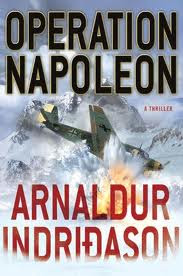
Operation Napoleon
A Thriller
By Arnaldur Indriðason, Minotaur, 2010
Translated by Victoria Cribb

One way to beat the heat is to spend time being engrossed in chilly Icelandic crime fiction. Although this book isn't part of Arnaldur Indriðason's immensely successful Inspector Erlendur series (Erlendur does make an uncredited "cameo" appearance), it is a one-off mystery/thriller with a plot centered around a German plane which had crashed on an Icelandic glacier during the last days of World War II. Most of the action takes place in the year 2000 as the United States military is engaged in a clandestine recovery operation. The plane holds a terrible secret which still has the power to disrupt international relations. Kristín, a lawyer for the Icelandic Foreign Ministry, unwittingly becomes entangled with with this affair setting off a wild sequence of events to uncover the mystery.

This novel came out in Iceland in 1999; it was only recently translated. It is much less introspective than Arnaldur's other titles (it would make a dandy action flick), but it still retains a strong sense of setting and a few quirky Icelandic idioms. The plot is complex but well handled. The chain of events, while a bit far-fetched, never becomes ridiculous. Because it was written before the US closed its base at Keflavík in 2006, its sub-theme about the US military presence in Iceland adds an interesting historical perspective to the book. The Americans in it are, for the most part, villains and nasty ones at that. Exciting, fast-paced, not too challenging (I read it in one sitting) Operation Napoleon I found it to be perfect summer reading, especially compared to:


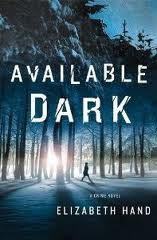
Available Dark
A Crime Novel
By Elizabeth Hand
Minotaur, 2012

This turgid mess of drug, death-metal music and Icelandic references masquerading as a book comes across as a lightweight parody of the Stieg Larsson thrillers. Told from the point of view of a 40-something female photographer and drug addict, it comes across as a quickie made in order to cash in on the Nordic crime craze. Gives a new meaning to the phrase "speed-read."

Yuck.

By Professor Batty


Comments: 4 


Monday, November 12, 2007

Voices


The third Inspector Erlendur book, Voices, by Arnaldur Indriðason, is billed as a thriller, but is really a subtle, layered psychological novel. This is the third in a series (the other English titles: Jar City, Silence of the Grave) of Icelandic mysteries, Erlendur is called to investigate a murder in a posh Reykjavík hotel, he decides to stay there for the investigation, not wanting to go home to his "empty hole" of an apartment during the Christmas season. By restricting his main character to one location, Arnauldur forces us to go inward with Erlendur, as he confronts his own past, as he explores the motivations of the murder, and reveals the background of the victim.

Arnaldur Indriðason is getting better with each book in the series, this book lacks the broader Icelandic settings of the others, but probes the Inspector's internal landscape deeper. This is a great series, and I am looking forward to many more.

By Professor Batty


Comments: 9 


Monday, January 14, 2013

The Gathering Storm

Black Skies

A novel by Arnaldur Indriðason
Harvill Secker, London, 2012

Originally published in Icelandic in 2009 as Svörtuloft (The Black Fort), Arnaldur Indriðason's second crime novel without Inspector Erlendur is set in Reykjavík in 2008 during the run-up to Iceland's financial meltdown. This time the main character is Sigurdur Óli, an investigator in the homicide division of Iceland's CID.

A convoluted plot involving sex, blackmailing and murder is set into motion when Sigurdur tries to help an old school chum who is being shaken down for his involvement with a "swingers" group a couple of years earlier. The list of persons of interest expands rapidly, taking the detective into the dazzling world of the newly-rich banking class. The author further explores this class stratification in a parallel story about a pathetic young alcoholic whose demise is not completely unrelated to the corruption that Sigurdur uncovers at the top.

This may be the most unrelentingly bleak of Arnaldur's crime novels since Voices. Sigurdur Óli's distaste for much of Icelandic culture (he prefers American Baseball and Football) is fully justified by the actions of the novel's characters. Arnaldur does use the City of Reykjavík as a vivid backdrop to the story; there is a lot of background here for those bitten with the "Iceland bug."

By Professor Batty


Comments: 2 


Monday, April 18, 2016

Mondays in Iceland - #58

Into Oblivion

An Icelandic Thriller
By Arnaldur Indriðason
Minotaur Books

This is the eleventh in the Inspector Erlendur series, although it would be the second in a chronological order.

Taking place in the late-seventies, Erlendur has been recently promoted to Inspector and works with his mentor, the gender-unspecified "Marion" to investigate a battered corpse that has turned up in the waste pool (which would later become the Blue Lagoon) from the geothermal plant on the Midnesheidi moor. An old missing-persons case from the early 1950s also captures Erlendur's attention.

The sub-theme behind both of these incidents is the US military base in Keflavík and how it distorted the values of the Icelandic citizens who dealt with it. There is a fair amount of history of a temporary housing project built upon old US facilities, a history which I found to be very interesting. Camp Knox, featured in the book, was where the Vesturbæjarlaug pool was later built and was also a subject of the excellent film Devil's Island.

The formula of this series is beginning to ossify, that's not necessarily a bad thing, but it does tend to make all the books blur together after a while. Still, I found it to be  worthwhile and it is a must for those who like their mysteries seasoned with an Icelandic flavor.

By Professor Batty


Comments: 0 


Monday, September 09, 2013

Reference

It has been a while since I've posted any bookshelf pictures, so, for you “snoops” out there, here are a couple images showing the “Flippist Reference Library™”:


Top left shelf contains Icelandic music and videos, along with doubles from my Halldór Laxness collection and a few “teach yourself Icelandic” books (I DIDN'T). The shelf below has the bulk of my Icelandic literature, mostly Laxness, but also some Sjón as well as a few Faroese authors. Fun for some, not for all. Moving down to the third shelf are music related books, heavy on Dylan, with Björk and Joni Mitchell. The right side has modern authors writing about Iceland (Indriðason, Nancy Marie Brown, Bill Holm, others).


Lower still are the books on Mythology (Campbell, Graves) folktales and then a mix of old fiction, art, poetry, biography and even a family genealogy. The bottom shelf has mostly art and photography (along with my High School yearbooks!)

The shelves on the right contain my music collection, They seem empty now because I recently thinned them out and also moved my DVDs which had been there to the Flippist Home Theater Media Center™  (subject of a later post.)

I've been going through a house cleaning purge lately; I can see my possessions dwindling in the future. I don't want to leave my heirs with a bunch of meaningless stuff. The Flippist Archives are safe for now; I use them for this blog. The photos and artwork on the walls as well as my modest ceramic collection (also to be featured later) have become a surprising joy to me.

All of this Proustian reflection leads to a deeper issue: as the tenth anniversary of FITK approaches I wonder what will be the ultimate fate of this site?  Discovered by new generations? Not likely. Buried in some forgotten server until a meteor blasts it out of existence? More likely. The old material here is still accessed every day by persons all around the world.  The new posts are read as well by a few dozen people, some of whom I know, some I don't (here's looking at you, Pretoria!). Facebook users also link to pages, although they never leave a comment. That's OK. It's a blog of images and ideas, not a social group. If I can brighten someone's day or offer a new perspective in my blog-posts, that is enough justification for me for me to continue its existence.

Which is more than can be said of television, the subject of Wednesday’s post.

By Professor Batty


Comments: 11 


Tuesday, June 09, 2009

Mount TBR


The Book Nook, Flippist World Headquarters

Most of the "keepers" in our book collection are stored in a corner of the bedroom. "Mount TBR" is a phrase I first heard used by correspondent Niranjana to indicate that pile of books "To Be Read." It struck a chord (C#dim 7th?) in me, for although I'm pretty much a one-at-a-timer as far as the reading of books goes, I do have those books which I know I'll revisit. I tend to purge my library of anything I know I won't read. So, just for the fun of it, let's take a "widescreen" peek at my "special" corner of the Batty library, those books I'll probably open again:


Of course Laxness leads the way, presented in order of publication, I'm only missing The Happy Warriors. I've even got Under the Glacier in Icelandic! Going down the row are various Sagas and "teach yourself Icelandic" books (I haven't given up hope yet!) and even a copy of Kristin Lavransdatter which I MUST re-read someday. A couple of Indriðason´s mysteries and my treasured Bill Holm. Going down a row, into the Biography section, Björk, Dylan and Gág share space with Huxley and Mary Magdalene. Further on are myths and tales; the rest of bookshelf contains mostly reference works.

The Weaver's shelf holds more modern literature; our tastes overlap; but there are some differences:


Snoop to your heart's content... ...UPDATE! Rose's Mount TBR is here... and Niranjana's is here...

By Professor Batty


Comments: 11 


Sunday, July 15, 2007

Ichiro, Rem and Arnaldur

Sunday found us in center of the city for some sightseeing and a Seattle Mariners baseball game. We parked near Pioneer square and visited a "Gold Rush" museum where I spotted this pair of glorious boots from the "Gay Nineties" (more food for thought for my trans-gender studies.) We went on to the game where we watched Ichiro Suzuki, who had just signed a $90 million contract the day before- which works out to over $100,000 per game over the next 5 years. One fellow who made considerably less per game at least still retained some poetic aspirations:


After the game we stopped briefly at the new Seattle Public Library, a Rem Koolhaus design, which was full of vertigous surprises:


Spending the evening in our rooms at the B&B, I managed to finish my summer novel Silence of the Grave (Grafarþögn), a detective mystery by the Icelandic author Arnaldur Indriðason, to whom I was introduced by blogger Kristín while in Iceland last fall. Of particular interest to me was the plot element involving the U.S. occupation of Iceland during and just after World War II. This intriguing bit of history has shown up in my reading before, with mentions of its aftermath even showing up in blogs (the U.S. military presence in Iceland ended just last year!)

By Professor Batty


Comments: 3 


Thursday, April 24, 2008

My Weekend With Baltasar

                          "No! No more cruddy digital projection!"

I'm not really as upset as the fellow in the picture seems to be. Actually, I'm looking forward to spending some quality time with him tonight. we've met before, via a mutual acquaintance: Baltasar Kormákur, the Icelandic director of such films as 101 Reykjavík, Hafið, A Little Trip to Heaven, Devil's Island, and a film that I'm going to see again tonight, Jar City, based on the book Mýrin by the noted crime writer Arnaldur Indriðason. I've seen 101 and a couple of Kormákur's stage productions. Furthermore, I was almost run over by him the last time I was in Rekjavík as I was leaving the National Theatre's box office!

One thing Baltasar does well is create stunning images, both on stage and in movies; the first time saw Mýrin, without subtitles, I was left with quite an impressionistic view of modern Icelandic forensics. Tonight's viewing (after having read the book) should be a little more coherent, but just as rewarding. He just won a "best picture" award for Jar City at the Prague Film Festival. It's worth a look, it will also play Monday night in Minneapolis, you might be able to catch it at other festivals this spring as well.

UPDATE: Just got back from the festival showing, the movie is as good (or better) than I remembered it (yay!), but it had been transferred to digital (boo, hiss!) with a BIG degradation of image quality. The theater was packed, the film received a good response, with a lot of Icelandic-oriented discussions going on in the lobby both before and after the showing. One viewer at a time, Rose.

If this is the only "print" in the country, it might be better to wait for the DVD or pay-for-view. Some kind of "truth in advertising" law must have been broken here, film is film and digital is digital. High quality digital is possible, but this wasn't it.

By Professor Batty


Comments: 4 


Wednesday, February 27, 2013

Íslensk menning


My collection of Icelandic (and Faroese) books, music and films has grown dramatically during the last fifteen years. From a single book (Independent People) into this collection occupying two full shelves of the Flippist Archives™. Actually, there are even more books—nine Indriðason titles are on a shelf below. Pretty impressive output from a country of 321,000! Even more amazing when one considers that my Icelandic shelf space is 20% of all my media (except vinyl, and I even have a couple of Icelandic LPs!)

I'm starting to think that it won't get much bigger than this, however. The Icelandic music scene is starting to falter (Kimi records just went bankrupt) and its film industry, while still vital, is starting to be incorporated in the world cinema—Balthazar Kormakur is now directing Mark Wahlberg action flicks! The book section might keep growing however, and I haven't even started reading Gunnar Gunnarsson.

I'm not a hoarder. Every couple of years I mercilessly thin out my books and CD's. If I don't think I'll ever visit a title again out it goes.

I know I'll be seeing my Íslenskir vinir again and again.

By Professor Batty


Comments: 5 


Friday, January 08, 2010

Mount TBR 2010


As promised, here is a brief rundown on my new books (with another look at my ever-expanding Halldór Laxness collection!), bottom row, left to right:

The Encyclopedia of Witchcraft and Demonology, by Rossell Hope Robbins, Crown, 1959. Pretty tedious reading, but full of cool vintage woodcuts.

Stories from The New Yorker, 1950 - 1960, various, Simon and Schuster, 1960. All the big hitters of short fiction in the '50s. Really exceptional.

Buffalo for the Broken Heart, by Dan O'Brien. Random House, 2002. Received as part of a combo gift with 10 pounds of frozen bison. Heartache, buffalo and redemption on a South Dakota ranch.

Icelander, by Dustin Long. Grove/McSweeney's, 2006. Post modern mystery, not about Iceland at all.

Arctic Chill by Arnaldur Indriðason. Minotaur, 2009. I'll be writing a review when I've finished this.

Swedish Folktales & Legends. See last Tuesday's FITK.

The Chain Letter of the Soul, The Heart Can Be Filled Anywhere On Earth,
The Music of Failure
All by Bill Holm. I've been reading Bill a lot lately, These three books span the last thirty years. I may be writing an overview of his essays sometime in the future. The title essay of Music is about as close to perfection as Bill ever got in his writing.

Björk by Nicola Dibben, Indiana University Press, 2009. A scholarly treatment of Björk, her career and her music. Somewhat pedantic, but its section analyzing her music gives a greater understanding of her unique approach to composition.

TOP ROW: 14 Halldór Laxness titles and counting...

By Professor Batty


Comments: 10 


Monday, August 21, 2023

Another Kind of Doll Story

The Girl By the Bridge
A Detective Konráð Novel

By Arnaldur Indriðason
Translated by Philip Roughton
Minotaur Books, 2023

It was October, 2018. The Weaver and I were heading into Reykjavík from the airport when I spotted an electronic billboard touting Stulkan hjá brúnní, the latest title from Iceland’s most renown mystery writer. It wasn’t until this year that I was able to read it in translation.

It was worth the wait.

The novel begins on the small bridge over Tjörnin, the pond in the center of Reykjavik, a place where I have walked dozens of times. It is 1961 and a young man spies a doll in the water at the pond’s edge. He investigates further and finds the body of a girl. The narrative jumps to a birthday party a few weeks later where we are introduced to Eygló, a 12 year-old girl with psychic abilities, who has an encounter with an apparition of another girl who mysteriously disappears after saying “I lost her.”

Flash-forward nearly sixty years and we find retired Detective Konrád who is called upon to conduct an informal search for the granddaughter of a notable Icelandic couple. The story takes off from there, with the usual mix of druggies and lowlife who are somehow tied into the death of the girl who was found at the bridge. Eygló reappears with information about the dead girl. Konrád’s back story is nicely integrated into the plot, I’m looking forward to seeing how the long arc of that story develops. In a pleasant deviation from the usual dectective novels, Konrád does not develop a love interest (perhaps because he's in his seventies.)

This is solid writing, terse, with a good translation by Roughton. Lots of local references makes it fun to read if you’ve spent time walking the streets of Reykjavík (if so, have a map handy when you read this). All of that said, as with most of Arnaldur’s novels, there are lots of interviews with elderly witnesses, not exactly thriller material. Multi-generational cover-ups are a recurring theme of Arnaldur’s books. There are three more books in the series yet to be translated.

I’ve reviewed most of Arnaldur’s translated output over a time span which matches this blog’s existence exactly. During that time he’s sold millions of books while all I have this goofy blog with its 20-30 daily visitors! Recommended.

By Professor Batty


Comments: 0 


Thursday, January 21, 2010

Arctic Chill

A Thriller. By Arnaldur Indriðason, Minotaur Books, New York, 2009

This latest* installment in the Inspector Erlendur series is another bleak visit to the world of Icelandic murder and intrigue. One problem in this continuing series is that there is always a chapter or two devoted to exposition, but once things get rolling the action picks up considerably. These stories always have a sub-context concerning Icelandic society and conflicts caused by change. This time the questions of immigration and prejudice are at the forefront of the narrative, with a nasty murder of a Icelandic-Thai child sending Erlendur off on a search for the murderer and, as is always the case, his own demons.

Fans of the series should enjoy this book thoroughly, newcomers might want to start with Jar City AKA Tainted Blood (Mýrin, in Icelandic.) There is just enough continuity in these stories to warrant reading them in order.

*The latest book in the US market. We are about 3 years behind the Icelandic publication, and a couple of years behind the UK, perhaps because Arnaldur's long-time translator, Bernard Scudder, died recently.

By Professor Batty


Comments: 3 


Sunday, April 18, 2004

Arnaldur Indriðason

FITK reviews of novels by the noted Icelandic mystery/thriller writer:

In English publication order:

Jar City (aka Tainted Blood) (2004)
Silence of the Grave (2005)
Arctic Chill (2005)
Voices (2006)
The Draining Lake (2007)
Hypothermia (2009)
Operation Napoleon (2010)
Outrage (2011)
Black Skies (2012)
Strange Shores (2013)
Reykjavík Nights (2014)
Into Oblivion (2015)
The Shadow District (2016)
The Shadow Killer (2018)

A guide to the Inspector Erlendur Series in continutity order here.

By Professor Batty


Monday, April 19, 2010

Reykjavík-Rotterdam

So the Minneapolis - Saint Paul Film Fest is finally here, and over the weekend I did manage to catch three films. One was French (35 Rhums), one was Chinese (Dixia De Tiankong- The Shaft), and one was Icelandic- the aforementioned Reykjavík-Rotterdam. The French and Chinese films were both slice-of-family-life dramas, very minimal action, and not a whole lot of character interaction either. They both had some redeeming qualities, but entertainment was not one of them.

Óskar Jónasson's film was, in contrast, a vivid and at times sordid crime drama. Co-written by the director and Arnaldur Indriðason, it is a "last caper" movie, with Baltasar Kormákur in the lead role as a reluctant bootlegger. An excellent cast includes many regulars from the Icelandic scene including Ingvar Sigurdsson, Ólafur Darri Ólafsson, and Jörundur Ragnarsson. Although it does feature some good local color, it is more of a Hollywood style movie. Indeed, it is being remade with Mark Wahlberg in the lead! Lots of hoods, creeps and lowlifes, with some disturbing beatings and bloody violence. Realistic footage on a freighter and a wild heist scene in Rotterdam filled out the well-plotted story. Not much of Icelandic culture, but as I said, it is a Hollywood style movie, and a successful entertainment.

By Professor Batty


Comments: 0 


Saturday, November 02, 2013

Strange Shores


An Inspector Erlendur Mystery
by Arnaldur Indriðason

Fortunately, I received my copy of this, the last book in the series, only a few hours before leaving our my recent trip.  I read it in one sitting while cozily ensconced in an antique bed in my room at the Calumet Inn in Pipestone, Minnesota. In a way it was fitting, for the hotel is said to be haunted, Arnaldur’s book is also filled with ghosts from the past. The previous two books in the series centered around his colleagues in Reykjavík while Erlendur was on leave, revisiting his childhood haunts in the East Fjörds. This book tells the story of his absence.  While still a child, Erlendur had been caught in a snowstorm with his younger brother and father. The younger brother was lost in the storm and never found.

It so happens that other people had also turned up missing in another, earlier, storm in the area—a group of British soldiers and a local woman. The soldiers were ultimately all accounted for (some died) but the woman's body never turned up. Erlendur starts asking questions out of curiosity, perhaps spurred on by the similarity with his brother’s disappearance, but soon finds himself reliving the event through the memories of aged pensioners. This is not a book for fans of action. Most of it is in the form of dialogs, many of those who Erlendur interacts with are in nursing homes. The book has an exceptionally dreary mood: it is overcast, cold, damp and dark, filled with lives of regret and suspicion.

The book has two endings: the ending of the story and the ending of the series. The story’s end is melancholy. The series end is fitting and, in a strange way, spiritual and uplifting. I wouldn’t recommend reading this entry first; the reader should have at least a few others read in order for this volume to make its maximum impact. My other reviews of the series are here.

By Professor Batty


Comments: 2 


. . . . . . . . . . . . . . . . . . . . . . . . . . . . ©Stephen Charles Cowdery, 2004-2025 . . . . . . . . . . . . . . . . . . . . . . . . . . .