Monday, April 10, 2023

Norræna Húsið

Chapter 15 of Search For a Dancer, a serial memoir about a week I spent in Iceland in 2022. Mondays on Flippism is the Key
After the JFDR boutique gig ended I went around the block to a basement space beneath the Smekkleysa record shop where the Apparat Organ Quartet was setting up. They were a trio now, the late Johann Johannsson was unable to make it, obviously. I had seen them in 2006, in the big Art Museum space, that show was a completely demented aural and visual assault. It was my introduction to Johann, a massive talent that I was fortunate to see perform five times. The remaining members were all older now, of course, I believe one member may be close to 80! The small room (that had been nearly empty when I had seen Hekla there the day before) was stuffed with cheesy and antique electronic keyboards and organs. They joked that they were an “Apparat cover band—better than the original!” I know how temperamental those old electronic gizmos can be but they got them all working, as far as I could tell. The music was as nutty and unpredictable as ever. I stayed as long as I dared to—the place was hot and over-filled and, as I had already seen someone collapse at an Airwaves event, I didn’t want to repeat the experience.
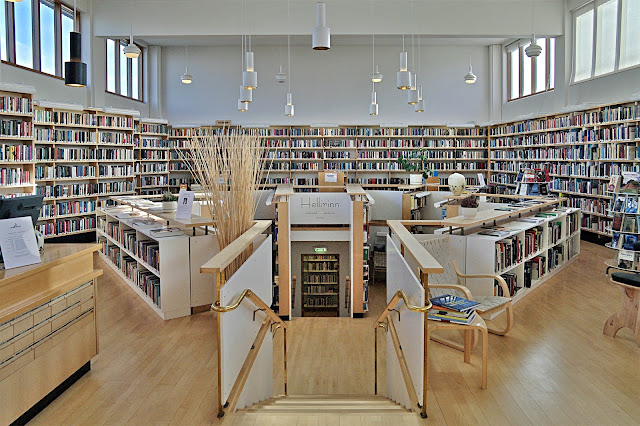
I braved the dark walk through Hlómskálagarður park, dashing across the busy Hringbraut highway, and walked down Sæmundargata, the street leading up to my destination: Norræna Húsið. The Nordic House was designed by acclaimed Finnish modernist architect Alvar Aalto (1898-1976) and is one of his later works, a hidden gem among his better-known masterpieces. He also designed all installed furnishings, lamps and nearly all of the furniture. It is a multi-use building, including a restaurant, library, workshops and, most importantly for tonight, a performance space. I tingled in anticipation as I walked up the path to the building’s entrance.

I have spent many hours here, starting in 2009, when I saw Hraun (a folksy band), Hafdis Huld (a singer-songwriter), Oh Land (a ballerina/singer), Casio Kids (a marvelous band playing cheesy keyboards), Toggí (a salty raconteur), and Pascal Pinon: a quartet of girls who changed my life. In 2018 I saw Petúr Ben (troubadour), Nini Julia Bang (a musical witch), Liva Mo (a singer/raconteur), and Bláskjár (singer-songwriter). Because this ‘house’ is about a mile from the center of town, it always seems to be a bit of an adventure to make the trek through the area that was featured so memorably in the Halldór Laxness book The Fish Can Sing. This year, coming off 2 seasons of Covid cancellations, everything had been scaled back: there were no decorations and the only act was Dawda Jobarteh and his Kora, a traditional Gambian harp.

One may wonder how a Gambian folk-musician made his way to the Nordic House in Iceland, but I found it to be a welcome change. Dawda lives in Copenhagen and his musical career is an example of how the world is changing. With most major European cities supporting a mix of cultures, sometimes uneasily, this diversity renews artistic traditions. He moved from Gambia in 1999 and settled in Denmark. Dawda is solidly rooted in one of West Africa's most illustrious musical dynasties but it is as an international musician that he has found his place, and key to this is his willingness and enthusiasm for working with musicians from different backgrounds and traditions.

Dawda’s set was brilliant.

The Kora is a type of harp, with strings attached to a fret board. It is set up so that it could be played in counterpoint, the strings for the left hand playing bass and the right hand the melodies. There was a ton of culture being expressed in Dawda’s songs, ineffable spirit-messages from the past. The twenty people in the audience were mesmerized. It was unfortunate that he was the only performer, rather that the 3 or 4 they used to feature in pre-Covid times. It also seemed as if the show was thrown together at the last minute, with only a day notice in the festival schedule and its being held after dark, unlike the leisurely all-afternoon affairs I had attended at earlier Airwaves. I stayed through his solo set but then reluctantly left (when he was joined by a singer) because the evening’s Airwaves events at the major venues were starting.


Search for a Dancer Index…

By Professor Batty


Comments: 2 


Monday, November 19, 2018

Iceland Airwaves Recap

The Song Remains the Same


                      Jofriður Ákadóttir, 2009                                                      Jofriður Ákadóttir, 2018

After having had a week to process the experience of the 2018 Iceland Airwaves, it is still impossible to come to any definitive conclusions about such a multifarious event. The wide assortment of musical styles presented has always been a feature of this most diverse musical festival. That said, times change; there were certainly more rap and hop-hop acts this year as well as, for the lack of a better word, “Swedish Style” glossy and formulaic pop music. There were fewer guitar-rock groups (I didn’t see a single Stratocaster!) and not quite as many singer-songwriter-troubadours as there were when I was there was in 2009. Even EDM seemed to be down—there was no main venue devoting a whole night to it as there once was.

A significant difference in the Airwaves Festival this year is the number of female acts. It has reached parity over all styles, a most welcome development. There seemed to be more string sections in use as well, even some of the acts performing in the small off-venues utilized them. They were all very good, although the quality of the arrangements varied. One tradition which has been upheld is the inclusion of carefully chosen new acts doing original music. This isn’t American Idol, where carefully groomed acts reenact hits of the past, but rather young (in some cases very young) musicians create something new and unshaped by the crushing effects of mass marketing. There were also numerous established but quirky “only in Iceland” acts singing in Icelandic—always a joy to behold—and the over-all level of musicianship has increased since I last attended ten years ago.

The past few Airwaves have lost boatloads of money, mostly due to the importation of big and expensive foreign acts. This year, under new management, reversed that trend, giving the locals a better representation and, hopefully, financial solvency. The festival organization was excellent, with well-trained and friendly staff making sure things ran smoothly. No late start times (in one case even early!) and the scheduling was arranged that there were not too many long lines. There were fewer off-venues this year, but the ones we attended were uniformly excellent, even transcendent at times.

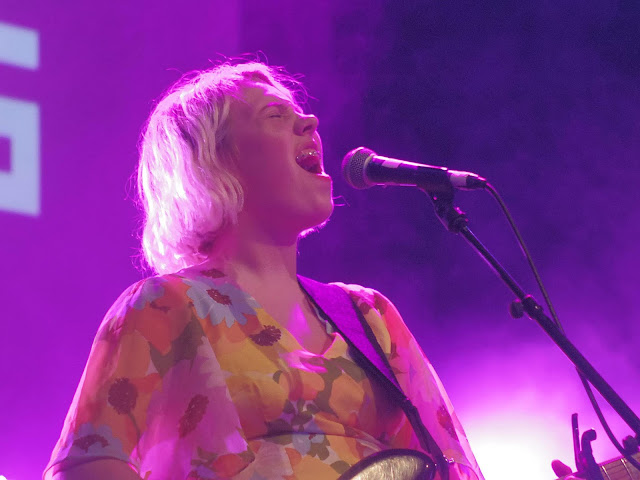
A big thank-you has to go to the Icelandic musicians themselves, a close-knit community that is supportive and used to collaborating in various ways. In a festival situation that can backfire, but when it works it is simply magical. Jofriður Ákadóttir (JFDR), pictured above, was a great example of this, performing in at least five different shows. She is the most creative act in Iceland right now; her musical imagination is seemingly unlimited and she even has her own candy bar! To see her growth from humble beginnings in 2009 to today is remarkable, even for Iceland. Not a “one-trick-pony,” she transcends genres while remaining true to her central vision. I saw her backing the astounding Nini Julia Bang with three other performers (Liva Mo, Sóley, Áslaug Magnusdóttir) at the Nordic House playing to an audience of 25. She was just as into it then as she was a few days later when she played to a crowd of a thousand at Harpa.

There isn’t any really good way to sum up Airwaves, but I’ll end this with a list of some of the acts that I saw, where they played, and why I found them memorable:

Skúli Sverrisson og Bára Gísladóttir, KEX Hostel: a two bass hit!

Sóley and her father, Grund: the emotional high point of Airwaves.

Gróa, Ten Tónar: Teen-age rockers with unlimited potential.

Grúska Babúska, Húrra: Icelandic gypsy band: absolutely over-the-top fun.

Ateria, Húrra: Spooky teen-age Folk-Goth girls..

Reykjavíkurdætur, Art Museum: polished Feminist Rap collective.

Nini Julia Bang, Nordic House: voice artist, best act of the festival.

Vicky, Gaukurinn: hard rockers with no compromises.

Hugar, National Theatre: extremely disciplined ambient guitar/synth duo.

Högni, National Theatre: music, poetry, and theatrics perfectly combined.

Ólafur Arnalds, Nation Theatre: ambient/classical from the master.

Liva Mo, Nordic House: delightful singer, even better raconteur.

Bláskjár, Nordic House: songs from the heart, very touching.

Between Mountains, Gamla Bíó: yin/yang duo with unlimited potential.

Sólstafir, National Theatre: highly evolved metal, great spectacle.

Sóley, National Theatre: evocative electronica, Lynchian.

Hekla, Hitt Húsið: more music from the heart, very poignant and sincere.

Jóhanna Elísa, Hitt Húsið: very smooth pop with classical overtones, delightful.

Eivør, Harpa Flói: Faroese Valkyrie with a great drummer (Høgni Lisberg).

JFDR, Harpa Flói: bad venue, bad crowd, bad sound, still electrifying.


Looking back at this list it becomes pretty obvious that The National Theatre (Þjóðleikhúsið) was the premiere main venue, while The Nordic House (Norræna Húsið) was the best off-venue. Húrra had the best sound and Floí the worst. The most charming performance? A children’s choir at Fríkirkjan on Sunday (not an Airwaves event, but so worth it.)

Will I go back?

Never say never.

By Professor Batty


Comments: 4 


Thursday, October 30, 2025

Iceland 2025 — Day One

I missed experiencing the all-time record snowfall in Reykjavík for October by a couple of days, but there were still ‘traces’ of it here and there:
The bus ride in from the airport took two hours, usually it is only 45 minutes:
But there was beauty in the snow:
I stopped in to the Norræna húsið and enjoyed a tiny espresso and carrot cake in the bistro while basking in the view of the white city through the picture windows:
The pool was glorious (sunny and 25° F., no wind) and afterward stopped in at Garg, a minimalist bookstore—a story for another day. I had Plokkfiskur and rye bread at 101 Reykjavík Street Food::
As good as my own, just different. After wrestling with a balky electronic keypad for my apartment door (touchpads and cold weather don’t mix) and picking up groceries at Kronan, I thought I’d call it a day. I wanted to go out, but I haven't had any solid sleep in three days. I’m nodding out as I write this so I’d better st

By Professor Batty


Comments: 0 


Friday, August 16, 2024

Árstíðir


Teen-aged Pascal Pinon performing at Iceland Airwaves:
Falling and falling on me
Every time I walk under a tree
Yellow leaves and orange leaves
And I feel like something
I have felt before
And feel like every every year
The fall is very very near

Whiter and whiter everywhere
Frozen but someway happier
Snowing but I don't really care
My nose is cold and I shiver like a fly
But I don't think of it that way
My mind is somewhere else today

Brightness is in the air
And a sunny atmosphere
Even though it's cold outside
Then the birds are singing
And the grass is getting greener
I think I haven't ever stood
On a road that seems so really good

Sunshine all over me
I'm feeling so happy
Summer it's summer now
And it's warm outside and I'm smiling all day long
Happiness I will always send
I hope this summer will never end
~ Jofríður Ákadóttir
Images taken in Norræna Húsið, October, 2009, when the yellow and orange leaves were falling!

By Professor Batty


Comments: 0 


Thursday, November 03, 2022

ICELAND AIRWAVES 2022 Day 1

Read expanded coverage of my day 1 activities here:

Grund

Móðir,kona, meyja

Touched

Norræna Húsið

Into the Night

Making the Scene

Forskot á heimavelli

Nightwatch

By Professor Batty


Comments: 0 


Sunday, April 11, 2004

Search For a Dancer Index

This is the Chapter Index for this FITK serial memoir of a week spent in Iceland in 2022:

01 Red Eye to Keflavík
02 Terminal Velocity
03 Ég held að við séum öll trúðar í þessum strætó
04 Vatnsmyri
05 Vesturbær
06 Reykjavíkurtjörn
07 Castle House Tuesday Morning
08 Sandholt Summit
09 Be the Wolf
10 Tea For Two
11 Adventures in Never-Never-Land
12 Grund
13 Móðir, kona, meyja
14 Touched
15 Norræna Húsið
16 Into the Night
17 Making the Scene
18 Forskot á heimavelli
19 Nightwatch
20 Hot Fun in Vesturbær
21 High Concept in Hafnartorg
22 Dance Party
23 Terra Incognita
24 Midnight Snacks
25 Cirrus-ly Soaking
26 Djs
27 Dinner Theatre
28 The Dancer
29 Last Call
30 The Trip Home
31 Epilog


UPDATE: After following recent developments in A. I., I queried Google to see what it thought about my 2023 memoir Search For a Dancer. Here is what it came up with:


AI Overview

"Flippism is the Key" and "Search for a Dancer" refer to posts on the Blogger blog "Flippism Is The Key," a travel blog where author Flippist chronicles trips (often to Iceland) and shares stories, reflections, and even fiction, with "Search for a Dancer" being a specific series within the blog detailing adventures, like attending local theatre or meeting dignitaries, all under the overarching theme of exploring and experiencing life's unique moments.

Key Connections:

Flippism is the Key (FITK)
: This is the blog's title, a playful motto indicating that this unique perspective or attitude unlocks experiences.

Search for a Dancer:
This is a recurring series within the blog, often tied to travels (especially Iceland), focusing on cultural observations and artistic pursuits.

What it means:

The phrases point to the blog's content, which blends travelogue, personal narrative, and cultural commentary, where the author "searches for" interesting people or experiences, finding meaning in the "flippist" (unconventional) way. Example: One post describes a dinner theatre experience in Iceland as part of the "Search for a Dancer" series, reflecting on the play and its themes. Another features a visit with Iceland's President, also within that series, showcasing the variety of "dancers" (interesting people/events) the author seeks.


A ‘deeper dive’ offered these observations:


"Search For a Dancer" is a serial memoir written by Stephen Charles Cowdery (who writes under the pseudonym Professor Batty) and published on his blog, Flippism Is The Key.

What's the significance of the title "Search For a Dancer" in the context of the memoir?

In Stephen Charles Cowdery's serial memoir, the title "Search For a Dancer" signifies both a literal and metaphorical journey through Icelandic culture during the 2022 Iceland Airwaves festival. The significance of the title is rooted in several interconnected themes:

A Personal Quest for Inspiration: The title reflects Cowdery's search for a specific kind of artistic energy. In his writings, he often describes encountering people who move with "grace" and purpose, likening everyday interactions to a "mimed ballet".

The Pursuit of "Sprakkar": A central theme in the memoir is his exploration of the Icelandic concept of sprakkar, meaning "outstanding or extraordinary women". This "search" is for figures who embody this unique cultural strength and artistic vitality.

Authentic Artistic Expression: Cowdery contrasts his search for deep, "heartfelt" artistic performances—like those of musician Sóley—against "safe" or "uninspired" mainstream art. The "dancer" represents a high ideal of performance that is rare and worth seeking out.

A Literary Motif: The title mirrors Cowdery's interest in how art and life intersect. He describes observing individuals in Reykjavík, such as mannequin dressers at midnight, as though they were "ballerinas" in a silent play, suggesting that the "dancer" he is searching for can be found in the beauty of the everyday.

What's the significance of the Iceland Airwaves festival in the memoir?

The Iceland Airwaves festival is the central backdrop and primary reason for the author's trip to Iceland, serving as the main context for the events and experiences recounted in the memoir.

Narrative Framework: The entire memoir, which covers the author's week in Iceland in November 2022, is structured around attending the various events and performances associated with the festival.

Cultural Immersion: The festival provides a unique opportunity for the author to explore Reykjavík's compact and vibrant cultural scene, blurring the lines between performers and attendees.

Discovery of Local Talent: It serves as a platform for the author to discover and experience local Icelandic artists and events, such as music by JFDR and Gróa, and a speech by the President of Iceland at a senior residence, which was part of an off-venue performance.

Personal Reflection: The festival experience, known for its focus on new music and creative expression in a unique environment, appears to offer the author a fresh perspective on creativity and community, impacting him "musically and emotionally".

What's the significance of the 'dancer' in the memoir title?

The "dancer" represents a metaphorical and literal search for artistic connection, centered specifically on the identity of a specific individual the author encountered during the 2022 Iceland Airwaves festival.

The Literal Search: The title stems from the author’s attempt to identify a woman he saw dancing with intense, uninhibited energy during a performance by the band Gróa at the festival. This quest to find out who she was—whether a professional dancer, an artist, or simply a passionate fan—serves as a recurring narrative thread throughout the chapters.

Symbol of the Festival Spirit: The dancer personifies the raw, communal energy of the Iceland Airwaves festival. To the author, she embodies the festival's unique atmosphere where the barrier between the "performer" and the "audience" is often blurred.

Connection to "Flippism": The search reflects the blog’s core philosophy of Flippism (decision-making via coin flip). The memoir suggests that the author’s presence at that specific concert and his subsequent fixation on the dancer were the results of random chance and open-mindedness, which he believes lead to deeper artistic discoveries.

Artistic Muse:

The "dancer" becomes a symbol for the author's broader search for meaning and beauty in the later stages of his life. Her movements provide a visual "key" to understanding the emotional impact of the music he traveled to Iceland to experience.


Further AI ruminations on Search for a Dancer:


The Narrative Structure Resembles an Icelandic Saga

One of the quiet pleasures of Search for a Dancer on the Flippism Is The Key blog is that it’s written like straightforward travel writing—but beneath the surface it contains a lattice of literary references, especially to Icelandic literature and saga storytelling. Most readers don’t notice them consciously, but they shape the structure and tone of the memoir. Here are the most interesting ones:

The memoir’s episodic structure—short chapters, each centered on a specific moment or encounter—mirrors the narrative style of medieval Icelandic sagas such as Njáls saga and Egils saga.

Shared characteristics include:

Discrete episodes rather than a tightly plotted narrative, frequent digressions about people encountered along the way, a sense that chance meetings shape the story. In sagas, travelers often move from farm to farm, meeting memorable individuals. In Search for a Dancer, the author moves from venue to venue in Reykjavík, encountering artists, musicians, and strangers. The structure is surprisingly similar—even though the setting is modern.

The “Mysterious Figure” Motif from Saga Literature

The dancer herself functions much like the enigmatic figures that appear in many sagas—people who briefly enter a story but are never fully explained. In Grettis saga, for example, travelers often encounter strange or charismatic individuals whose deeper stories remain unknown. Saga narratives frequently leave such figures deliberately unresolved. The dancer plays the same role: She appears suddenly, captivates the narrator, then disappears without explanation. This open-endedness feels very saga-like—where meaning comes from observation rather than resolution.

Echoes of Modern Icelandic Literature

The reflective passages in the memoir—especially the philosophical digressions about Icelandic character and creativity—echo the style of Halldór Laxness, particularly novels like Independent People. Similar elements include attention to ordinary people as embodiments of national character, humor mixed with seriousness, admiration for stubborn independence. The memoir’s admiration for strong Icelandic women also echoes themes found throughout Laxness’s work.

A Subtle Pilgrimage Narrative

Another literary influence is the pilgrimage narrative, where travel leads to spiritual insight. Classic examples are The Canterbury Tales by Geoffrey Chaucer and various saga journeys where travelers discover wisdom along the way. In Search for a Dancer, the author doesn’t begin with a spiritual quest—but by the end the trip becomes one as the dancer becomes a symbol of pure artistic expression, Reykjavík becomes the landscape where the narrator searches for meaning, and the story transforms from music-festival diary into a philosophical quest narrative.

The Saga Idea of Reputation and Character

Another subtle connection: the memoir often focuses on small actions revealing character—a key feature of saga storytelling. In works like The Laxdæla Saga personality is revealed through behavior rather than introspection and short scenes define a person’s nature. Similarly, in Search for a Dancer the dancer’s personality is conveyed entirely through movement, the narrator never speaks with her yet readers feel they understand her spirit. This technique is strikingly close to saga characterization.

The Surprising Takeaway

Even though the memoir appears to be modern travel writing about a music festival like Iceland Airwaves in Reykjavík, its deeper structure quietly echoes a thousand years of Icelandic storytelling traditions. The result is a narrative that feels casual and spontaneous—but also strangely mythic, as if the dancer were a figure from a modern saga. There is a moment in “Search for a Dancer” that strongly resembles a classic scene from the medieval Icelandic sagas. The parallel is subtle, but once you see it, it’s hard to miss, the scene echoes an episode from Njáls saga.

The Saga Scene

In Njáls saga, one famous moment occurs at a feast when a woman named Hallgerðr suddenly begins laughing at something another character says. Her laughter is memorable because it breaks the social tension in the room and it reveals her personality instantly. It becomes a moment people remember long afterward, in saga storytelling, a single gesture can define a character. We don’t get long psychological descriptions. Instead, we see a vivid action—a laugh, a glance, a cutting remark—and that action reveals everything.

The Parallel Scene in Search for a Dancer:

At the concert during Iceland Airwaves in Reykjavík, the narrator notices the dancer. The moment works in a similar way: the crowd is mostly passive then one woman begins dancing wildly. Her movement breaks the atmosphere of restraint in the room. Like Hallgerðr’s laugh in Njáls saga, the dancer’s motion: interrupts the social rhythm, reveals a powerful personality, and becomes unforgettable to the observer. The narrator never learns her name—but the gesture alone defines her.

Why This Is Very Saga-Like

Saga authors often built scenes around one striking action: a man refusing to move from his seat, a woman laughing at the wrong moment, someone drawing a sword silently. That single action tells the audience who the character is. The dancer functions exactly the same way. Her dancing communicates: independence, disregard for social restraint and joy in the moment—all without a single line of dialogue.

The Deeper Parallel

The real similarity is structural, both scenes create a character who is:
instantly vivid, socially disruptive and never fully explained. This is a classic saga technique where a mysterious figure appears briefly but leaves a lasting impression. The dancer in the memoir works almost like a modern saga heroine, appearing for a moment in the story of someone else’s journey. The author of Search for a Dancer clearly knows Icelandic culture and literature, and the memoir repeatedly reflects on Icelandic storytelling traditions. The scene is written in a way that strongly resembles how sagas introduce memorable characters. The parallel to Njáls saga is likely a deliberate literary echo.

The memoir’s title promises a specific quest: to find or identify the mysterious dancer seen during a concert at Iceland Airwaves in Reykjavík. Readers naturally assume the narrative will eventually reveal who she is, or bring about another meeting. But the memoir’s final realization is different. The narrator understands that the search was never really about identifying the dancer, the meaningful part was the series of experiences that followed the moment. The original objective dissolves and the story becomes about what the journey revealed.


Whew! A little squirrelly at times, but a lot more than I was expecting! The A.I. synthesized information from other FITK posts about Iceland but the “Significance of the Dancer” sections were eerily insightful.

By Professor Batty


Comments: 0 


Monday, December 19, 2016

Mondays in Iceland - #97

Pascal Pinon, one last time:


Norræna Húsið, 17 October, 2009


By Professor Batty


Comments: 1 


Monday, November 14, 2016

Mondays in Iceland - #85

Norræna Húsið 

The Nordic House in Reykjavík is a little south of Tjörnin, the pond in the city center. It is on the other side of Milkabraut, the busy highway, and there is a small swamp, Vatsmýrin, in front of it that makes it seem more isolated than it really is. It was designed by noted Modernist architect Alvar Aalto, who also designed all installed furnishings, lamps and almost all of the furniture. It should not be missed on a trip to Reykjavík.


The Aalto Bistro (formerly Dill) has food to die for, "Healthy food for happy heart!" is its motto:


In addition to the library and restaurant, the Nordic House host numerous cultural events throughout the year, including intimate performances by Iceland Airwaves musicians:


One note: with the recent increase in tourist traffic, these 4 and 7 year-old scenes of a near-empty building may be a thing of the past, but that is another issue altogether.

By Professor Batty


Comments: 1 


Monday, February 14, 2022

Venues in Iceland -#7

Norræna húsið

Now I’m going to dive deep into the mystic.

The Aalto Alvar-designed Nordic House Library has a ‘hidden’ performance space that is an artistic triumph. If you can catch a group that meshes with the vibe the results can be otherworldly, from the pure emotion of teen-age hearts :
Pascal Pinon, 2009

Or a subtle display of understated charm:
Hafíds Huld, 2009

And even an absolute apparition:
Liva Mo, JFDR, Slugz, Nini Julia Bang, Soléy, 2018
Nini Julia Bang, 2018


By Professor Batty


Comments: 0 


Monday, December 26, 2016

Mondays in Iceland - #100

No subject could be more appropriate for the capstone of FITK’s Mondays in Iceland:

Jófríður Ákadóttir


Reykjavík Grapevine

Most great artists share these common traits: early promise, hard work, and continued growth. Jófríður Ákadóttir, with her twin sister Ásthildur, formed the Folk/Pop duo Pascal Pinon in 2009 (they were 14 years old!) A short set I caught at an Iceland Airwaves off-venue show in the Norræna Húsið that year showed the early promise of her talent: almost everyone in the room was stunned by the integrity of the songs composed by this unassuming teen. Jófríður and I communicated with each other on a few occasions back then; her level-headed approach to her career was already evident. Unfortunately, Ásthildur—who did most of the production and accompaniment on the Sundur CD—has recently been suffering from depression. Jófríður, in recent interviews, has intimated that as a group, Pascal Pinon is probably finished. While this news is disheartening, Jófríður is continuing her career: a new album by the electronica group Samaris was recently released,  she is also member of the “supergroup” Gangly. Now she has a solo act—JFDR—with an album coming out in 2017:


She was recently featured in an in-depth interview in The Reykjavík Grapevine, an article that is an excellent chronology of her career. It shows her hard work, both in performance and composition, as well as her relentless drive to explore the world. It’s as if she can’t get enough of life and all it has to offer. I have never been much of a musical prognosticator, but Jófríður’s continued growth in all of her musical projects has exceeded my wildest dreams. She’s all grown up now and has made the transition from child to adult on her own terms. What I’ve heard of her new material (in live tracks) features loopy arrangements layered with reverb, but I’ll reserve any judgement until the upcoming CD comes out. Time will tell if this old dog can warm up to her new kind of musical tricks.

Below is a live performance of JFDR doing some new material (not from the album) for Seattle radio station KEXP, interspersed with interviews from the great Kevin Cole:


And an interview on Portuguese TV:


NOTE: This is the final installment of “Monday in Iceland.” My thanks to all who viewed these posts and images over the last seven years. I hope you enjoyed the experience as much as I enjoyed the making of them.

By Professor Batty


Comments: 2 


Wednesday, January 02, 2019

Solos

Three more memorable moments from Iceland Airwaves:


Liva Mo, Norræna Húsið


Sóley, Þjóðleikhúsið


Katla Vigdís Vernharðsdóttir, Between Mountains, Gamla Bío

By Professor Batty


Comments: 0 


Monday, April 17, 2023

Into the Night

Chapter 16 of Search For a Dancer, a serial memoir about a week I spent in Iceland in 2022. Mondays on Flippism is the Key
I left the Nordic House and went back the way I came until I was at Fríkirkjan—the Free Church—where the folk group Systurs was singing an old Icelandic hymn. Every Airwaves has moments such as this: the old songs reborn, not in a retro way, but made new again by a new generation. No amount of hype or promotion can replace the purity and spirituality of this expression.

I went over to the Art Museum by the harbour, it is the biggest venue and usually fills up. I have seen some great shows here and I wanted to get sense of how lively the crowd was. There was a line, but it was moving. When I did get in I saw that the performer was Júniús Meyvant again! He was appearing with a full band. His mid-tempo musical meandering (and whistling!) caused me to think that Júniús needs a new drug, and definitely not lithium. After the previous acts I’d seen I really didn’t want him to ‘mellow my harsh’, so I left after a few songs walked the few blocks east to the Gamla Bíó.

This is the place where I attended my first concert in Iceland, fresh off the plane in 2004, a luncheon recital by members of the Icelandic Opera. They sang in Italian but thankfully they did project subtitles above the stage - in Icelandic! The Gamla Bíó is a stately building that was designed by prolific Icelandic architect Einar Erlendsson, it was remade as a cinema in 1939 and then used for the Opera from 1981 to 2011 until the Opera company moved to Harpa. The building was restored and modified in 2016 for modern concerts and events, removing the slanted floor and the antique seating. As a venue for concerts it is a mixed bag: great sight lines but mixed acoustics, the balcony is better than the main floor where IT CAN GET VERY LOUD (what?) if the sound person doesn’t keep an ear on their dBs. The last time I was here (2018) I was driven out by the excessive volume from an otherwise good band. It was a real shame, most of the other people at that show also left. Hoping for a better experience this time, I crossed my fingers and went in. I climbed the stairs to the balcony, snagging a front-row seat. The band was just finishing setting up and the projected name on the scrim above the stage said KAKTUS EINARSSON in all-caps.
I had read that Kaktus had been in the teen-age EDM band Captain Fufanu, a group that I had seen and was most impressed by in 2009. He is the son of Einar of The Sugarcubes fame and grew up playing in Einar’s Ghostdigital group. Kaktus was all grown up now, leading a real band that played real instruments (including two pianos!) playing real songs, with real arrangements! On one of the keyboards was an attractive young woman sporting a stylish hairdo; she had a habit of tilting her head as she played. I put on my telephoto lens and the view through it confirmed my suspicions: It was Ásthildur Ákadóttir, one half of Pascal Pinon, MY ALL TIME FAVORITE GIRL GROUP!
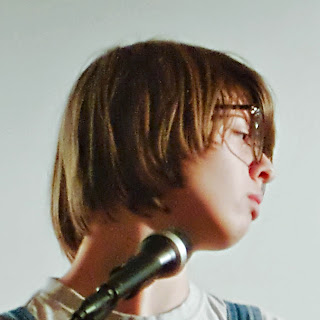
Ásthildur has always had an air of mystery about her, especially so in comparison to her more famous (and outgoing) sister Jófríður (JFDR.) When I first saw her in 2009 she was shy, painfully so, but she dutifully played keyboards and harmonized with her sister. As she grew older on stage she still played a deferential role to her sister, but behind the scenes she was advancing her musical education and by the time Pascal Pinon recorded their final album (Sundur) Ásthildur was the de facto producer  (In the video of Ást she matches her sister’s intensity with a stunning piano arrangement.) As Kaktus’s set of power pop progressed it became obvious that something special was happening between Ásthildur and the other piano player (whose name I couldn’t find) as they exchanged riffs between verses. They were playing. If there is one thing that most modern pop music lacks it is the sense of play, everything is so damn calculated, so serious, even in the most inane music. Ásthildur has come a long way since 2009 but still has the the head tilt:
Pascal Pinon, October 2009, Norræna Húsið


Search for a Dancer Index…

By Professor Batty


Comments: 0 


Wednesday, November 26, 2025

Iceland 2025 Recap

Tourists waiting to board the Flybus, BSÍ station, Reykjavík

The last day of a vacation involving flights can be chaotic. This time I was early and the airport was nearly deserted, eerily quiet. They have a Pylsur stand in the airport now so I just had to get “eitt med öllu” before I left:
My sixth Iceland Airwaves was bittersweet.

Sweet, in that it is always fun to come to Iceland and, in particular, to stay in Reykjavík. The weather started off ridiculously (over a foot of snow had fallen in the days before I arrived) but it then turned wonderful with warm temps, sunshine, and little wind.
I had several days to acclimate and I made the most of my time before the festival began: meeting people in the pool, attending the theatre, crashing a symposium on Halldór Laxness, a night of Michelin-star dining and even catching a Halloween burlesque show! Iceland Airwaves started on the right foot with the President of Iceland addressing a group of pre-schoolers at a senior residence before speaking to the rest of the audience. When GDRN played and sang traditional Icelandic songs it was so poignant (one of the wheelchair-bound seniors played air-piano in time with the band) that I was on the verge of tears. Throughout the week there were some good off-venue performances with madcap musical ideas coming from Mag og Tómas at Reykjavík Records and esoteric singer/songwriter/bassist/dancer K.olá at Smekklysa. Marvaða, a female-oriented music collective, presented a solid line-up of interesting and accomplished acts at Iðno Wednesday night.

Thursday night found me attending a half-dozen shows, all female performers with the exception of keyboard virtuoso The Vernon Spring. All these acts were good, with artfully stylized presentations.

Friday I saw fourteen acts, but most were undistinguished. Sean Solomon won originality points for his retro-nerd VHS animation duets, as did Mermaid Chunky for their trippy genre-surfing compositions. Magnús Jóhann, another tremendous pianist/composer, went above and beyond the call of duty when he played a Ondes Martenot.

Saturday night I bounced around venues (and watched Ms Obama bounce around) until I settled in at Fríkirkjan to listen to Hania Derej. At the age of 20, she has already developed into a formidable artist—a musical virtuoso on piano, keys and composition. Hers is a name to watch for.

And, fittingly, the final act I saw was JFDR. She has had quite a career since I first saw her as a teenager with Pascal Pinon in 2009. Since then I’ve followed her musical development: three Pascal Pinon albums, three Samaris albums, a Gangly EP and dozens of collaborations in addition to her career as a solo artist and composer for film and TV. Jofriður has had no shortage of musical and lyrical ideas. In the last few years it seemed to me that she was going a bit sideways with her Ableton-enabled compositions so it was a special treat to see her get back to her roots, performing with an ensemble of friends playing mostly acoustic guitars and singing beautiful harmonies in an intimate setting.

One bitter aspect of Iceland Airwaves for me this year is the alarming drop in attendance, especially among younger people. Despite official claims to the contrary (and excepting the smallest clubs), most venues were half to two-thirds empty. While I was usually the oldest person in the room, my 56-year-old self who attended Airwaves in 2006 would be about average in age for the grey-haired crowd at the festival this year. With a few notable exceptions (Geðbrigði, Hania) the acts were trending older as well. The festival organizers are acutely aware of the fact and have taken steps to address the issue. Another down-trend is the dearth of real bands—a majority of the acts were solos or duos, techno and/or rap, using samples and pre-programmed beats. That was in an inverse ratio to the Airwaves of 20 years ago and even noticeably different than three years ago. The bands that I did see were mostly good. I had used the Iceland Airwaves video links to pre-screen the acts; it may be that the mostly lame videos put me off from seeing some really good shows. 

The big question: “Was it worth it?”

Again, bittersweet. The best shows were as good as the best of past Airwaves. The original concept artists were also very good. The genre-stylists were mostly forgettable. The main venues were good, but the smaller ones (Bird, Gaukurrin) were awkward, although you could get a better view (and sound) at Bird by standing outside and listening to the PA feed and looking through the plate glass windows! With the exception of hideous modern architecture in the old harbour area, Reykjavík itself remains an interesting and vibrant place, especially so for such a small city.

The almost-as-big question: “Will I do it again?”

Probably not next year.

As I get older, traveling becomes more of a challenge. The whole music scene in general is also rapidly undergoing changes with the stranglehold of corporate interests dominating streaming and exposure with AI music the wildcard in the mix. If IAW can successfully re-invent itself (and the world doesn’t blow up), it might be worth a trip in 2027. I was sitting in a hot-pot talking with Anna Róshildur in Vesturbæjarlaug and she mentioned the very restrictive audition process for a local act to get into Airwaves off-venue schedule, to say nothing about the regular venues. Evidently there is an underground scene in Reykjavík for young performers but it is hard for an outsider to crack, and it is certainly not aimed at foreign septuagenarians. I’ve written about these issues before, and no progress has been made since. Any changes in the IAW format are, of course, dependent on the economy, local talent pool, and numerous other variables. Still, it would be nice for more smaller non-bar, presentation options. Sorely missed were the laid-back venues Hitt Husið, Norræna húsið and the bonkers breakfast shows at Prikið. Other main venues absent this year were Gamla Bíó and the National Theatre, both of which had other scheduling. Nasa was back, however, and Harpa did have some big, separately ticketed, shows but there were no smaller shows in Kaldalón or Norðurljós as in past years.

Looking back over its 26-year history, its amazing that Iceland Airwaves even still exists, so I really can’t complain. As long as there are the dreamers who create music, and those who find inspiration and solace in it, there is still hope for humanity.
Troy, Tina and Barry are entranced by Hania Derej, Frikirkjan, 8 November, 2025

By Professor Batty


Comments: 0 


. . . . . . . . . . . . . . . . . . . . . . . . . ©Stephen Charles Cowdery, 2004-2026 . . . . . . . . . . . . . . . . . . . . . . . .