Tuesday, September 20, 2011

Tales from the Faroes


Faroese Short Stories
Twenty-five stories by nine Faroese authors,
Translated and introduced by Hedin Brønner
Twayne Publishers, New York, 1972


My "world trip" last summer found me browsing through a book/ antique store in the old mining town of Galena, Illinois. There, sitting side by side, I discovered a copy of Víga-Glúm's Saga and this book. I had previously run across many references to the Faroese writer William Heinesen, where he was often compared favorably with Halldór Laxness. This book presents several stories by Heinesen along with work by seven other Faroese writers, most of whom were born within a ten year span around the turn of the 20th century. In a sparsely populated and isolated country (less than 30,000 at the time) it is only natural that there would be stylistic similarities between authors. Some of the stories were written in Danish, some in Faroese, I'm obviously not the person to make a judgement on this, I can only read the English translations anyway.

Mads Andrias Winther contributed three very short tales about life's injustice and the narrow-mindedness of the common folk. Sverri Patturson wrote of a clever fisherman who managed to catch a shark and a persistent farmer's battle against a couple of crafty ravens. Hans Dahlsgaard's Nelson's Last Stand is the story of a feeble-minded villager who was not a dim as he seemed.

Heinesen has six stories here, his is the most polished writing. His magical The Celestial Journey is simply wonderful in the way it goes from realism to fantasy and back again. His story The Night of the Storm touches upon a Sapphic relationship between two reclusive elderly women whose life together is torn apart: first by a storm and then by the "good intentions" of the village women. Absolutely devastating.

Heðin Brú has seven stories. He might be the best pure story-teller of the lot, his tales are alternately funny and wistful. His charming story The White Church, told from the point of view of a five year old, is one of the finest Christmas stories I have ever read. It would appeal to children and adults alike. The Long Darkness is a harrowing account, also told from a child's point of view, of the progressive blindness of one of the villagers.

There are four more authors, each of them tell slice-of-life stories which, like the others, reveal life in the Faroes, timeless and plain, but rich in the human experience.

This is a wonderful and touching book. The stories transported me to another place and time with an elegant and unsentimental simplicity. Although it is not common there are no shortage of reasonably priced copies at Amazon or Abe's books. I'll be featuring reviews of three Faroese novels in the coming weeks including Heinesen's The Lost Musicians and Jørgen-Frantz Jacobsen's Barbara.

By Professor Batty


Comments: 2 


Monday, October 15, 2018

Murder in the Faroes

The Blood Strand
A Faroes Novel
By Chris Ould
Titan Books, 2016

The Killing Bay
A Faroes Novel
By Chris Ould
Titan Books, 2017

Taking a respite from my recent Icelandic studies, I recently read a couple of murder mysteries by the UK author Chris Ould, a writer of numerous screenplays. The books discussed here concern an English DI named Jan Reyna, who is on administrative leave from an unexplained incident in a prior investigation. Jan was born in The Faroe Islands; he had left there with his mother (under strained circumstances) when he was a small child.  

The Blood Strand begins in The Faroes as Jan’s father, a wealthy owner of a fishing fleet, suffers a stroke under mysterious circumstances. Jan returns to visit him in hospital and to reconcile with his past—only to be thrown into a mysterious murder case. He has awkward meetings with his half-brothers, trying to uncover information about his mother and his other relations.  He also befriends Faroese police detective Hjalti Hentze who is looking at Jan’s stepfather’ case.

The Killing Bay takes up the action almost immediately after the end of Strand, its plot centers on a militant Greenpeace-style organization trying to disrupt a Faroese whale harvest. Jan is remains stuck in The Faroes (an improbable situation that almost becomes a running joke), still climbing his family tree and also obliquely helping (or hindering) Hjalti and a police investigation of a suspicious murder of a photographer affiliated with the anti-whaling group.

Ould is obviously an experienced writer of crime fiction. The books read like screenplays (I’m sure he has aspirations of turning them into a TV series) and have good descriptions of the islands, he has done his research. I found them to be a little shallow on character development. There is a lot of police procedure including most of the standard tropes: situation room, internal power struggles, deceptive interviews—its all part of the standard package. The somewhat far-fetched conceit of having an English DI working with the Faroese police is actually handled pretty well. There is also a fair sprinkling of quirky Faroese culture which adds interest to the story. One thing this novel does not have is gratuitous sex scenes—Jan’s most obvious love interest turns out to be his cousin!

These two books are part of a trilogy (The Fire Pit is the third volume) and can be read as a continuous story. If they were just a little better in writing, character development, and setting they would be great. My previous exposure to actual Faroese novels may have spoiled me. Of course, in the world of mass market fiction greatness is a quality usually not to be desired.  That said, I’ll probably read the third book if I get the chance.

By Professor Batty


Comments: 2 


Monday, July 17, 2023

Last Call

Chapter 29 of Search For a Dancer, a memoir of a week spent in Iceland in November 2022

As I was leaving Gamla Bíó…

A young stoner offered me a hit from his vape device…

…As if! Fifty years too late.

There was a line for the Ukranian hip-hop band Go A at the Art Museum so I went into Airwaves Headquarters, where there was a stage set up in the old Kolaportið building. The Faroese rapper Marius DC was… well… rapping… in Faroese. A couple of degrees out of my comfort zone, he was energetic but not a lot of fun, and  no dancers. Perhaps it was just the Faroese but it seemed as if things were getting fragmented:
I went across the street to Hurrá, a small club, where I saw the guitar band BRIMHEIM, led by Faroese musician and songwriter Helena Heinesen, pounding out her three chord masterpieces. Hurrá has consistently had the best sound of any the venues but I hadn't seen any other acts in there this Airwaves. Helena aside, sometimes things just don’t work out:
They had gotten good reviews for their show the previous night at Iðno:


Hard rock, with good playing and attitude but I was starting to run out of steam so I headed back to my apartment, first dropping in to Fríkirkjan, the church on the pond.
Arny Margret, a capable singer-songwriter was holding court there. She mentioned that she had played her first public performance a year ago in this very place. She only had one song then, but tonight she played a full set with very tasteful accompaniment from a pianist and electric bassist. Definitely a cut above the usual singer-songwriter. I think she has some future potential and her performance was a definite high note to go out on:


My apartment was only 20 meters away from the church and although the music was still going on, my bed was beckoning.

Farewell, Airwaves 2022!


Search for a Dancer Index…

By Professor Batty


Comments: 0 


Monday, September 26, 2011

Broken Hearted Melody


Faroese stamps illustrating scenes from The Lost Musicians

The Lost Musicians

A novel by William Heinesen
Translated by Erik J. Friis
Twayne Publishers, New York, 1971

William Heinesen, arguably the foremost Faroese author, is noted for his keenly observed literary sketches of everyday life in the Faroes, an isolated group of islands between Scotland and Iceland. The Lost Musicians intrigued me, I had seen it favorably compared to Halldór Laxness' majestic The Fish Can Sing on more than one occasion while scouring the internet over the last few years. I found this to be a quite different sort of book. Both stories take place in a very small geographical area on an island in the North Atlantic, but Fish is told from the very personal point of view of a boy slowly growing into manhood, while The Lost Musicians has a much broader scope- its ensemble cast of misfits, wastrels and drunkards careen from one misadventure to another, gathering steam toward a wild climax and then slowing to a poignant conclusion. While not a happy ending, it is not one without hope.

Heinesen is a concise writer, and seems to perfectly capture the low humor and salty vernacular of the Faroese underclass (there is a lot of drinking!) He offers no judgments on the actions of these hapless musicians, nor does he bestow them an elevated status. If Heinesen has any underlying theme in the book, it may simply be a faith in the validity of ordinary existence triumphs over pretension and fatalism. Definitely worth a look to anyone who is open to the idea of exploring this little-known culture.

By Professor Batty


Comments: 1 


Thursday, October 06, 2011

Desire Amidst the Faroes

Barbara

A novel by Jørgen-Frantz Jacobsen
Translated from the Danish by George Johnston
Norvik Press, 1993

This is the third entry in my Faroese Authors series. Jørgen-Frantz Jacobsen was a tragic figure- this is his only novel and was written as he was dying from tuberculosis. The manuscript was taken from his deathbed and prepared for publication (the book wasn't finished) by his friend and literary contemporary, William Heinesen. First published in 1939, it quickly became a classic of modern Scandinavian literature. Barbara is a tale of an 18th century Faroese woman who remains a free spirit with an eagerness for sexual adventure in spite of the consequences. She acts thoughtlessly at times, but has no personal sense of sin.

Although the plot is simple, it is not the standard fallen woman story. The effects of her actions can be tragic (for her lovers), but she is not evil. Some of the townsfolk call her "wicked, wicked Barbara" but others are not so harsh in their judgement, for she brings light into the dreary lives of many. Her only vice, if it may be termed such, is that she can't be be tied down to any one man.

This conflict is played out over a variety of locales in the Faroes, these set-pieces are described with a sumptuous, almost cinematic quality. Barbara's sensuality as well as the cast of well-drawn secondary characters all come to life in the absolutely fabulous writing. The ambiguous ending meshes with the story's lack of rigid moralizing.

The first English translation of Barbara was done by Estrid Bannister, who was a friend of Jacobsen and was the real life model for Barbara. It might be fun to compare the two translations. Although Johnston writes vividly and seems to capture the Faroese idioms, I can't help but think that Estrid's version might possess a special charm of its own.
Highest recommendation.

Next week: The Old Man and His Sons, by Heðin Brú.

By Professor Batty


Comments: 2 


Monday, October 10, 2011

Whales, Fish, Wool

The Old Man and His Sons

A novel by Heðin Brú
Translated from the Faroese and with
an introduction by John F. West
Paul S. Eriksson publisher, New York, 1970

This is the final entry in my Faroese authors series. It was first published in 1940 (Feðgar á ferð) and it reflects the turmoil of the change from a primitive society to a more modern one. Ketil, a vital seventy-year-old, is caught between his traditional self-sufficient hunter-fisher-farmer existence and his sons' lives of working for wages and living on credit. The story starts with an intensely graphic account of a whale massacre. After the slaughter Ketil overbids on a quantity of whale meat because he doubts if he'll have the strength to participate again. The rest of the book deals with Ketil's efforts to raise money to pay for the whale meat while trying to deal with his unsympathetic adult chidren.

The writing is pithy, dryly ironic at times, and extremely down to earth. The introduction mentions how Faroese is a very concrete language and abstractions are not common. The book is simple in its language, but Brú's mastery of understatement and his use of dialog to examine the issues of generational conflict and aging make this a surprisingly moving story. One thing this novel shares with the others I've recently reviewed (The Lost Musicians and Barbara) is its open-ended resolution. Life goes on.

Recommended, but Brú's terse writing and his humble protagonist's lifestyle may not suit every taste.

By Professor Batty


Comments: 0 


Monday, November 21, 2011

Book Meme

Now that snow shoveling season has returned, my guilt at staying indoors and reading has diminished considerably. In order to further justify my indolence, I've joined this "5 things" meme:

1. The book I’m currently reading:

Dylan's Vision of Sin by Christopher Ricks.
Yes, The Oxford Book of English Verse, Christopher Ricks. If you've ever had a yen to see if Bob Dylan's lyrics hold up to a close reading under the "classical" microscope, this is the book for you. Although he may not cover your favorite Dylan song, those which Ricks does analyze are covered in depth: in their construction, in their relationship to other poetry, and in their meaning. At over 500 extremely verbose pages this is neither a quick nor easy read. It is, however, refreshingly free of the usual Dylan biographical sidetracks as Ricks takes each song as a stand-alone creation and doesn't dwell on what Dylan ate for supper the day he wrote it.

2. The last book I finished:

Snow Country by Yasunari Kawabata. One of my Nobel Laureate "series", is a small gem of a novel concerning a sad affair between a middle-aged Japanese man (Shimamura) and a young woman (Komako, a geisha) who try to create a meaningful relationship in a mountain ski resort and spa. As it develops it shows various nuances of the very Japanese situation. It was hard for me to warm up to the characters in the book, Shimamura is aware of imbalance in their relationship but can do little or nothing to change it, his passivity lacks empathy. Komako, who seems to be somewhat different than other geisha girls, remains trapped in her role as well.


3. The next book I want to read:

Laterna Magica by William Heinesen. I found this book when I was in Seattle, one of several Faroese connections I made that weekend.
I had recently read Heinesen's The Lost Musicians, along with several pieces in Faroese Short Stories. This book contains more short fiction- it is his final book- and was published in Seattle by Tiina Nunnally for the Fjord Press in 1987 (Tiina translated Peter Høeg's immensely successful Smilla's Sense of Snow).
I've peeked at it; I'm sure I'll devour it once I'm through with the Dylan book.

4. The last book I bought:

The Greenhouse by Audur Ava Olafsdottir, translated by Brian FitzGibbon. This is a leap of faith, I've seen numerous favorable reviews, it is still a risky bet though. I've been burned before by on-line recommendations but have been pleasantly "warmed" by others. Outside of crime fiction writers, I am woefully ignorant of modern Icelandic fiction.

It's in my Amazon queue, I'll put off actually ordering it until after I make the rounds of the Minneapolis booksellers.


5. The last book I was given:

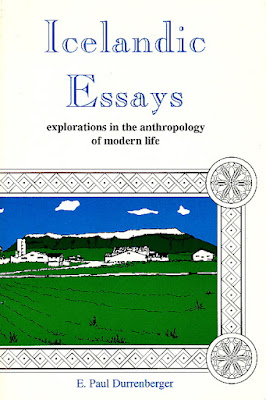
Icelandic Essays, explorations in the anthropology of modern life by E. Paul Durrenberger, Rudi Press, 1995.

This gifted book was a complete surprise from my blog-pal "Rose". It contains a series of anecdotal essays tying modern life in Iceland to its history and culture. Written just before the crazy economic expansion in the 2000's, its greatest value may line in its "time capsule" description of that time of transistion. While this book would have limited appeal for the general reader, Rose knows exactly what appeals to my fancy.

This meme is from Simon, via Niranjana...

By Professor Batty


Comments: 6 


Thursday, December 29, 2011

Year in Review

   Hindsight is 20-20, or so it is said. Thinking about this past year at FITK, I wonder (often) if what I produce here is worth anything. This year saw me scale back on posting to three times a week, with Sharon Spotbottom (bless her inscrutable heart) visiting every Friday. But actually looking at and re-reading the posts done over the last 12 months is somewhat heartening.

   This has been a year which saw a broadening of my literary pursuits (Thanks to Rose, Niranjana, and Caroline); I must have covered more than a score of books- and read even more. Putting up the Laxness in Translation site and connecting with so many other Halldór Laxness fans really expanded my horizons as well (Rose~ the revolution is at hand!) My sidetrack into Faroese literature was triggered by a serendipitous discovery of Faroese Short Stories in an antique store in Galena Illinois. Following up on that book opened my eyes to a wonderful vein of literary ore, made even more precious by its scarcity. I hope to uncover even more "nuggets" next year.

   My Icelandic connections seem to be fading and this might be the start of a trend. While I have scarcely exhausted all the Icelandic culture available, there comes a point where the "low hanging fruit" is gone, and climbing higher does not insure commensurate rewards. I might get back there this year but it is just too soon to say.

   And then there are the actual Flippist "archives". Yes, they do exist, in tidy white boxes and folders. Artifacts, images, tapes, papers, negatives and slides. Meaningless in themselves, but often these things contain a story. The encouraging thing about creating a post from them is that there is almost no subject too obscure to attract at least a little interest. If a post makes a connection to just one person it is worthwhile. For example; A few years ago I wrote about a great aunt of mine, a person I had only met in childhood once or twice. This summer I received an email from a man who had been in her care for a few years when he was a child. He had lost all touch with her when he moved away, my post was one of the few links he had left to a person who was literally a second mother to him at a very trying time in his life. There are dozens of hits on my back posts every week; the "long tail" of internet searches is a reality.  That said, I have the nagging suspicion that one day Google will change its search algorithms and Flippism is the Key will be effectively shut out; it seems that a similar scenario is already in effect for YouTube.

   So, another year awaits. Sharon will be back and I'll be as random as ever (I subscribe to The Brownian Motion School of Blogging) but as with all things, I sense a change coming, both from within this blog and from external events. I don't know what that may entail, so I'll just say thanks to everyone who stopped by this year, and I hope you come back again next year.

   Your patronage is appreciated.

By Professor Batty


Comments: 9 


Monday, September 09, 2013

Reference

It has been a while since I've posted any bookshelf pictures, so, for you “snoops” out there, here are a couple images showing the “Flippist Reference Library™”:


Top left shelf contains Icelandic music and videos, along with doubles from my Halldór Laxness collection and a few “teach yourself Icelandic” books (I DIDN'T). The shelf below has the bulk of my Icelandic literature, mostly Laxness, but also some Sjón as well as a few Faroese authors. Fun for some, not for all. Moving down to the third shelf are music related books, heavy on Dylan, with Björk and Joni Mitchell. The right side has modern authors writing about Iceland (Indriðason, Nancy Marie Brown, Bill Holm, others).


Lower still are the books on Mythology (Campbell, Graves) folktales and then a mix of old fiction, art, poetry, biography and even a family genealogy. The bottom shelf has mostly art and photography (along with my High School yearbooks!)

The shelves on the right contain my music collection, They seem empty now because I recently thinned them out and also moved my DVDs which had been there to the Flippist Home Theater Media Center™  (subject of a later post.)

I've been going through a house cleaning purge lately; I can see my possessions dwindling in the future. I don't want to leave my heirs with a bunch of meaningless stuff. The Flippist Archives are safe for now; I use them for this blog. The photos and artwork on the walls as well as my modest ceramic collection (also to be featured later) have become a surprising joy to me.

All of this Proustian reflection leads to a deeper issue: as the tenth anniversary of FITK approaches I wonder what will be the ultimate fate of this site?  Discovered by new generations? Not likely. Buried in some forgotten server until a meteor blasts it out of existence? More likely. The old material here is still accessed every day by persons all around the world.  The new posts are read as well by a few dozen people, some of whom I know, some I don't (here's looking at you, Pretoria!). Facebook users also link to pages, although they never leave a comment. That's OK. It's a blog of images and ideas, not a social group. If I can brighten someone's day or offer a new perspective in my blog-posts, that is enough justification for me for me to continue its existence.

Which is more than can be said of television, the subject of Wednesday’s post.

By Professor Batty


Comments: 11 


Friday, November 19, 2021

Nordic Fashion Redux


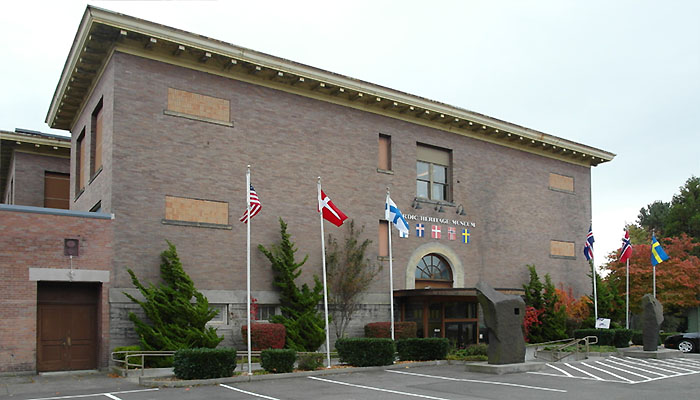
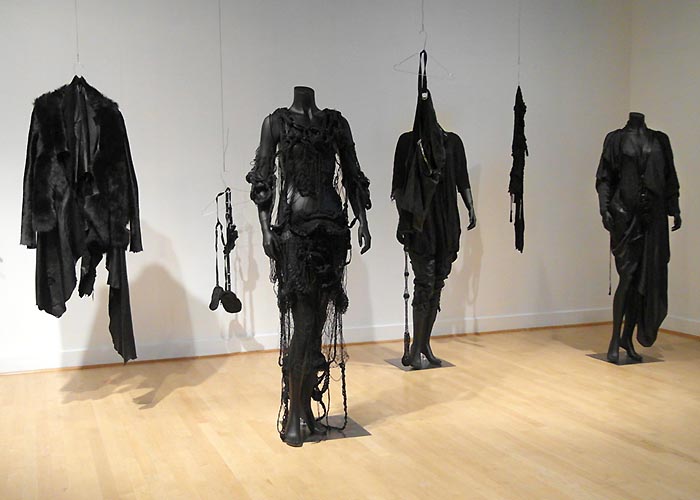
While I was in Seattle in 2011, the Nordic Heritage Museum was hosting the Nordic Fashion Biennale (NFB). Designers from Iceland, Greenland, The Faroes, Denmark, Norway and Sweden moved their wildly diverse creations into the museum for a six week run. When I say moved into, I mean right into the existing museum exhibits! Curated by New York–based visual and performance artist Hrafnhildur Arnardóttir (AKA "Shoplifter"), the resulting show was often amusing, sometimes sublime, and always fascinating. Many of the modern designer fashions fit right into the depictions of immigrant life from the 19th century:


The model on the left is based on the Faroese novel Barbara:


Vivid colors contrasting with subtle tones:


While some fashions were a bit more outré:


And others were downright scary:


Everybody can use a new pair of shoes:


Some were simply stunning:


Even the Patchwork garments had pizzazz:


I've been on a Faroes kick lately and was pleased to find that they were well represented here:


The Seattle area is home to the greatest number of people of Icelandic descent in the United States. The museum is located in the Ballard district, where large numbers of Norwegians, Swedes and Danes also settled and that heritage still exerts a strong influence. The integration of fashion into history reflects this heritage in the best possible way—full of imagination and with a sense of humor—retaining the connection between the past and present.


Originally posted November 2011

By Professor Batty


Comments: 1 


Sunday, May 03, 2020

My Own Private Iceland #5

This is the fifth in a series of posts imagining what my scheduled trip to Iceland would have been like…


O.K., I'll admit that this post might be stretching the concept of my “fantasy island” trip too far. But, if I am allowed to have an fictional travelog, why not include a night spent in Harpa in the company of Eivør, the Faroese (not quite Icelandic but close and she is immensely popular there) performer.

I don’t think anything I can write can compare to the vitality expressed in the image presented above, so I’ll let her ‘speak’ for herself:


BONUS: BBC article about þetta reddast featuring Alda and Audur…

By Professor Batty


Comments: 0 


Friday, November 04, 2011

Highs and Lows- Reykjavík Calling II


Northeast meets Northwest as Ólöf embraces David at the end of the show
With the lights out it's less dangerous...
Here we are now entertain us...
I feel stupid and contagious...
Here we are now entertain us...
Smells Like Teen Spirit ~ Nirvana

The second pairing of KEXP's Reykjavík Calling concert at Neumos in Seattle was more than successful, it was absolutely inspired. Guðrið Hansdóttir is a singer/songwriter from the Faroes, with a fine voice and guitar chops to match. Her songs concern nature, and nature in the Faroes means lots of rain. Tomo Nakayama was born in Japan and grew up in Seattle, he was no stranger to mists and fog either. His ethereal singing and masterful playing might be considered a bit precious by some, but he was a perfect complement for Guðrið. Trading lead vocals, singing harmony on most songs, this unlikely duo from the opposite ends of the earth really captured the intent of the concert, with numerous highlights in their nature-inspired songs. They captivated the packed venue.

And they had met only the day before!


Snorri Helgason is a troubadour from Iceland, I had seen him in the power-pop band Sprengjuhöllin in 2006. This was a whole 'nother thing. His "partner" was the salt-of-the-earth David Bazan with his primal "bummer songs". Both performers were competent, but neither was very charismatic. Snorri had a top album in Iceland last year, I think his strength may lie in his writing:


Take a deep breath. Okay. The next act was Sean Nelson, performing with a yet-to-be named band. I really would rather not write about his performance, I'll just throw out a few concepts: Buzz Kill. Unbridled Ego. Neurotica.
He barely interacted with the rest of the performers, I think he thought this concert was being held for the sole purpose of showcasing for his new "act". He single-handedly cleared the room of all but the most die-hard Ólöf Arnalds fans. The picture says it all:


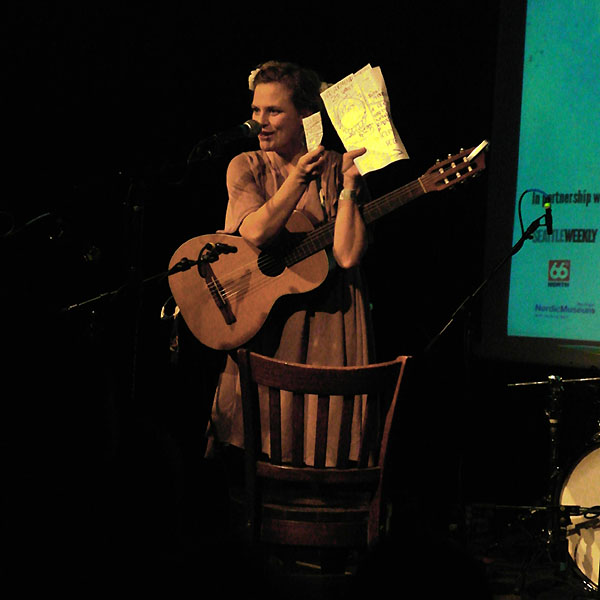
Finally, chanteuse Ólöf Arnalds took the stage. She is a paradoxical musician, capable of esoteric art-song and bawdy pub-tunes. She started off with the story of how she learned to play guitar by listening to the Nevermind album, including a spoofed version of Polly. She then tried an acoustic a capella version of a poem by the Faroese writer William Heinesen, but yakkers at the bar wouldn't hear of it.

She played tunes from her new EP of covers, with some wild singing (she definitely is one of a kind!) but this night was not going to be a "serious" performance for her:


Sean Nelson and his band then slooowly returned to the stage, sabotaging what momentum Ólöf had established, with a knuckle-headed mash-up of Lou Reed(?) and Ólöf's own Klara. The finale was a ragged version of, what else- Nirvana's Smells Like Teen Spirit! Everyone (everyone but too-cool Sean) got into the "spirit" although I doubt if anybody really knew the lyrics.

By Professor Batty


Comments: 4 


Monday, November 19, 2018

Iceland Airwaves Recap

The Song Remains the Same


                      Jofriður Ákadóttir, 2009                                                      Jofriður Ákadóttir, 2018

After having had a week to process the experience of the 2018 Iceland Airwaves, it is still impossible to come to any definitive conclusions about such a multifarious event. The wide assortment of musical styles presented has always been a feature of this most diverse musical festival. That said, times change; there were certainly more rap and hop-hop acts this year as well as, for the lack of a better word, “Swedish Style” glossy and formulaic pop music. There were fewer guitar-rock groups (I didn’t see a single Stratocaster!) and not quite as many singer-songwriter-troubadours as there were when I was there was in 2009. Even EDM seemed to be down—there was no main venue devoting a whole night to it as there once was.

A significant difference in the Airwaves Festival this year is the number of female acts. It has reached parity over all styles, a most welcome development. There seemed to be more string sections in use as well, even some of the acts performing in the small off-venues utilized them. They were all very good, although the quality of the arrangements varied. One tradition which has been upheld is the inclusion of carefully chosen new acts doing original music. This isn’t American Idol, where carefully groomed acts reenact hits of the past, but rather young (in some cases very young) musicians create something new and unshaped by the crushing effects of mass marketing. There were also numerous established but quirky “only in Iceland” acts singing in Icelandic—always a joy to behold—and the over-all level of musicianship has increased since I last attended ten years ago.

The past few Airwaves have lost boatloads of money, mostly due to the importation of big and expensive foreign acts. This year, under new management, reversed that trend, giving the locals a better representation and, hopefully, financial solvency. The festival organization was excellent, with well-trained and friendly staff making sure things ran smoothly. No late start times (in one case even early!) and the scheduling was arranged that there were not too many long lines. There were fewer off-venues this year, but the ones we attended were uniformly excellent, even transcendent at times.

A big thank-you has to go to the Icelandic musicians themselves, a close-knit community that is supportive and used to collaborating in various ways. In a festival situation that can backfire, but when it works it is simply magical. Jofriður Ákadóttir (JFDR), pictured above, was a great example of this, performing in at least five different shows. She is the most creative act in Iceland right now; her musical imagination is seemingly unlimited and she even has her own candy bar! To see her growth from humble beginnings in 2009 to today is remarkable, even for Iceland. Not a “one-trick-pony,” she transcends genres while remaining true to her central vision. I saw her backing the astounding Nini Julia Bang with three other performers (Liva Mo, Sóley, Áslaug Magnusdóttir) at the Nordic House playing to an audience of 25. She was just as into it then as she was a few days later when she played to a crowd of a thousand at Harpa.

There isn’t any really good way to sum up Airwaves, but I’ll end this with a list of some of the acts that I saw, where they played, and why I found them memorable:

Skúli Sverrisson og Bára Gísladóttir, KEX Hostel: a two bass hit!

Sóley and her father, Grund: the emotional high point of Airwaves.

Gróa, Ten Tónar: Teen-age rockers with unlimited potential.

Grúska Babúska, Húrra: Icelandic gypsy band: absolutely over-the-top fun.

Ateria, Húrra: Spooky teen-age Folk-Goth girls..

Reykjavíkurdætur, Art Museum: polished Feminist Rap collective.

Nini Julia Bang, Nordic House: voice artist, best act of the festival.

Vicky, Gaukurinn: hard rockers with no compromises.

Hugar, National Theatre: extremely disciplined ambient guitar/synth duo.

Högni, National Theatre: music, poetry, and theatrics perfectly combined.

Ólafur Arnalds, Nation Theatre: ambient/classical from the master.

Liva Mo, Nordic House: delightful singer, even better raconteur.

Bláskjár, Nordic House: songs from the heart, very touching.

Between Mountains, Gamla Bíó: yin/yang duo with unlimited potential.

Sólstafir, National Theatre: highly evolved metal, great spectacle.

Sóley, National Theatre: evocative electronica, Lynchian.

Hekla, Hitt Húsið: more music from the heart, very poignant and sincere.

Jóhanna Elísa, Hitt Húsið: very smooth pop with classical overtones, delightful.

Eivør, Harpa Flói: Faroese Valkyrie with a great drummer (Høgni Lisberg).

JFDR, Harpa Flói: bad venue, bad crowd, bad sound, still electrifying.


Looking back at this list it becomes pretty obvious that The National Theatre (Þjóðleikhúsið) was the premiere main venue, while The Nordic House (Norræna Húsið) was the best off-venue. Húrra had the best sound and Floí the worst. The most charming performance? A children’s choir at Fríkirkjan on Sunday (not an Airwaves event, but so worth it.)

Will I go back?

Never say never.

By Professor Batty


Comments: 4 


Wednesday, February 27, 2013

Íslensk menning


My collection of Icelandic (and Faroese) books, music and films has grown dramatically during the last fifteen years. From a single book (Independent People) into this collection occupying two full shelves of the Flippist Archives™. Actually, there are even more books—nine Indriðason titles are on a shelf below. Pretty impressive output from a country of 321,000! Even more amazing when one considers that my Icelandic shelf space is 20% of all my media (except vinyl, and I even have a couple of Icelandic LPs!)

I'm starting to think that it won't get much bigger than this, however. The Icelandic music scene is starting to falter (Kimi records just went bankrupt) and its film industry, while still vital, is starting to be incorporated in the world cinema—Balthazar Kormakur is now directing Mark Wahlberg action flicks! The book section might keep growing however, and I haven't even started reading Gunnar Gunnarsson.

I'm not a hoarder. Every couple of years I mercilessly thin out my books and CD's. If I don't think I'll ever visit a title again out it goes.

I know I'll be seeing my Íslenskir vinir again and again.

By Professor Batty


Comments: 5 


Monday, September 14, 2009

Mondays in Iceland - #18


Amiina, Minneapolis, 2007
 
One month from now (October 14th), The 11th Iceland Airwaves festival will begin (I hope.) Money problems, perhaps related to the Kreppa, perhaps not, have put the future of this unique event in limbo. From what I've read, November will bring new hardships and economic contractions to Iceland. Perhaps this will be a final hurrah, an end to an era. This festival, apart from its "exotic" locale, brings out a variety of musical acts, some are mainstream bands from the US and the UK, while others are from more isolated parts of Scandinavia and, of course, Iceland itself. The Airwaves I attended (in 2006) had performers ranging in age from 13 to 70, with rock, metal, techno, classical, folk, country, rockabilly, and numerous hybrids of these. Many of the groups performed in Icelandic. There have even been Faroese acts. This musical generation is the first to come of age in a world-wide pop culture, but there is just enough isolation left in the upbringing and education of these musicians to enable them to offer truly unique, innovate music.

If this event were to end, something will be lost which will be impossible to regain.

By Professor Batty


Comments: 2 


Thursday, December 08, 2011

The Last Book

Laterna Magica


By William Heinesen
Translated from the Danish by Tiina Nunnally
Fjord Press, Seattle, 1987

The road out to Gray Skull Wharf, where everything ends, is a long one. With many twists and turns and cul-de-sacs, it passes through a thousand-year-old city.

We are in no hurry, and on this belated journey we will not take things like chronology and causality too seriously either. We feel just like children playing in the twilight, who are reluctant to go home to bed as long as there is still light in the sky and the beautiful day is not entirely over. And the old boatman, sitting in his ferry and waiting at the end of the world, is a wise man, after all. He knows the whims and caprices of the human heart, and its untimely yearning for the unreachable. He will surely grant us a reprieve for a little longer. You'll see– he has probably lit his pipe and is sitting there in his gray wolfskin enjoying himself as he gazes out over the deep with experienced seaman's eyes, to where the beginning and the end meet and shake hands with each other, as the darkness falls.


William Heinesen was born at the turn of the 20th century in Tórshavn in the Faroes, a group of islands in the North Atlantic between Scotland and Iceland. He was considered the greatest of the Faroese writers and although he wrote in Danish, his work revolves around everyday life in the Faroes. This collection of stories, loosely connected by the thread spun in the preface reprinted above, was written with the intention of being his final work. Tiina Nunally's elegant translation is always concise and poetic.

Heinesen's intention was to have one last go at telling the stories of the people of his life, they are tales from a time that is long gone, an old man's look at those memories of things that have stayed with him over a long life. The stories are simultaneously magical and realistic. Love unrequited, passions leading to ruination, life in a small town in all its facets- with all its joys and heartbreaks.

These are simple stories, told in a straightforward manner. A travelogue, if you will, to the ends of the earth and the center of the human heart.

Highly recommended.

By Professor Batty


Comments: 1 


Sunday, November 11, 2018

Iceland Airwaves Day Four


The final day of airwaves has come and gone. It was a day of subtle joys and a major disappointment. We spent the afternoon with DJ Cousin Mary and her husband Ken at the Hitt Husið, a community center for teens in downtown Reykjavík. The first performer was Hekla, not the thereminist that I had hoped for but, rather, an unassuming young woman singing songs of things important to her. It was a very sweet and honest, albeit shaky at times, performance:


Jóhanna Elísa led a six piece band with her fine playing and singing.
The string arrangements were superb:


We saw Between Mountains again, this was a much better venue for their emotional songs of the heart:


And we just had to stay to see Ateria again. They were in their element here, surrounded by friends and family. There are some very weird currents running through their music, who knows what darkness lurks in the minds of Icelandic teen-age girls?


After a break for dinner (monkfish, yum!), we went over to Floí,  a large multi-purpose room in the Harpa complex. The first act was the Faroese performer Eivør, an experienced veteran who sang, played guitar, and wielded a Celtic drum, all to great effect:
Not so great was the next act, Team Dreams: Sin Fang, Sóley & Örvar Smárason. In fact it was a disaster; quite possibly the worst musical performance of any kind I have ever endured. They announced that it would be their last gig. It sounded as if the band had already broken up  some time ago. An atrocious sound mix turned it into torture:


Finally, JFDR, who I've been wanting yearning to see perform again since I last saw her in Samaris in 2012:


The sound problems continued, almost destroying her set. She did fine when she was on her own—singing and playing guitar—but additional instruments were way out of balance. Various mid-bass and low-mid resonances made for a very unpleasant experience. Others told me that it wasn't as bad in the rear of the room, perhaps I was in a bad spot, although reviews in the Grapevine also mentioned the bad sound in Floí.

Here is a video of one of the songs of her performance:


Although Airwaves is over, I'll be back tomorrow with more

Yesterdays Airwaves coverage…

By Professor Batty


Comments: 3 


. . . . . . . . . . . . . . . . . . . . . . . . . . . . ©Stephen Charles Cowdery, 2004-2025 . . . . . . . . . . . . . . . . . . . . . . . . . . .